Editorial responsibility for this article rests with Wuhan Ooi Photoelectric Technology Co., Ltd. Written and reviewed by the Ooitech editorial team. See our editorial policy for how we write, where AI tools are used, and how to request a correction.
TOPCon to BC Retrofit: What Changes, What It Costs per GW
Table of Contents
Quick answer: A TOPCon module line can be converted to back-contact assembly without touching lamination, framing or edge sealing — 85–90 % of the back end stays. What changes is stringing: cells run back-side up, so the SMBB welder gives way to a 0BB platform with two-channel UV dispensing, low-stress cleaving, rear vision and a de-gluing rework station, while a dispense kit bolted onto the old welder only produces samples. The UV-adhesive route costs about RMB 30–40 million per GW (US$4.2–5.6 million at 7.1), the IFC film route RMB 45 million and up, and a reported 7 GW project worked out at about RMB 33.5 million per GW. The binding constraint is not the purchase order: it is a 2–4 month yield ramp with breakage running one to two points above the TOPCon baseline.
Your laminator is not the problem. Neither is the framing station, the junction-box welder or the glass cutter. If you are moving a TOPCon module line to back-contact, almost everything downstream of layup survives untouched. The conversion lands in one place — where the cell is flipped over and joined — and that is where the money and the risk sit.
Retrofit or conversion: the distinction that sets the budget
Two different projects get called “converting to BC”, and they differ by roughly an order of magnitude in capital. One is a cell-line conversion: you are rebuilding a fab to make back-contact wafers, with new diffusion, masking, patterning and metallisation steps. The other is a module-line retrofit: you keep buying BC cells from a cell maker and change only the back end that turns those cells into modules. Everything below is about the second one.
The distinction matters because it sets the budget before anyone opens a quotation. A module retrofit is a equipment and process-window project measured in tens of millions of RMB per GW. A cell conversion is a plant. If a supplier quotes you a number for “going BC” without asking which of the two you mean, the number is not about your project.
What changes on the line, station by station
A standard TOPCon module line runs SMBB: the cell travels front-side up, and ribbon is soldered directly onto the front busbars. The joint is simple, the process window is wide, and most lines have run it long enough that nobody thinks about it any more.
Back-contact breaks that arrangement, because there is no front grid to solder to. The cell must travel back-side up, the interconnect must be laid onto rear pads, and the rear surface is where the fine electrode geometry sits — which is also the surface that hates being handled.
| Stage | TOPCon / SMBB line (today) | BC / 0BB retrofit |
|---|---|---|
| Cell infeed | Front-side up, no flipping | Flip module — back-side up for the rest of the line |
| Separation | Conventional cleaving | Low-stress, non-contact cleaving (thinner wafer, rear electrodes) |
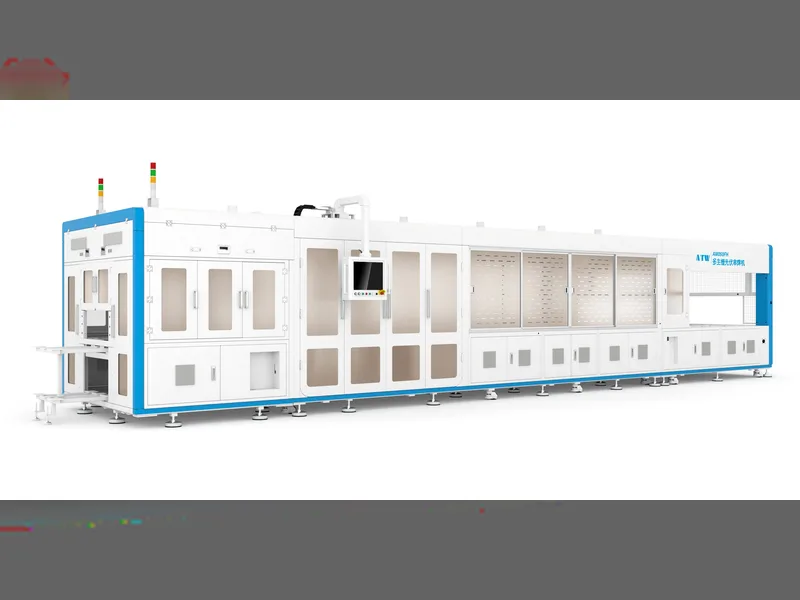
| Joining | SMBB stringer, ribbon soldered to front busbars | 0BB station: insulating adhesive, conductive adhesive, laser or IR weld, UV pre-cure |
| Inspection | EL, front-side visual | Rear AI vision for adhesive path and pad contact, plus EL and PL |
| Rework | De-solder and re-weld | Laser de-gluing station (a cured UV joint cannot be unsoldered) |
| Layup to packing | Unchanged | Unchanged — cutters, laminator, framing, edge seal, junction box all reused |
Process sequence as described in the trade report this article is based on; equipment reuse percentages are the source’s, not our measurements.
The useful way to read that table is by column three only. Cutters, laminators, conveyors, framing and junction-box stations come through the retrofit essentially untouched — the source puts reusability at 85–90 % of the back end, and that figure is why tier-two manufacturers attempt the conversion at all. Stamping new BC lines instead would mean paying for asset you already own.
When integrating the 85 to 90 percent backend hardware that lines retain, we profile the heating platens on existing laminators to prevent localized thermal stress across the newly relocated rear contact points.
The hardware list: buy, upgrade, reuse
Sort every line item into three buckets before you compare quotations, because vendors tend to bundle them and the bundles are not comparable.
| Bucket | Item | Published price (RMB) | Why it is in that bucket |
|---|---|---|---|
| Buy new | BC 0BB stringer (dispense + weld + UV pre-cure in one frame), 6,000–7,200 half-cells/h | 3–4 million per unit, 2 units per 250 MW line | An SMBB welder cannot be converted into a production 0BB machine; a dispense kit bolted onto one yields samples, not volume |
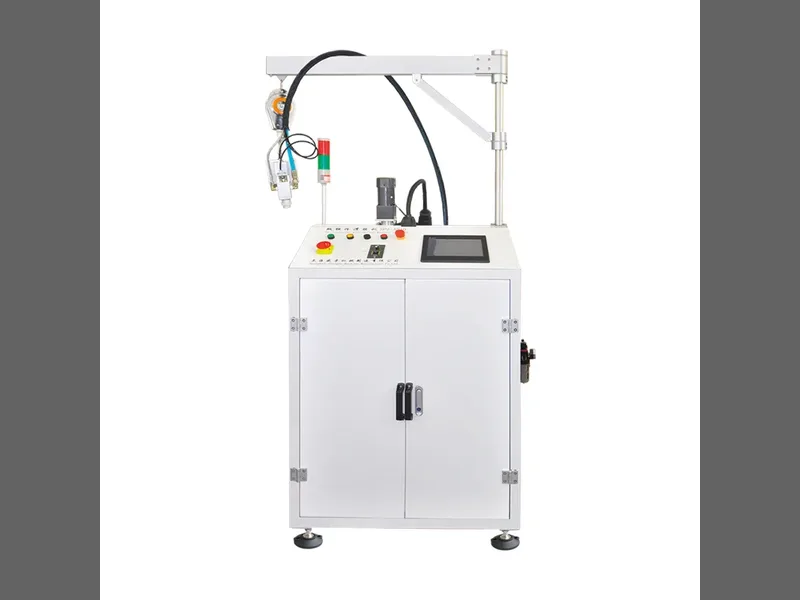
| Buy new | UV dispense and curing system, separate insulating and conductive channels | 0.4–0.8 million per set | Dispense placement decides short-circuit and cold-joint rates more than any other station |
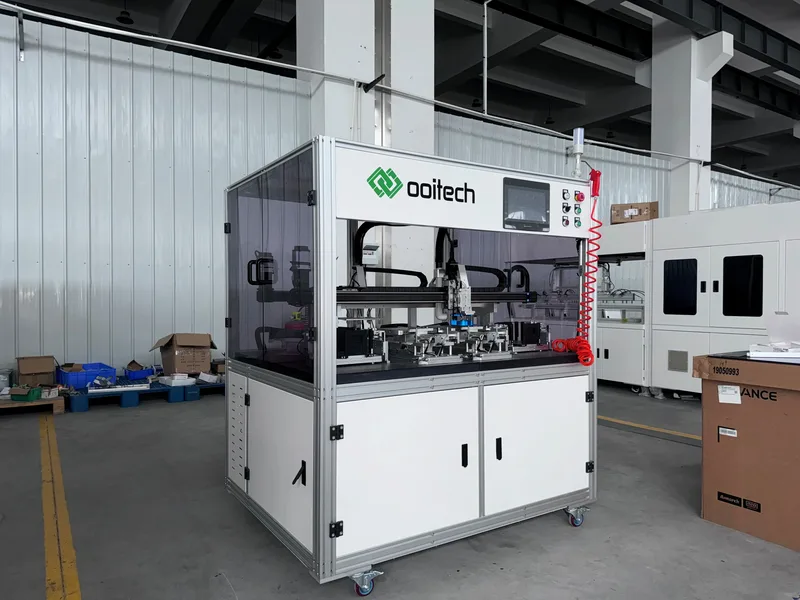
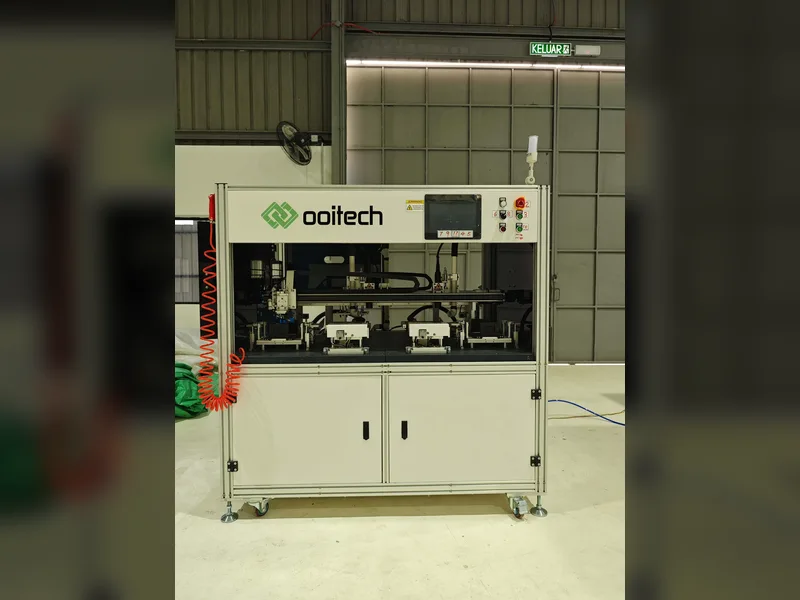
| Buy new | Low-stress cleaving machine | 0.8–1.5 million per unit | Rear electrodes and thinner wafers turn conventional cleaving into a breakage source |
| Buy new | Rear AI vision inspection | Quoted per station in the source, no figure given | EL sees cracks, not missing or offset adhesive — 0BB fails on adhesive geometry |
| Optional | Laser de-gluing rework station | Not quoted | Cured UV joints are not reworkable by hand; without it, bad strings are scrapped |
| Upgrade | MES traceability | Software, priced with the line | Rear images and dispense parameters have to be logged per cell, not per batch |
| Upgrade | PL inspection alongside existing EL | Priced per station | Catches latent cold joints that EL misses on rear-side joints |
| Reuse | Cutters, laminator, conveyors, framing, edge seal, junction-box welder | — | 85–90 % of back-end value survives the retrofit |
Unit prices are vendor list ranges as published in the October 2026 trade report (ex-works China); they are indicative, not quotations. Ooitech does not publish retrofit pricing.
Two items deserve a second look because they are routinely under-specified. The first is the flip and transfer module: the retrofit adds a turnover station and higher-precision conveying so rear pads and dispense points align, and this is where alignment error enters the process for the rest of the line’s life. The second is facility work, which almost never appears in an equipment quotation: UV adhesive is sensitive to dust, ambient light and supply stability, so the dispense area needs better cleanliness, light shielding, extraction and regulated power. Lines that skip this step discover it as random open circuits that nobody can reproduce.
Three cost routes, and the number that reconciles them
The industry has settled into three routes, and they are not variants of one another — they answer different questions.
| Route | Cost per GW (RMB) | What it is for | Main limit |
|---|---|---|---|
| UV-adhesive 0BB (the mainstream choice for tier-two lines) | 30–40 million | Volume production with the least disturbance to an existing TOPCon back end | Dispense window is narrow; short-circuit and cold-joint risk sit in one station |
| IFC film-based 0BB (Aiko ABC-style dedicated line) | 45 million and up | Higher yield ceiling, no dispense short-circuit mode | Large changes to an existing TOPCon line; near-custom equipment; usually chosen for new builds, rarely for retrofits |
| Dispense kit on existing SMBB welder | 6–10 million | Samples, customer qualification, small pilot runs | Slow takt and narrow window — cannot carry volume orders |
Routes and ranges as published in the source trade report; converted nowhere, quoted in RMB as published.
Check the middle of that table against the only public project benchmark in the source: a 7 GW BC module retrofit reported at RMB 235 million in total, or about RMB 33.5 million per GW. That sits inside the UV-adhesive band, and it is worth understanding why, because the arithmetic is not obvious.
Build the figure up from unit prices and a 1 GW line — four 250 MW lines, two stringers each — and the published range only closes at its lower end:
| Item | Units per GW | Per GW (RMB million) |
|---|---|---|
| 0BB stringers at 3–4 million each | 8 | 24–32 |
| UV dispense and cure sets at 0.4–0.8 million each | 4 | 1.6–3.2 |
| Low-stress cleavers at 0.8–1.5 million each | 4 | 3.2–6.0 |
| Rear vision, flip/transfer, conveying, MES, facility | Line-wide | Not quoted — the remainder |
| Sum of quantified items | — | 28.8–41.2 |
Our arithmetic from the published unit prices, not a vendor quotation. The published band of 30–40 million only reconciles if the stringer count and unit prices both sit near the low end.
That reconciliation carries a practical warning: if your layout needs eight high-speed stringers and full dual-vision inspection and a rework station, you are in the upper half of the band or above it, not in the middle. And the band excludes everything that is not a machine — facility upgrades, spare parts, the ramp scrap in the next section, and the certification work your customers will ask for. Budget the equipment against the published range and the project against something wider.
The materials switch nobody budgets for
A retrofit is not only an equipment project. Three material changes arrive with it, and each has a qualification cost attached.
Two new adhesives. UV insulating adhesive isolates the positive and negative grid on the rear; UV conductive adhesive carries current from pad to ribbon. They are new BOM lines and, according to the source, one of the reasons BC modules currently command a premium at all. The insulating adhesive is a process material, not a glue — dispense volume and cure energy are process parameters.
Finer ribbon. 0BB needs ultra-fine round ribbon to suit the dense rear grid. Ribbon that was fine on a front-side busbar becomes a handling and joint-strength problem on the rear — the geometry change is covered in TOPCon versus BC from the back side and in our note on where 0BB gains and yield limits sit on back-contact cells.
Encapsulant compatibility. This is the item that surprises lines late. UV adhesive and EVA or POE do not behave identically, and some manufacturers end up switching to a dedicated film. Get the compatibility and damp-heat work done before the purchase order, not after the first bankability failure; the material trade-offs are set out in our overview of what removing the busbar changes.
When validating encapsulant compatibility across the two new adhesives, we run test laminations with POE and EVA to confirm that both films crosslink cleanly without causing void formation around the rear joints.
Five places the retrofit goes wrong
Every one of these is a process window, not a purchasing mistake — which is why they survive quotation review and show up in month two.
| Failure point | What it looks like | What to measure before you commit |
|---|---|---|
| Fragmentation and micro-crack control | Breakage 1–2 percentage points above the TOPCon baseline during ramp, concentrated at flip and cleave | Breakage by station on rear-up handling, on your thinnest wafer, at production takt |
| Dispense yield | Overflow shorts the two polarities; a missing or offset dot becomes a cold joint with low pull strength | Placement repeatability and Cpk at full speed, on real cells — not on demo coupons |
| Reliability and certification | 0BB joint strength is inherently below SMBB; thermal cycling, damp heat and PID expose it later | Joint strength distribution before and after your own preconditioning; whether the target market needs bankability sign-off |
| Ramp length | A TOPCon spec change settles in about a week; a BC 0BB ramp commonly runs 2–4 months, with staged line stoppages | Cash and order coverage for the ramp; a stop-line plan per 250 MW block |
| The premium assumption | Premium concentrates in high-end residential, BIPV and black distributed product; ground-mount buyers stay price-sensitive | Signed premium orders before capex, not a market forecast |
Risk list condensed from the source trade report’s account of tier-two retrofit experience; the measurement column is ours.
The dispense row deserves emphasis because it is the one the source calls the lifeline of the line. UV adhesive responds to shop temperature and humidity, nozzle wear and light exposure. A parameter nudge that looks trivial on a chart moves yield by points. If a vendor demonstrates at 70 % of takt on conditioned coupons, you have not seen the number that decides your ramp.
Before you sign: five questions
The source’s advice to tier-two and tier-three manufacturers reduces to a gate, and it is a gate on demand and people rather than on equipment:
1. Do you have a secured BC cell supply at stable price and volume? 2. Do you have premium orders that can absorb the material cost increase, or only ground-mount customers? 3. Can you carry 2–4 months of degraded yield and staged stoppages without breaking delivery commitments? 4. Do you have process engineers who own UV adhesive and 0BB, or will the equipment vendor own your yield? 5. Have your target customers told you what bankability evidence they will require?
Failing two or more of those, the source’s own recommendation is not to convert: run the TOPCon line harder, take the silver-reduced and lightweight-0BB route on TOPCon, and keep the volume ground-mount business. That is an uncomfortable recommendation for anyone selling equipment, which is a reason to take it seriously.
What we would test on the stringer first
We build tabber-stringers; we do not sell turnkey retrofit projects, so we have no interest in the answer to whether you should convert. But three acceptance numbers decide whether the machine you buy will hold the yield you modelled.
One: placement capability at production speed. Not accuracy on a stationary coupon — repeatability and Cpk with cells moving, at the takt you will actually run, measured on your cell batch. Ask for the raw distribution, not the mean.
Two: handling loss on your thinnest product. Breakage and crack counts through flip, cleave, dispense and weld, reported per station. A single aggregate yield figure hides the station that will hurt you.
Three: joint strength distribution, not a pass rate. Pull strength on UV-cured rear joints, on your ribbon, before and after damp heat. A pass rate tells you the median; the tail is what fails certification. If you are choosing the platform itself, the station sequence and what each station can and cannot compensate for is set out in how a tabber-stringer works and how to choose one.
Where these numbers come from
Everything quantitative in this article — unit prices, the reuse percentage, the three cost routes, the 7 GW benchmark, the 1–2 point breakage penalty and the 2–4 month ramp — comes from an October 2026 Chinese-language trade report on TOPCon-to-BC module retrofits, reflecting vendor list prices and reported project experience. It is industry reporting, not our quotation and not our measurement, and prices in this category move. The reconciliation arithmetic and the acceptance criteria are ours. For the plant-level cost picture around a module line, see what a solar panel manufacturing plant costs.
Read the rest of the BC series
· The BC family sorted by structure and process — which names describe a layout and which describe a contact scheme
· TAC vs BC: what the name decides — if a quotation says TAC and you are planning a BC retrofit, read this before the spec sheet
· BC stringing warp: both ends curl — the defect that shows up after a retrofit, not during it
· Hybrid-contact BC cells at 28 percent — what the next cell generation will ask of the same line
· 0BB on back-contact cells — the rear-side joining route in full
Frequently asked questions
Can I convert an existing TOPCon cell line into a BC cell line?
Not usefully — that is a fab rebuild, not a retrofit. A module retrofits because 85–90 % of its back end survives the change. A cell line does not: the rear-side patterning, masking and metallisation steps are new process blocks, and the equipment you keep is a minority of the asset.
How much does a BC module retrofit cost per GW?
The UV-adhesive 0BB route runs about RMB 30–40 million per GW. The IFC film route starts around RMB 45 million. A dispense kit on an existing SMBB welder costs RMB 6–10 million but only supports samples and pilot volume. All figures are published industry ranges, ex-works China, and exclude facility work, spares and ramp scrap.
How long does the conversion take?
Installation is the short part. The number that governs payback is the yield ramp: a conventional spec change settles in about a week, while BC 0BB lines commonly take 2–4 months to reach stable yield, with line stoppages staged by block. Plan cash for the ramp, not for the installation.
Do I have to replace my laminator and framing line?
No. Cutters, laminators, conveyors, framing, edge sealing and junction-box welding are all reused. The change concentrates in infeed flipping, cleaving, the 0BB join, rear inspection and rework.
Can an SMBB stringer be modified instead of replaced?
Only for samples. Adding a dispense kit produces parts you can send for qualification, but takt and process window are too narrow for volume. Production-grade rear-side joining needs a purpose-built 0BB platform — rear-side vision, two adhesive channels and UV pre-cure in one frame.
What actually limits yield after the retrofit?
Dispense, in most reports. Overflow shorts the polarities; a missing or offset dot produces a joint that passes visually and fails on pull strength or damp heat. UV adhesive is sensitive to dust, humidity, nozzle wear and stray light, so the dispense station sets the line’s yield ceiling.
Will BC modules keep earning a premium?
Only in the segments that pay for it — high-end residential, BIPV and black distributed product. Ground-mount and utility buyers stay price-sensitive and do not pay a sustained BC premium. Converting without secured premium orders is the most commonly cited way to end up running a demonstration line for your equipment vendor.
What should be in the FAT for a 0BB stringer?
Placement Cpk at production takt on your cells, breakage and crack counts per station on your thinnest wafer, and pull-strength distribution on cured rear joints before and after damp-heat preconditioning. Ask for distributions, not pass rates.
Final thoughts
A BC retrofit is an equipment project with a materials problem and a ramp problem attached. The capex is knowable — roughly RMB 30–40 million per GW on the UV-adhesive route — and the equipment list is short. What is not knowable from a quotation is whether your dispense window, your reliability evidence and your order book will hold. Answer the demand questions first; then specify the stringer against distributions rather than demonstrations.
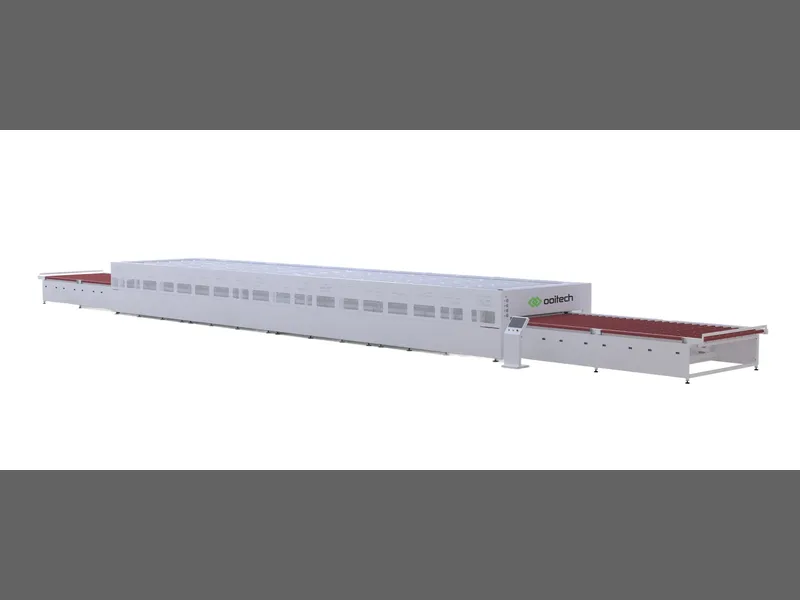
For back-contact conversions requiring controlled thermal cycles and uniform pressure, we supply the OTcy 2754DD single-layer double-chamber BIPV laminator along with customized platen tooling. Send your module stack, glass drawings, or test samples to our engineering team for process evaluation and thermal profile verification.