Quick answer: A junction box assembling line turns loose covers, diodes, housings, cables and connectors into a finished PV junction box. In its fully automatic configuration it is built from five machine groups — MC4 connector assembly, junction box housing assembly, cable cutting and crimping with connector insertion, welding with electrical testing and laser marking, and cable fastening — arranged as one inline flow with a rated output of about 1,000 pcs per hour. The process sequence is fixed but the modules are not: the same layout is offered in semi-automatic form, and fixtures can be changed to run different junction box models on one line.
This page sets out what each machine group does, what the line is rated at, which junction boxes it is built around, and the power and air requirements that decide how the line fits into a hall.
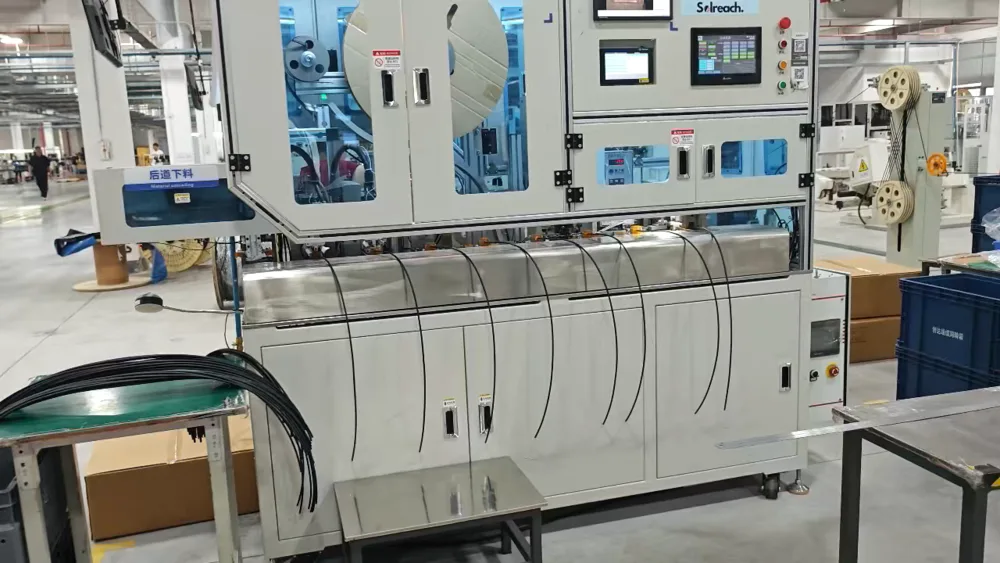
What the Line Puts Together
A module junction box of the type this line assembles is a small, highly standardised assembly. The bill of materials for a three-diode box is short: three covers, three diodes, a left, middle and right housing, two lock catches, two cables, and one male plus one female connector set. The line has to place, crimp, weld, test and mark those parts in the right order, at a rate that matches module production.
The boxes themselves are specified for the module side of the business: 1500 V rated voltage, rated current from 20 A to 35 A depending on the diode fitted, protection class II, IP68 sealing, PPO insulation, potting compound metered in grams, and a 12 AWG cable with a defined outer diameter. Certification is typically TUV and UL against IEC 62790 for the junction box product. Split-box constructions are also used, where the busbars are physically separated to reduce concentrated heating.
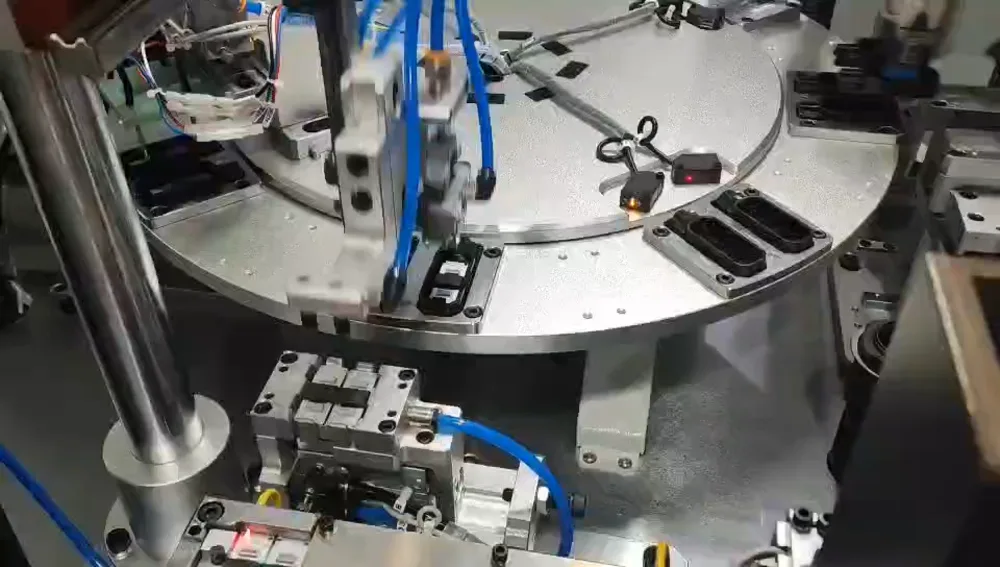
The Five Machine Groups
| Machine group | What it does | Units in the automatic configuration |
|---|
| MC4 connector assembly machine | Assembles the male and female connector sets that terminate the box cables. | 1 |
| Junction box housing assembly machine | Places diodes and assembles the housing sections; includes testing and marking. | 2 (one positive and middle, one negative) |
| Cable cutting, crimping and connector insertion | Cuts cable to length, crimps the terminal, inserts the connector and fastens the nut. | 2 (one positive, one negative) |
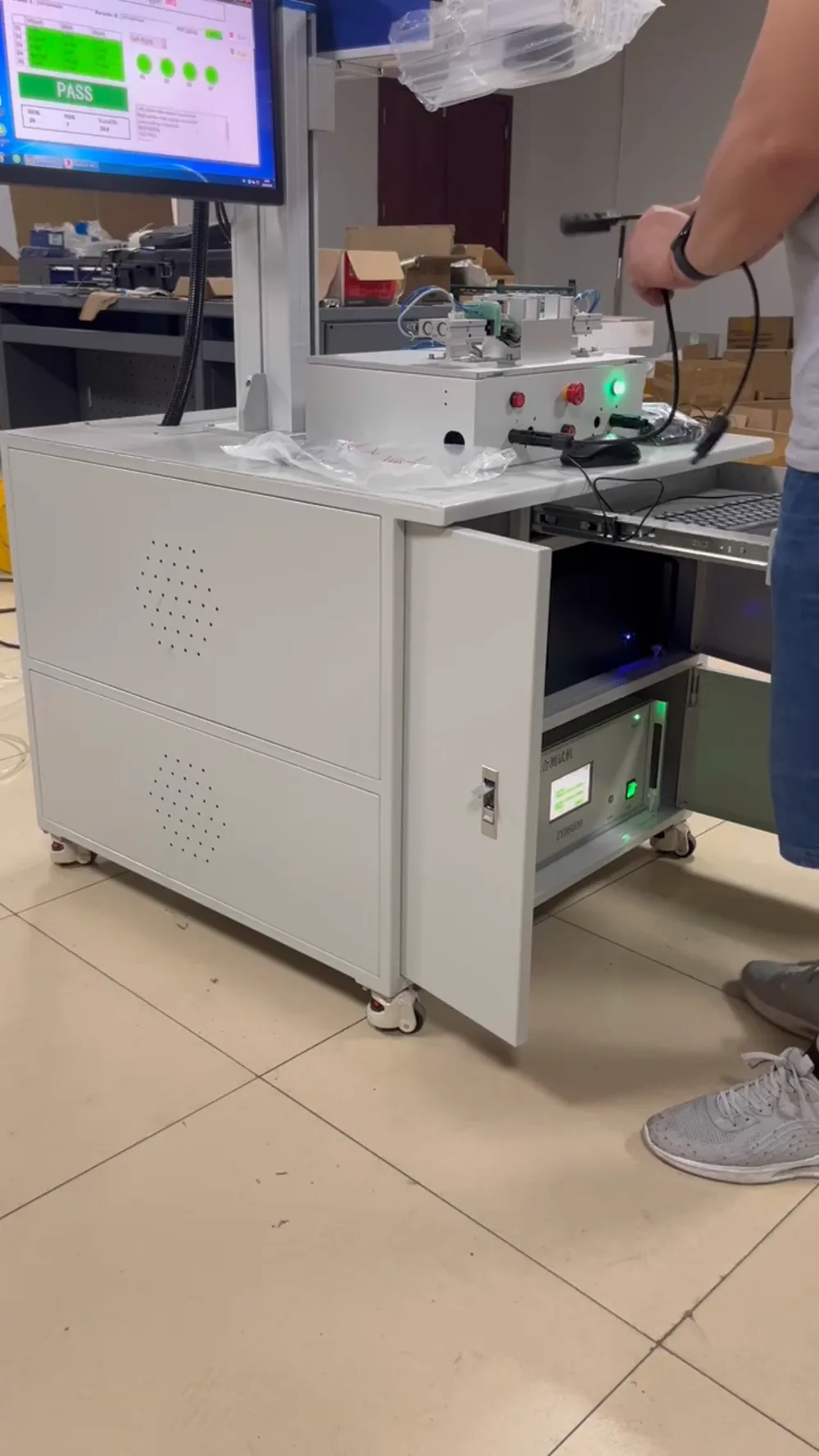
| Welding, testing and marking machine | Wire riveting, ultrasonic welding, electrical performance testing and laser marking in one station. | 2 (one positive and middle, one negative) |
| Fasten cables machine | Final fastening and dressing of the cables before packing. | 2 (one positive, one negative) |
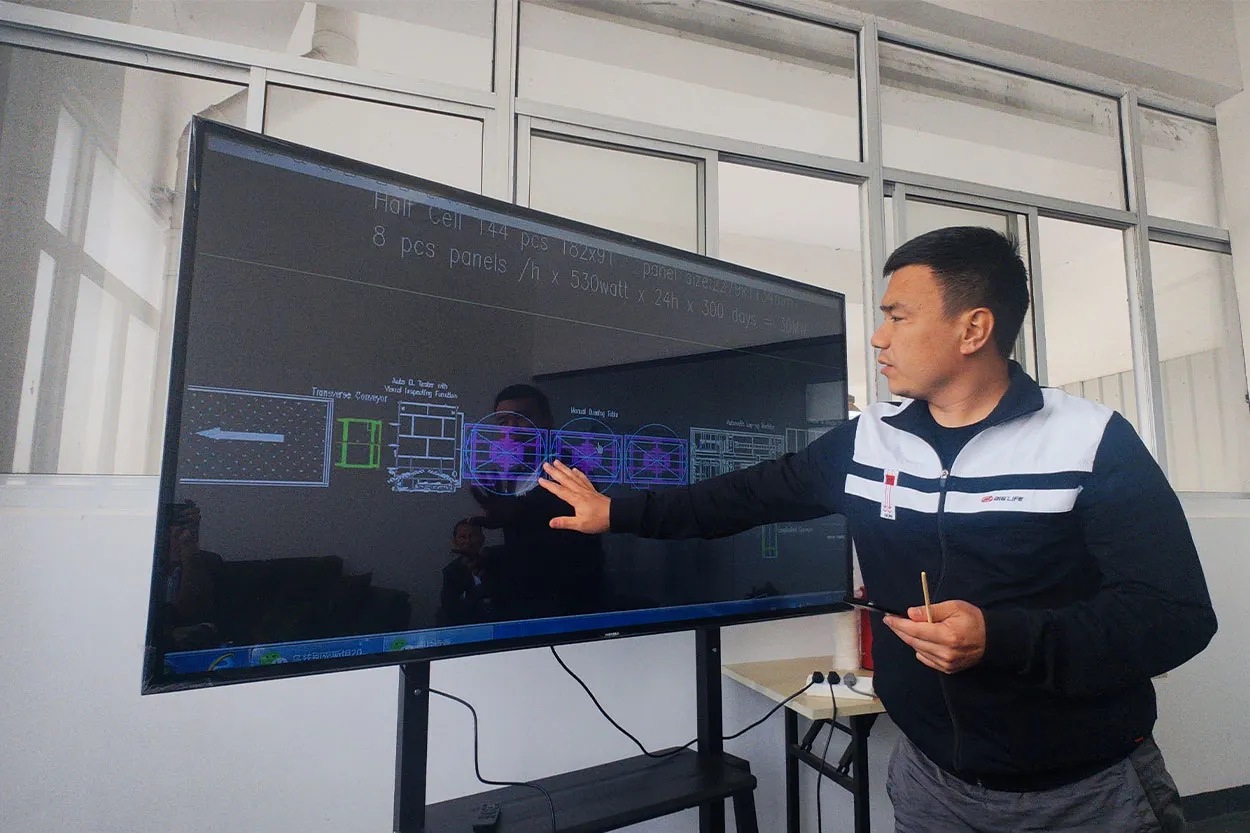
Positive and negative boxes run on separate parallel modules inside the same line, which is why the housing, cable, welding and fastening groups appear in pairs. The line is laid out as an inline flow rather than as islands, so material does not have to be transferred manually between stages.
Process Sequence Inside the Line
The critical sequence is inside the welding station, because that is where the electrical joint and the traceability of the box are created: wire riveting → ultrasonic welding → electrical performance testing → laser marking. Riveting fixes the mechanical joint first, welding makes the electrical connection without adding solder, the test rejects a box before it can be marked, and the laser marks the identification on a box that has already passed.
Upstream of that, the cable path is cut to length, stripped, crimped to the terminal and fitted with the connector and fastening nut. Downstream, the finished cables are fastened and dressed. Because testing and marking sit inline, a failed box is removed at the station rather than discovered at final inspection, and no marked box needs to be re-tested.
Automatic and Semi-Automatic Configurations
Not every volume justifies the automatic layout. The semi-automatic configuration covers the same process sequence with fewer integrated modules and manual transfer between some stages:
| Semi-automatic modules | Function |
|---|
| Wire cutting and crimping terminals with wires and tins | Prepares the cable ends; supplied as a pair. |
| Test and marking machine | Electrical test and marking, supplied as a pair. |
| Cable and diode crimping machine | Crimps the diode connection to the cable. |
| Cold press machine | Presses the mechanical joints; supplied as a pair. |
| Ultrasonic welding machine | Welds the electrical joint. |
| Screw machine | Fastens screwed connections. |
The practical difference is labour content per box and how much handling sits between stations. The automatic layout is specified for unattended running between loading points at around 1,000 pcs per hour; the semi-automatic layout keeps the same joint quality but needs operators at the transfer points.
Output, Changeover and What Limits the Rate
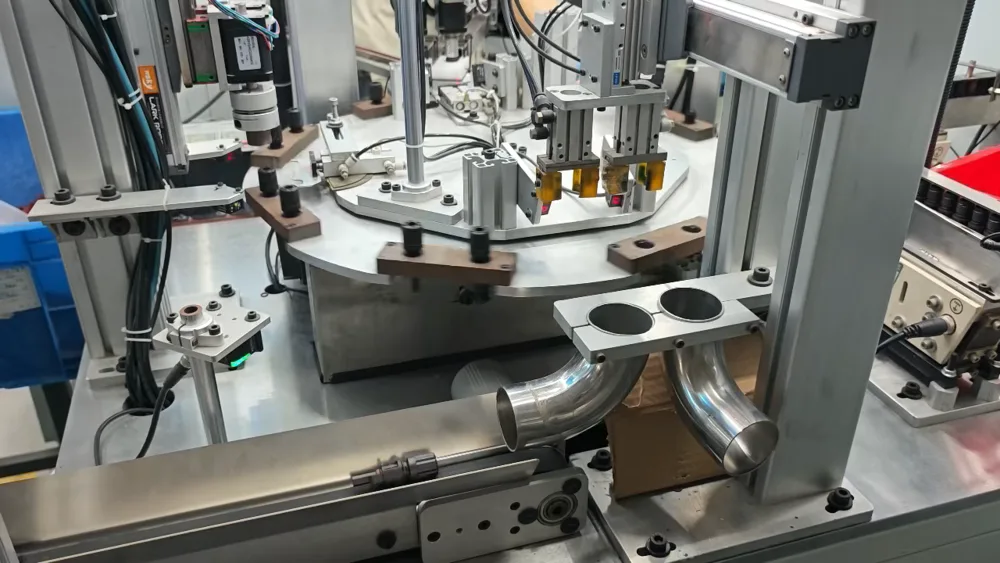
The rated output of the fully automatic line is about 1,000 pcs per hour, which is well above the consumption of a module line at gigawatt scale, so the junction box line is rarely the constraint on a factory. What actually limits throughput in practice is changeover, not steady-state speed.
Changeover is handled by fixtures and part changes rather than by rebuilding the line: switching the fixture set or individual parts lets the same stations run different junction box models and different connector types. For a plant that produces several module formats, the specification question is therefore not the peak rate but how many models the line has to cover and how often it changes over.
Utilities and Environment Per Station
| Station | Power | Compressed air |
|---|
| Front-end assembly machine | AC 380 V plus or minus 5 percent, rated about 3 kW | Above 0.5 MPa, static 0.6 plus or minus 0.1 MPa, filtered for water and oil |
| Clip (buckling) machine | AC 220 V plus or minus 5 percent, rated about 4 kW | Above 0.5 MPa, filtered |
| Rear-end assembly machine | Single-phase 380 V, 50-60 Hz, rated 35 kW | 5 to 7 kgf per square centimetre |
Common environment for the line: ambient -10 to 45 degrees C, relative humidity 20 to 80 percent RH, 50 Hz supply with a tolerance of plus or minus 5 percent, and no harmful gases on site. The rear-end machine is the electrical load that has to be planned for, because its rated power is an order of magnitude above the front-end stations. Air quality matters more than air volume: the manuals call for water and oil to be filtered out, and most station alarms trace back to pressure outside the stated range or a blocked filter.
FAQ
What is a solar junction box assembling line?
It is a set of machines that assembles module junction boxes from their separate parts: housings, diodes, covers, cables and connectors. It is a separate line from the module line, and it usually runs alongside it because the box is fitted to the module at the framing and junction box station.
How many junction boxes per hour can it produce?
The fully automatic configuration is rated at about 1,000 pcs per hour. Real output depends on how often the line changes over between models and how the loading points are staffed.
How many operators does the line need?
The automatic layout is designed for unattended running between loading points, so the operating crew is small. The semi-automatic layout uses the same joint technology but keeps manual transfer between several stages, and that is where the additional operators sit.
Which junction box types can it run?
Three-diode boxes in the 1500 V and 20 to 35 A class, in both standard and split constructions, with MC4-family connectors. Different housing sizes and connector types are handled by changing fixtures and individual parts rather than by rebuilding the line.
What utilities have to be available before installation?
Three-phase 380 V for the front-end stations, 220 V for the clip machine, a single-phase 380 V supply rated 35 kW for the rear-end machine, and clean compressed air above 0.5 MPa with water and oil filtered out. Floor space follows the layout drawing, which is issued with the line.
Is testing and marking part of the line?
Yes. Electrical performance testing and laser marking are inline inside the welding group, in the order riveting, welding, testing, marking. That sequence means a box is marked only after it has passed, so the mark can be used as the traceability reference for the finished assembly.
Final Thoughts
A junction box line is bought on three numbers rather than on a picture of a machine: the model count it has to cover, the changeover time you can accept, and the utilities the hall can actually deliver, above all the 35 kW rear-end load. Get those settled and the choice between automatic and semi-automatic usually makes itself, because the automatic layout earns its cost only when the volume and the model mix are stable enough to run it unattended. Send the junction box drawings and the annual volume with the enquiry, and ask for the station list plus the layout drawing for that specific box, so different offers can be compared on the same basis.