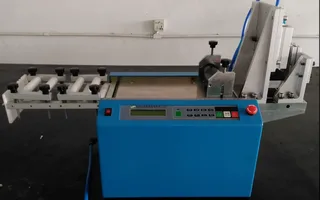
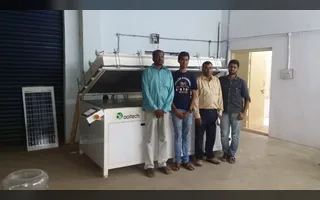
Quick answer: A solar panel manufacturing machine set is not one machine. A module line is a sequence of stations — cell cutting, tabbing and stringing, layup with glass and encapsulant, bussing, lamination, trimming, framing, junction box and curing, then EL and IV testing and sorting — linked by conveyors and a MES layer. Sizing starts from capacity, not from a machine list: a 5 MW semi-automatic line runs the same process sequence as a 1.2 GW automatic line, but station count, automation level, and the number of operators change at every step.
The expensive mistakes on a module line are rarely machines that fail. They are stations bought at the wrong automation level for the capacity you actually plan to run, and formats frozen too late to change the layout. This page walks the sizing decisions that follow from 5 MW to 1.2 GW.
Why 5 MW and 1.2 GW Need Different Machines
The process does not change with scale. The handling does. At 5 MW you can accept manual loading at the stringer, manual layup, and batch lamination, because the line runs at a fraction of the cycle time the equipment can deliver. At 1.2 GW the same stations become the constraint: stringer throughput, laminator cycle time, and inline test capacity decide whether the line reaches nameplate output or queues in front of one station.
This is why two lines with the same station list can differ by a factor of several in cost per MW. The difference sits in automation of material handling, in redundancy at the bottleneck station, and in whether testing is inline or offline.
What Changes at Each Capacity Tier
| Capacity | Handling | Where the constraint appears | Planning consequence |
|---|
| 5-20 MW | Semi-automatic, manual loading and unloading at several stations | Laminator cycle time, manual layup accuracy | Fewer stations, single shift, room to add automation later |
| 30-60 MW | Automatic at stringing and lamination, manual at framing and packing | Stringer changeover between cell formats, buffer between layup and lamination | Format flexibility matters more than peak speed |
| 120-300 MW | Inline handling with conveyors, MES traceability expected | Inline EL and IV capacity, bussing and layup accuracy | Testing must keep pace with the line, not lag it |
| 600 MW - 1.2 GW | Fully automatic, robot or gantry transfer, MES close loop | Any single station without redundancy becomes the line rate | Redundancy and layout decide real output, not datasheet speed |

Five Stations Where Sizing Goes Wrong
1. Cell cutting and scribing. The cutting route has to match the cell technology you will actually run. A line specified around half-cut M10 cells behaves differently once you move to multi-cut or back-contact cells, where the rear pattern has to be respected from the first cut. The SC-20P back-contact laser cutting platform is one example of cutting selected by cell family rather than by throughput alone.
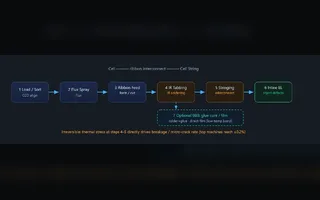
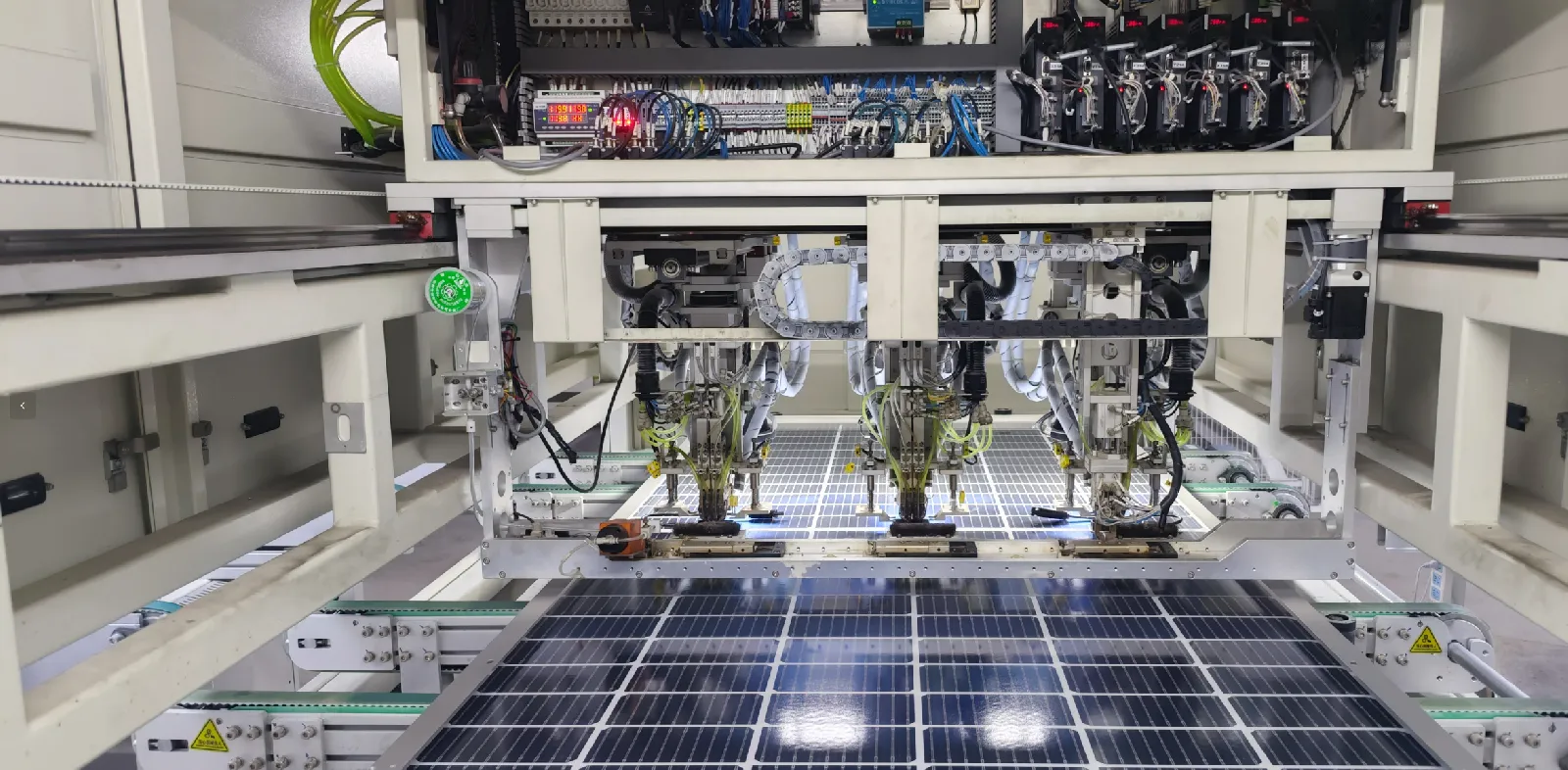
2. Tabber stringer. This is usually the first bottleneck. Busbar count drives the decision: an MBB machine cannot follow a line that has moved to SMBB or 0BB without a change of platform. Match the stringer to the busbar roadmap, not to today only.
3. Layup. Manual layup is viable only while capacity is low and formats are stable. Once formats change often, automatic layup with quick changeover costs less than the yield loss from handling.
4. Laminator. Cycle time and chamber count set the ceiling of the whole line. Buying a faster stringer in front of an under-sized laminator produces a queue, not output.
5. EL and IV testing. Offline testing is acceptable at low capacity. Above roughly 100 MW, inline testing has to match line rate, otherwise modules wait and the line rate is set by the test station.

Freeze These Inputs Before You Order
The layout is only as stable as the five inputs below. Changing any of them after the order usually means new fixtures, new programs, or a new machine.
- Cell format and size: M6, M10, M12 or G12, and whether multi-cut is planned.
- Busbar roadmap: MBB, SMBB or 0BB, and the changeover interval you can tolerate.
- Module format: glass size and thickness, frame profile, junction box type.
- Automation level: how many operators you intend to run, per shift.
- Traceability: whether a MES layer is required now or later. Retrofitting traceability is cheaper when the data points are planned into the stations from the start.
If you already know the capacity tier and the cell roadmap, the turnkey line solutions are organised by capacity from 5 MW to 1.2 GW, so the station list for your tier can be compared directly.
Where Line Cost Actually Moves
Equipment price is one line in the budget. In practice the cost per MW is decided by four things: the automation level of material handling, the degree of redundancy at the bottleneck stations, whether testing is inline or offline, and how much of the plant work (utilities, floor loading, compressed air, cleanroom class if used) is included in the supplier scope.
Two suppliers quoting the same station list can therefore differ substantially once scope and automation are aligned. Published cost figures for module lines are a starting point for comparison, not a quotation; the unit cost breakdown from 12 quotes shows how the same capacity is priced at different scopes, and current pricing has to come from a fresh quotation.

What to Settle Before the Line Ships
- Factory acceptance test: agree which modules are produced during the run and what data is recorded.
- Utilities and floor: power, compressed air, vacuum, and floor loading for the laminator, confirmed against the layout drawing.
- Spares and consumables: a defined first-year spares list, plus which consumables are sourced locally and which are not.
- Training and ramp-up: who stays on site through ramp-up, and what the acceptance criteria are for yield at the end of it.
- Import and installation scope: which side handles clearance, inland transport, rigging and commissioning, agreed in writing before shipment.
FAQ
Is a solar panel manufacturing machine one machine or a set?
A set. No single machine turns a cell into a finished module. The minimum viable set covers stringing, layup, lamination, framing, junction box and testing, plus the handling between them.
What is the smallest capacity that still makes sense as a factory?
Semi-automatic lines are offered from 5 MW upward. Below that, the labour and testing content per module stops being competitive against buying finished modules, so a line at that size is normally aimed at a specific product rather than at general supply.
Which station decides the output of the line?
Whichever station has the longest effective cycle time once handling and changeover are included. In practice that is the laminator on many lines, and the stringer when formats change often.
Can automation be added after the line is running?
Partly. Adding automatic handling at one station is normally feasible. Adding inline testing or full traceability later is more disruptive, because the layout and the data points have to be created rather than extended.
How long is a module line from order to production?
It depends on the tier and on plant readiness. Equipment build, shipping, installation and ramp-up are separate phases, and the last one is usually what slips when utilities or floor work are not finished before the machines arrive.
Do I need MES from day one?
Not necessarily, but the decision affects station specification. If traceability is likely within two or three years, it is cheaper to specify the data points now and enable the MES layer later.
Final Thoughts
Sizing a module line is a sequence of decisions, not a machine list: fix the capacity tier, fix the cell and busbar roadmap, then choose the automation level that the tier can pay back. Lines that skip the second step end up queueing in front of the stringer or the laminator within a year. If you are comparing offers, send the same five frozen inputs to every supplier and ask each one to state the station list and the scope boundary, so the comparison is between lines and not between quotations.