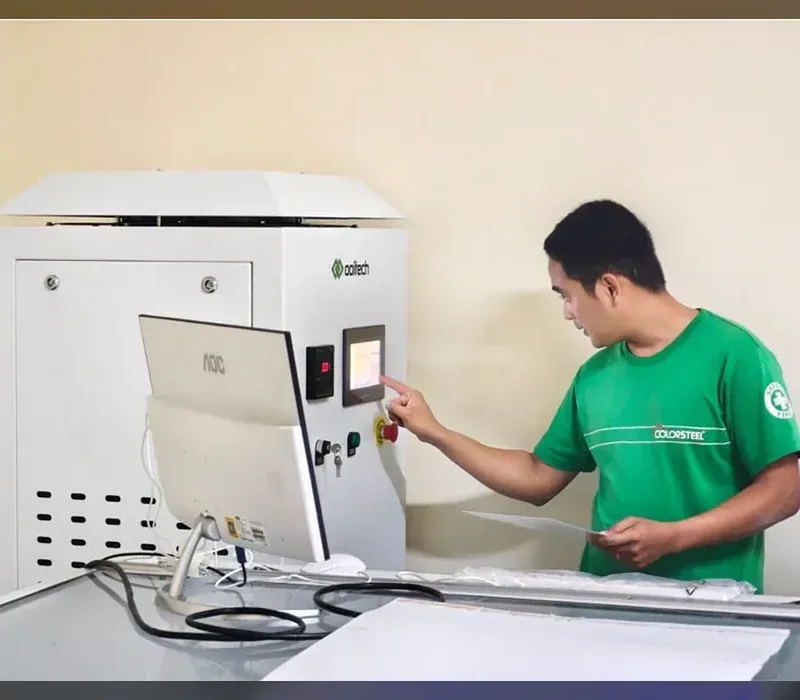
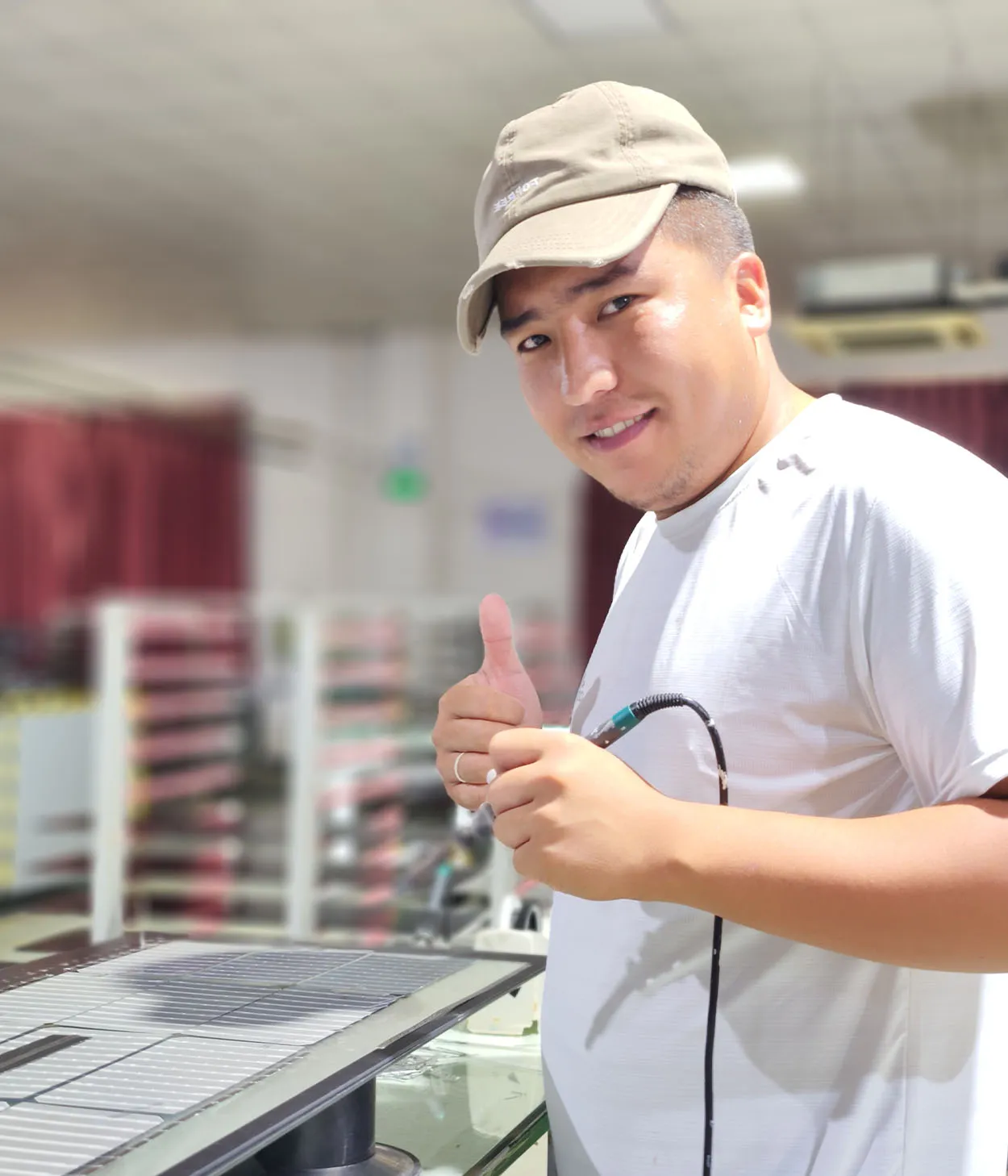
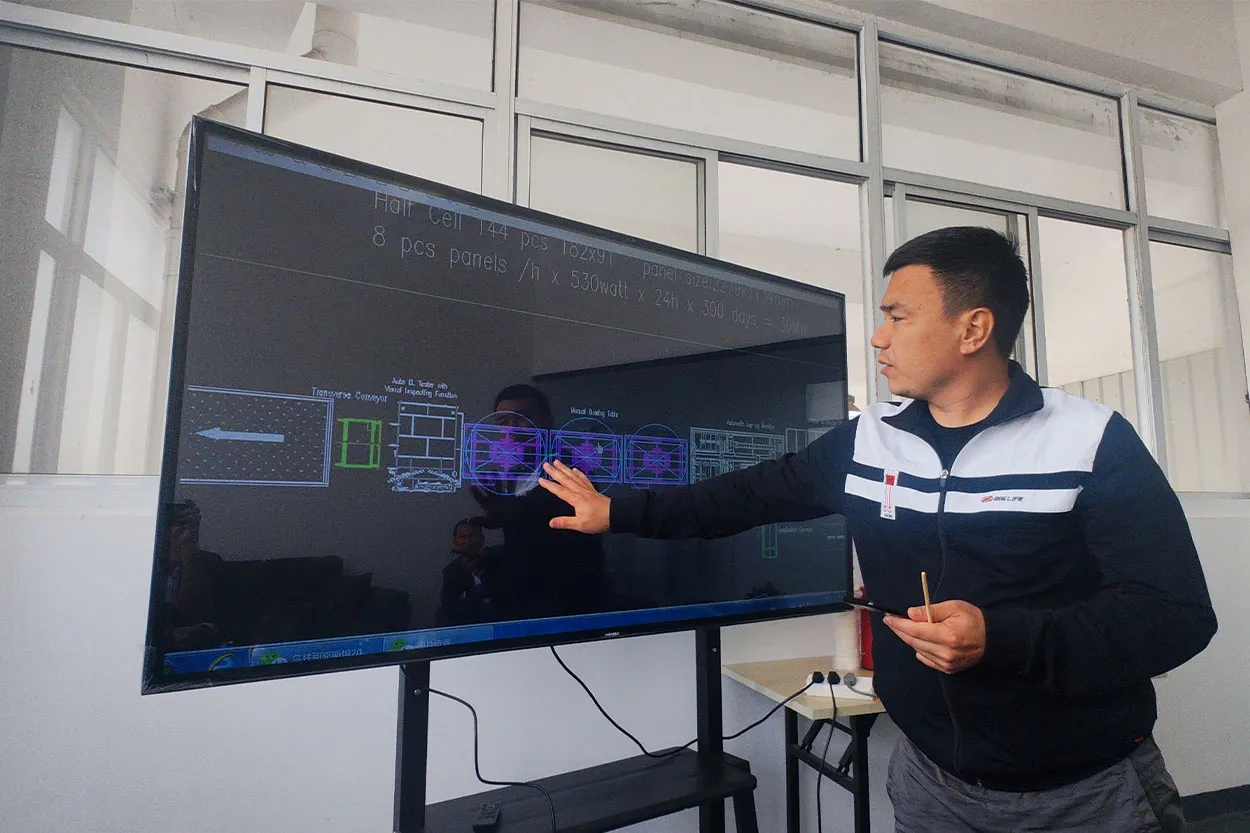
Quick answer: A solar panel manufacturing machine is bought station by station, not as one object — each unit owns one physical operation (cutting, soldering, placing, bonding, sealing, testing) and has its own failure mode when the specification is thinner than the job.
Solar Panel Manufacturing Machine: A Station-by-Station Guide
A module line looks continuous, but it is a chain of independent machines, each with its own motion system and way of ruining a panel. Buyers who treat a solar panel manufacturing machine as one quotation line discover the differences after installation, when a tabber drops strings or a laminator traps air at the edges.
Cell cutting and laser processing
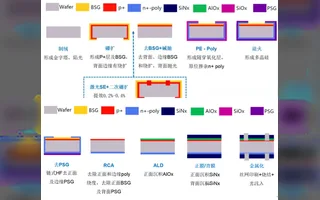
Half-cell, shingled and back-contact architectures begin by modifying the cell rather than assembling it. Laser scribing and cleaving divide a cell into halves or strips; edge-passivation and contact-opening tools prepare the surface for interconnection. Ooitech builds this group around the OLS-20E, SC-10C, SC-20A, SC-20D, SC-20P, GYM-HP8000 and ECPC-C350 families, each a distinct role rather than one universal box.
Underspecified cutting fails downstream: a cleave leaving micro-cracks passes visual inspection, then fails at lamination or in the EL image. Ask how scribe depth is controlled against cell thickness, how cell bow is handled, what debris extraction exists at the kerf, and whether a format change is a recipe or a rebuild.
Tabber-stringer
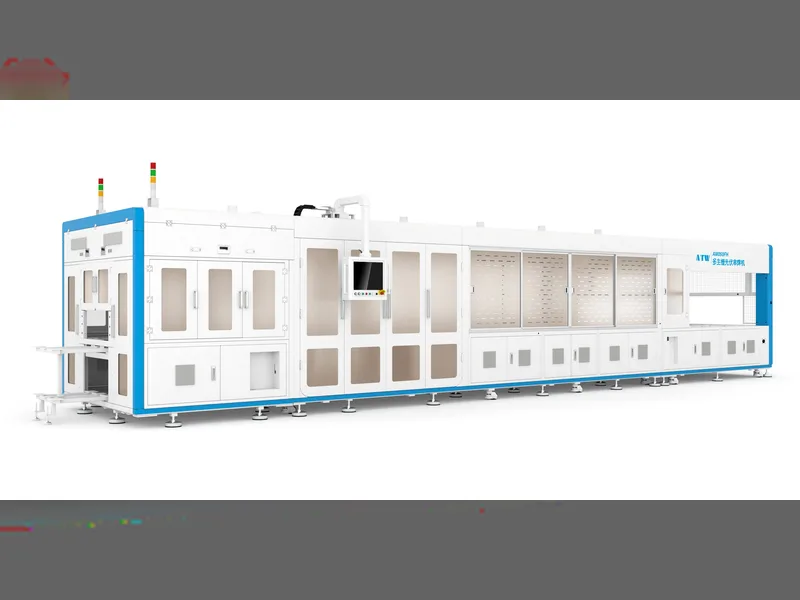
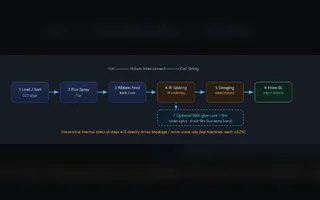
The tabber-stringer sets the electrical quality of the whole module. It solders ribbon onto busbars and joins cells into strings — the only station where thermal cycling, placement accuracy and ribbon tension act on the same part at once. The range follows cell technology: AM050FH for MBB half-cell, SS-1500B and SS-2500B for mainstream stringing, OSLB-1300 for BC cells, SL-1000 for IBC and back-contact, SL-30C for shingled layouts.
Failure is rarely dramatic — it is joints that conduct but resist, string lengths that scatter enough to jam the layup robot, or cells cracking because the profile was tuned for another paste. Ask about heating and cooling profile control, placement verification, ribbon tension regulation, in-process joint detection, and how recipe changes are validated. The tabber and stringer selection guide goes deeper.
Layup
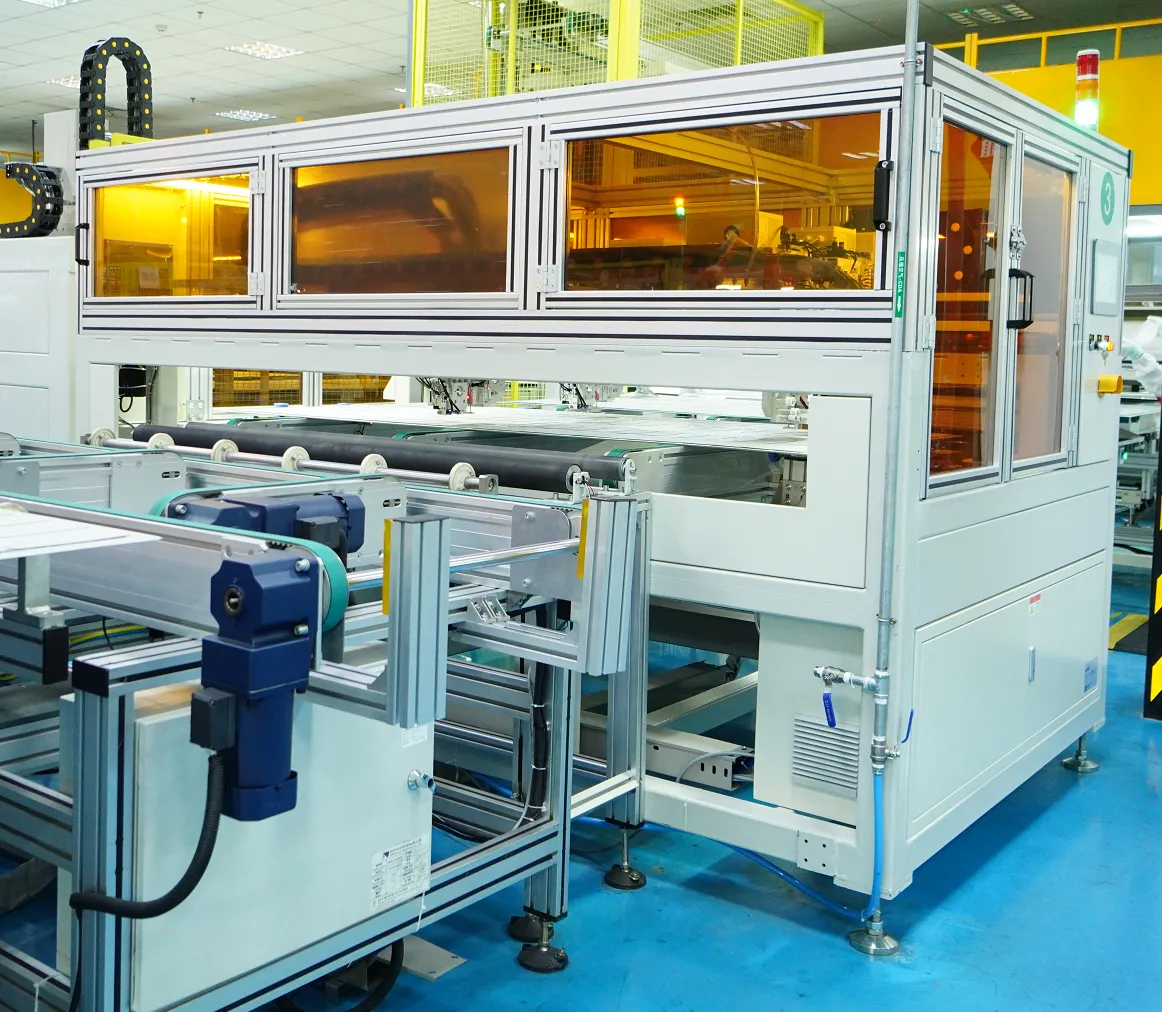
Layup turns the bill of materials into a stack: glass, encapsulant, string matrix, encapsulant, backsheet. Manual layup holds at small scale; beyond that robots take over, because hand placement cannot stay repeatable across a shift. Ooitech offers WS-CL80D for high-speed MBB half-cell laying, HS-PBR for robot string layup, SAW-100A for layup and bussing combined, and ALU-HBL for layout with bussing integrated.
Underspecified layup produces misalignment that lamination locks in permanently. Ask how the glass edge is referenced, how string presence is confirmed, what happens on a pick failure, and whether vision checks before or after placement. See the WS-CL80D layup machine.
Bussing
Bussing solders string ends into the busbar geometry reaching the junction box — little solder, much work, since every ampere passes through. DH200-Y and HDX200-P cover the automatic bussing role.
Weak bussing stays invisible until power measurement, then appears as a module merely a little low and gets blamed on cells rather than on this solar panel manufacturing machine. Ask how busbar position is set against the string ends, how soldering energy is controlled, how continuity is verified, and whether routing for your module design fits. See the DH200-Y bussing machine.
Lamination
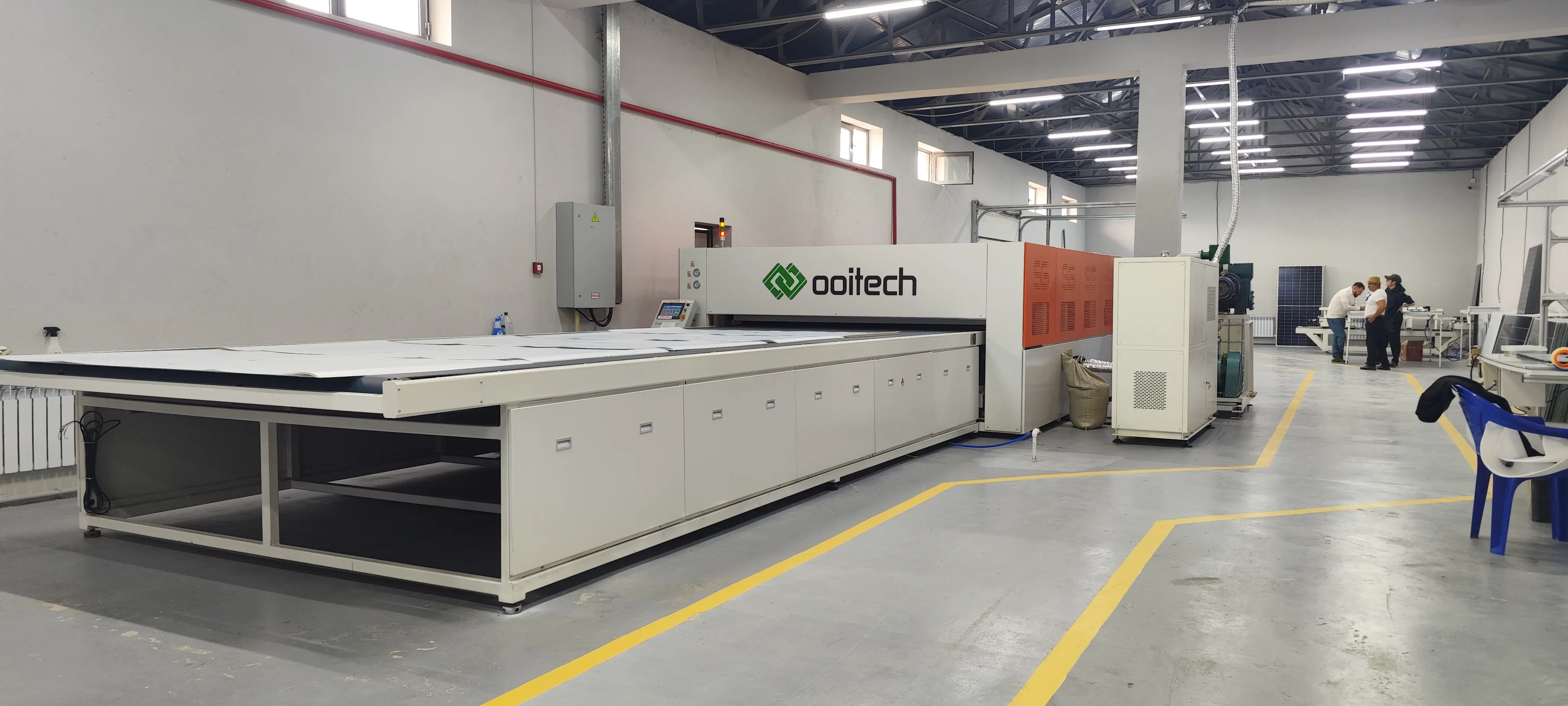
The laminator is the solar panel manufacturing machine most often underestimated, because on paper it is a press with heat. In practice it is a vacuum, temperature and pressure profiling machine, and the profile is the product. OTCY-2754DD is a single-layer double-chamber design aimed at BIPV work; OCY-H600D is a semi-automatic laminator for smaller operations.
Underspecified lamination gives bubbles, squeeze-out, cell shift, or backsheet that never fully cross-links — all passing a casual look and failing a damp-heat or EL check later. Ask how many heating zones and pressure stages the recipe allows, how vacuum is drawn and held, and how the actual profile is logged against setpoint. More in the laminator selection guide.
Framing
Framing presses the frame onto the laminated panel and, on most machines, dispenses structural adhesive in the same pass. Bead quantity and placement decide both mechanical retention and moisture sealing. OTZK-A is the automatic framing machine with automatic glue dispensing.
An underspecified station either starves the joint, leaving frames that loosen later, or floods it, putting adhesive on the glass. Ask how bead geometry is controlled, how corner interference is handled, how a missed bead is detected, and which frame profiles the tooling accepts. Details on the OTZK-A framing machine.
Junction box welding and glue filling
Two operations live here. KS-01C performs junction box welding, the connection from busbar to box terminal; SPZ-AB10S/JH performs glue filling, potting the box against moisture. A line needs both, and their failures differ: a cold weld is an electrical fault, an incomplete pot a corrosion fault appearing months later.
Ask how the welder verifies the joint rather than completing a motion, how potting volume is metered, how boxes from different suppliers are accommodated, and what cure handling sits between steps. See the KS-01C welding machine.
Cleaning
Cleaning sits between framing and test, removing flux residue, adhesive smears and handling marks before the EL camera photographs the panel. It is the least discussed solar panel manufacturing machine on the line and the one most often reduced to a manual wipe — tolerable at small scale, a yield problem as volume grows, because inconsistent wiping becomes false defects. Ask whether cleaning is inline, how brushes avoid marking the glass, and what consumables cost per panel.
EL and IV testing
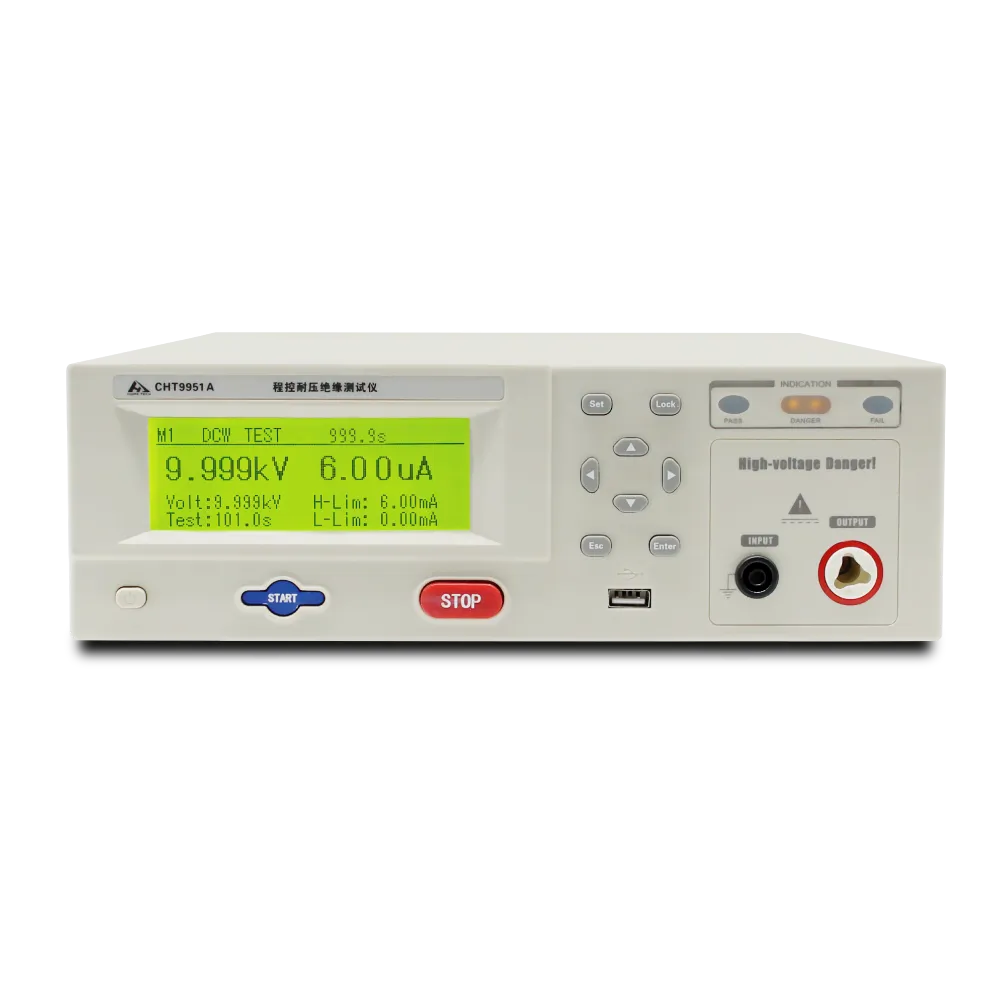
Testing is the only station that tells you whether the previous nine did their job, and it is the most consequential purchase on the line. The families split by measurement: OEL-S2400 for electroluminescence imaging; OPT-M960B, OPT-M951B and OPT-M950B for combined EL and VI; OTMT for AAA-class sun simulation and IV curves; ST-TLD3A for the sun-simulator role; CHT9951A/B for hipot; CHT9980A/9981A for safety; OPT-S110H for string-level EL before lamination.
An underspecified tester does not fail loudly. It passes panels it should have caught, or rejects good ones, and the operator stops trusting it. Ask how the camera resolves the defect classes you sell against, how the IV reference is calibrated, how results trace to a panel serial, and what the software does with a borderline result. See the OEL-S2400 EL tester.
Material-side machines
Not every solar panel manufacturing machine touches a cell. Ribbon cutting and shaping, EVA and backsheet cutting, and glass handling set the input quality downstream: ribbon cut inconsistently jams the stringer, ragged encapsulant leaves a seal path lamination cannot close, backsheet cut against grain wrinkles under vacuum. These units are cheap next to process stations, which is why they get skipped. Ask for cut-length repeatability.
Station summary
| Station | Model families | Spec sheet must pin down |
|---|
| Cell cutting | OLS-20E, SC-10C/20A/20D/20P, GYM-HP8000, ECPC-C350 | Scribe depth, debris extraction, changeover |
| Tabber-stringer | AM050FH, SS-1500B, SS-2500B, OSLB-1300, SL-1000, SL-30C | Thermal profile, placement check, joint detection |
| Layup | WS-CL80D, HS-PBR, SAW-100A, ALU-HBL | Glass referencing, pick failures, vision timing |
| Bussing | DH200-Y, HDX200-P | Busbar positioning, solder energy, continuity |
| Lamination | OTCY-2754DD, OCY-H600D | Zones, vacuum staging, profile logging |
| Framing | OTZK-A | Bead geometry, bead detection, frame range |
| Junction box | KS-01C, SPZ-AB10S/JH | Weld verification, potting metering, box fit |
| Test | OEL-S2400, OPT-M960B/M951B/M950B, OTMT, ST-TLD3A, CHT9951A/B, CHT9980A/9981A, OPT-S110H | Defect resolution, IV calibration, traceability |
How the stations constrain each other
Nothing here is independent. A precise but slow stringer starves the layup robot; a long laminator cycle forces framing to buffer panels; a slow tester becomes the queue everything waits behind. When you specify a solar panel manufacturing machine individually, ask what it assumes about the stations either side — cycle compatibility, panel size envelope, handling method. That is where integration risk lives. Grouping decisions belong to the stations and line layout guide.
Ooitech supplies these stations as turnkey lines, semi-automatic and fully automatic, with operator training and after-sales support inside the delivery scope.
FAQ
Which station matters most on a module line?
The tabber-stringer and the laminator, in that order: they set electrical and mechanical yield. Everything downstream only detects their mistakes.
Can I buy a solar panel manufacturing machine one unit at a time?
Yes, and many new factories do, adding stations as volume justifies them. Each unit must match the panel size envelope and handling of what you own.
How do I spot an underspecified station before buying?
Ask what it measures in process rather than what it performs. A station that only completes a motion, with no in-process check, passes defects silently.
Are these machines only for crystalline silicon modules?
The sequence described is the crystalline silicon one. Back-contact, shingled and BIPV products keep the station order but change the tooling, which is why model families differ by cell technology.
To discuss a station or request a full-line quotation, send your module design and target output and we will map it against the station list.