Quick answer: Solar panel manufacturing equipment splits into core process stations — stringing, layup, bussing, lamination, framing, junction box and testing — and auxiliary plant such as air, chilled water, handling and inspection. Buy the stations that decide product quality first, finish the utilities before the crates arrive, and phase handling and packing as volume grows.
Solar Panel Manufacturing Equipment: What to Buy First
Most first-time buyers assume the hard part is choosing machines. The harder part is deciding scope: which stations you must own from day one, what can be added as volume grows, and what the building must already have before anything is switched on.
Core process stations versus auxiliary plant equipment
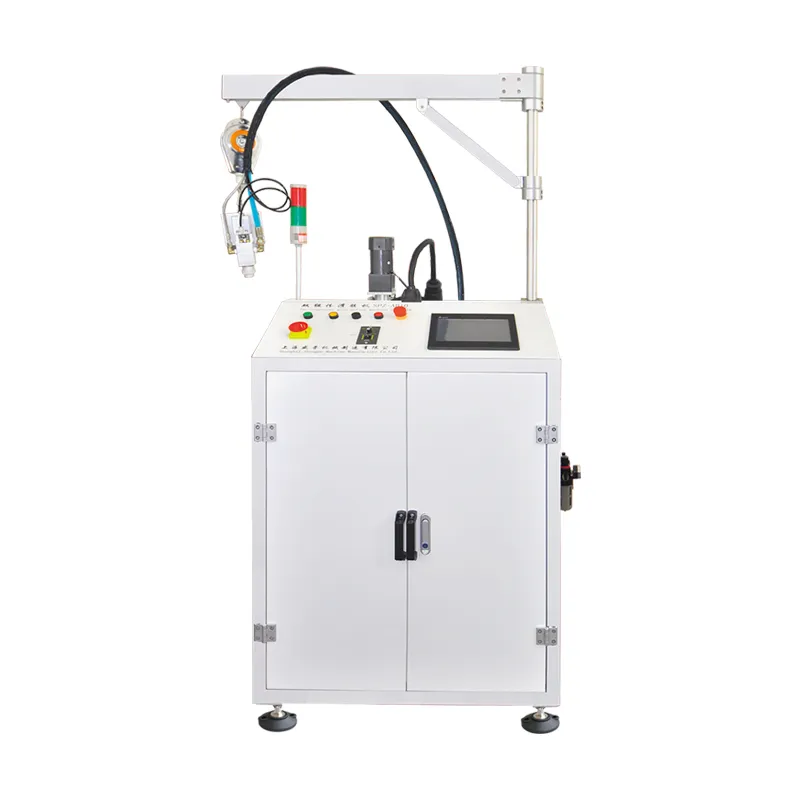
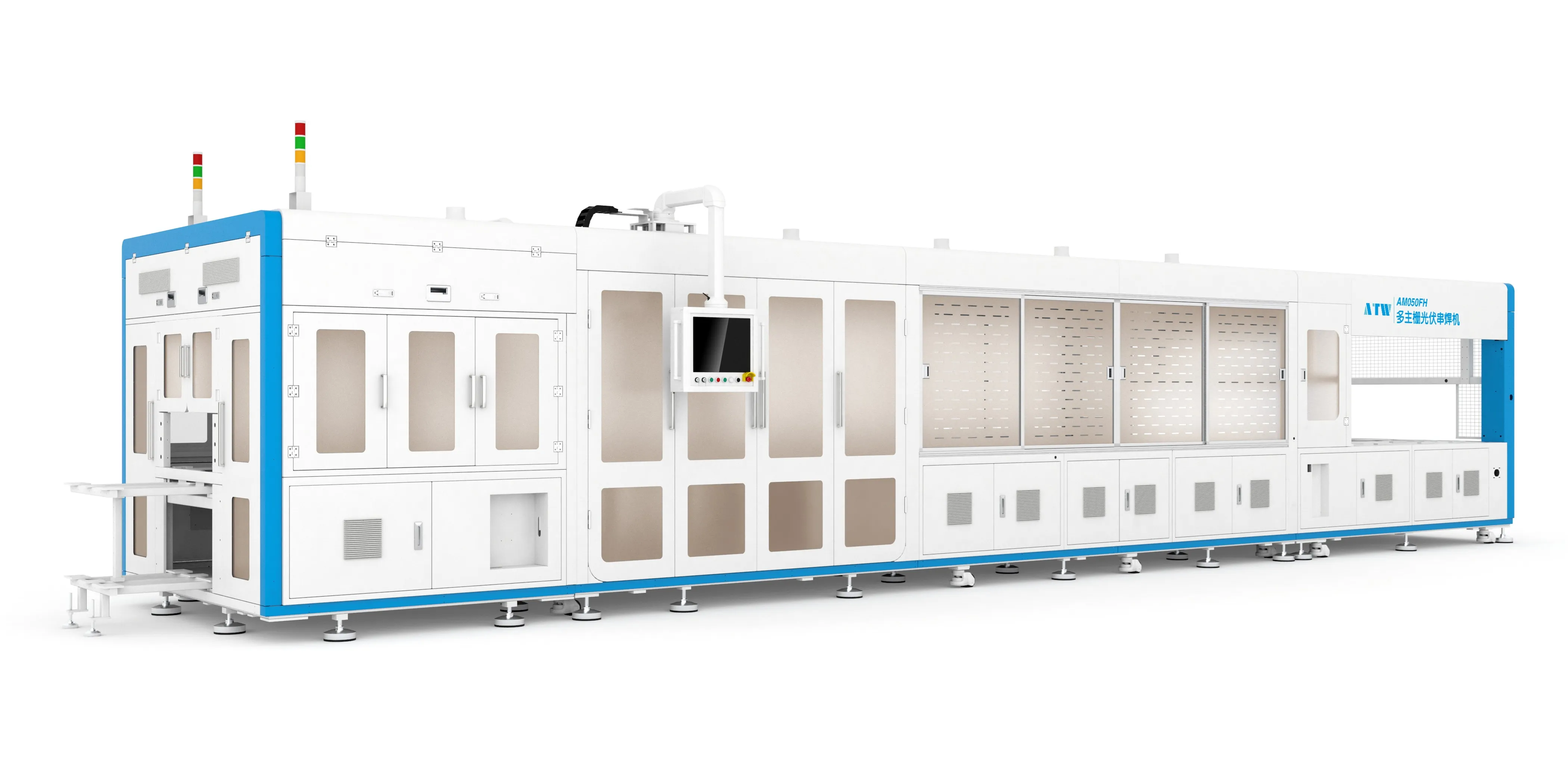
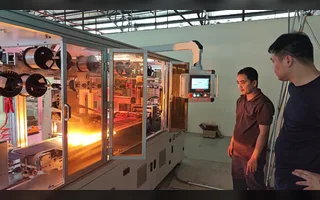
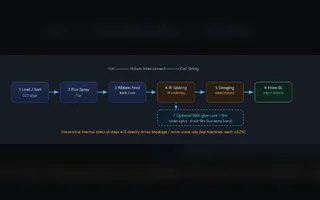
Both are needed, but they behave differently as purchases. Core process stations touch the product and set its quality — stringing, layup, bussing, lamination, framing, junction box, and the electrical and EL tests that decide whether a module ships. Auxiliary plant keeps those stations running: compressed air, chilled water, power distribution, exhaust, handling, storage and room conditioning. Buying solar panel manufacturing equipment without that distinction is how projects end up with a delivered laminator and nowhere to plug it in.
| Category | Typical examples | When to buy |
|---|
| Core process | Stringing, layup, laminator, framing, junction box, EL and IV test | First — defines yield and quality |
| Utility plant | Compressor and dryer, chiller, exhaust, distribution | First — before installation |
| Handling | Inter-station transfer, buffers, automatic loading | Later — costs labour, not yield |
| Packing | Sorting, pack building, palletising | Later — scales with orders |
| Extra inspection | String EL, hipot, safety benches | Mostly first; some can follow |
The rule behind the table: anything buried in the floor or in the electrical room must be decided before the first machine arrives, because retrofitting civil and utility works costs more than the equipment it serves.
What can be bought later without hurting the line
Deferring a purchase is safe when its absence costs labour rather than yield. Manual transfer between stations, manual packing, extra buffer capacity and a second inspection bench all fall into that category: they slow the plant and raise headcount, but a well-run semi-automatic line still produces sellable modules. What cannot be deferred is anything the product passes through — lamination, stringing, and the tests that catch a defective module before it leaves.
Two conditions make later purchases cheap: the layout must reserve the space with connection points already drawn, and the control system must accept the new unit without a rewrite. A turnkey supplier should show where the next stage bolts on; if the answer is a new drawing, the phasing plan is fiction.
Phasing a purchase on a limited budget
When the budget does not cover full scope, spend it in the order the product is made and protect the steps where defects become permanent: stringing and lamination. What comes before can be slowed, what comes after can be manual for a while. Inspection is the exception — cutting EL and IV testing removes your ability to see what the line is doing.
- Buy the process before the transport, and the transport before the packaging.
- Keep one vendor accountable for the interfaces between stations, even when some units come from elsewhere.
- Insist on drawings, utility schedules and manuals as deliverables, not favours.
- Leave spare capacity in the electrical board and the air receiver from day one.
Phasing also works better with a single turnkey partner: the second phase inherits the first phase's documentation, and nobody argues about whose interface failed.
Infrastructure prerequisites before the machines arrive
The pre-installation checklist is the most valuable document when buying solar panel manufacturing equipment, because it is the only one that says what must be finished while the machines are still in build: power distribution and earthing, compressed air with dryer and receiver, chilled water, floor loading, ceiling height for the laminator and framing stations, drainage, and conditioning for lamination and adhesive curing.
It should also cover the unglamorous items: a route wide enough for the largest crate, storage for encapsulant and ribbon at the specified conditions, and somewhere to put rejected modules that is not the production aisle. Utility requirements belong to the machine, not to the contractor's habits — get temperature and flow in writing, or the chiller will be correct and the line will still run hot.
Spare parts, tooling and consumables
Solar panel manufacturing equipment is only as available as its weakest wear part. The recommended spares should be agreed at order stage and shipped with the line: heaters and seals for the laminator, sensors and belts for transfer, grippers for handling, soldering consumables. Ask which items are consumables, which are wear parts, and which have a lead time long enough to stop production.
Tooling matters as soon as more than one format is planned: changeover needs fixtures, templates and a written procedure, and that cost belongs in the original quotation, not a surprise order later. Consumables deserve the same discipline — ribbon, flux, encapsulant and box adhesive should be the materials the machine was validated with, so a defect traces to a setting, not a supplier.
Factory acceptance and site acceptance testing
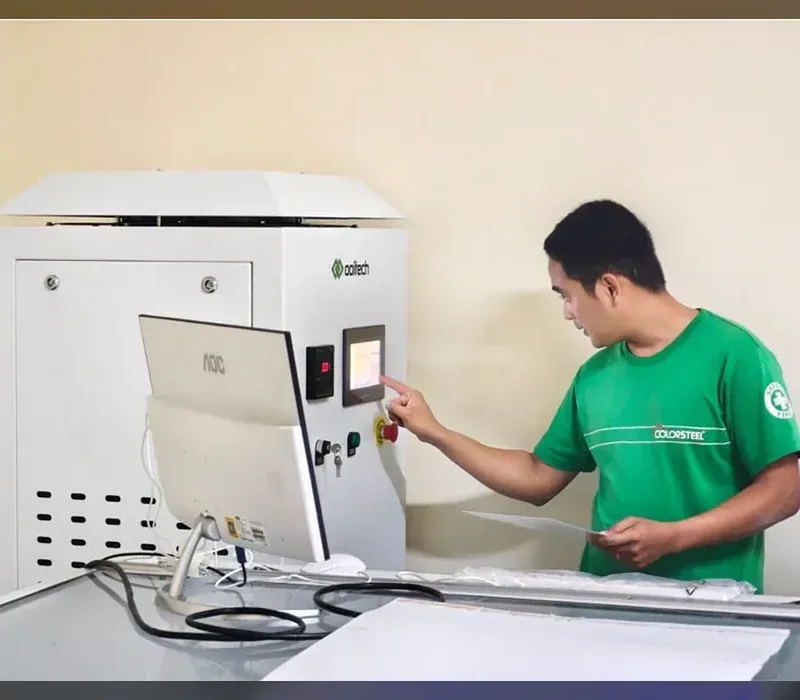
Factory acceptance testing happens at the vendor's works, ideally on material representative of yours. Witness joint quality after stringing, alignment after layup, an EL image after lamination from the OEL-S2400 tester, repeatability of IV measurement on a reference module, hipot and safety tests, and a changeover performed by the people who will do it in production. A FAT that consists of watching good modules come out proves little.
Site acceptance testing repeats the critical checks after installation, when the machine runs on your utilities. It should include a run at the conditions you operate in, confirmation that training reached named staff, and handover of drawings, manuals and spare lists. Both protocols need a written pass criterion and a signature line, because "accepted" is a commercial event, not a feeling.
A vendor evaluation checklist
- Service route — who answers, by what channel, and what happens outside working hours.
- Commissioning — a named engineer, not "our team will attend".
- Training — operators and maintenance separately, with materials left behind.
- Documentation — drawings and manuals in a language your technicians read.
- Spare-part lead time for the parts that stop the line, and references you can actually call.
- Scope clarity — a section-by-section list of what is and is not included.
Score the answers before you compare prices. Two quotations for the same nominal scope are rarely the same scope, and a low number usually means an interface, a test or a utility has quietly moved to your side of the contract. The same logic sits behind any honest discussion of equipment price.
Red flags in a quotation
- Machines listed with no interfaces, no utility schedule and no acceptance criteria.
- Output claimed without asking for your module format and cell type.
- No training plan, or training described as "free" with no scope.
- Refusal to say which critical components are sourced from third parties.
- A layout that fills the building, with no maintenance access and no room for phase two.
- Pressure to sign before a factory visit or a reference call.
None of these are fatal alone. Together they describe a supplier selling boxes rather than a working plant — which is the risk that solar panel manufacturing equipment bought as a turnkey project is meant to remove.
FAQ
What equipment do I need to start small?
A workable start is the product-defining chain: stringing, layup, lamination, framing, junction box, and EL plus IV testing, with manual transfer between stations. That set produces sellable modules and expands later. What it cannot skip is testing.
Can solar panel manufacturing equipment come from several vendors?
It can, and many plants are mixed. The cost is interface risk: when a module jams between two suppliers' machines, the argument starts. If you mix, keep one party responsible for the handover points, or specify the interfaces yourself and put them in both contracts.
How much floor space does a module plant need?
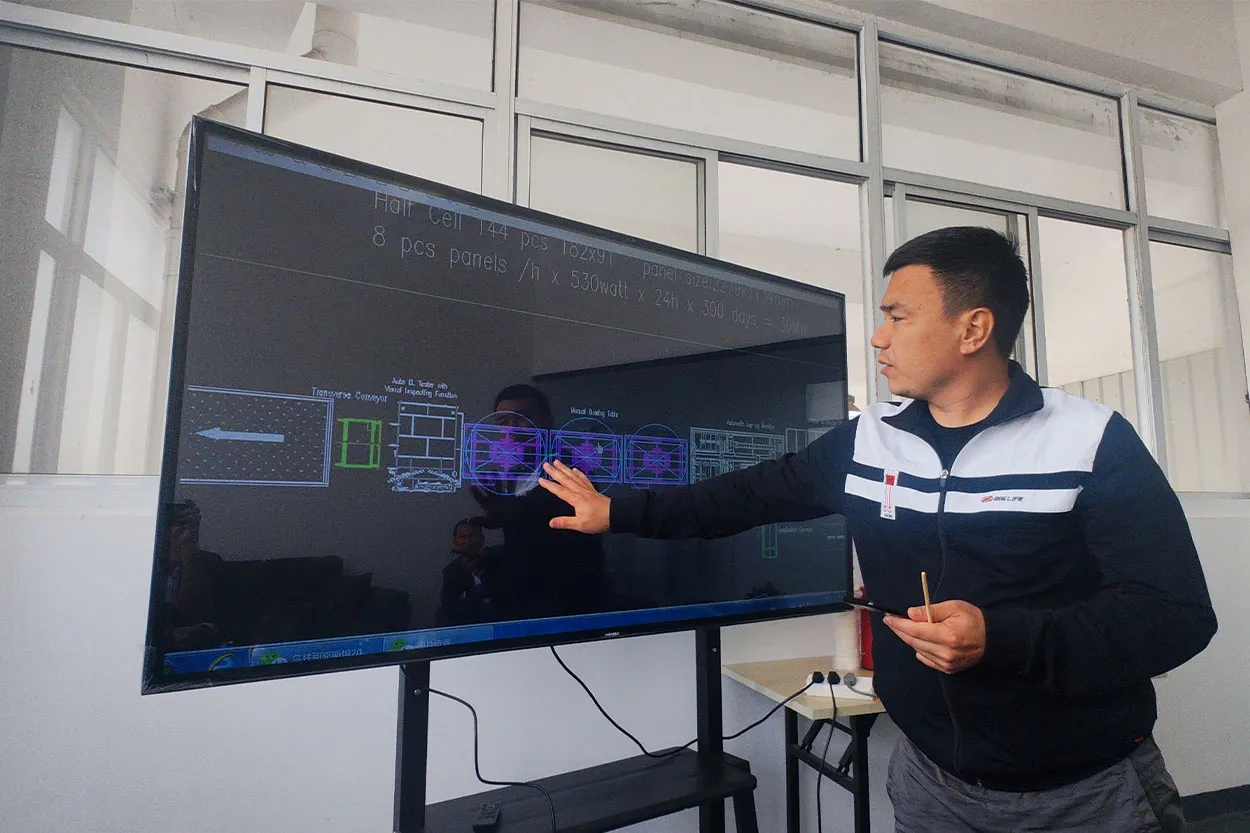
Space is decided by layout, not a single figure: the length of the process chain, the buffer before the laminator, cooling room after it, and aisle widths that let you service and remove machines. Ask for a layout with a maintenance aisle marked before you sign a lease.
What should the contract include beyond the machines?
Layout drawings, a utility schedule, acceptance criteria with sign-off lines, a training plan, a recommended spare-parts list with lead times, documentation in your working language, and a service response route. Those items are what separate solar panel manufacturing equipment from a shipment of metal.
Scope first, utilities second, price third keeps a project controllable. Send your module format, target output and site data through the quotation request form and ask for a scope that separates core stations from auxiliary plant; the machine overview and the line layout guide are the next reads.