Editorial responsibility for this article rests with Wuhan Ooi Photoelectric Technology Co., Ltd. Written and reviewed by the Ooitech editorial team. See our editorial policy for how we write, where AI tools are used, and how to request a correction.
2027 Module Efficiency Standard: Why Only 25% Pass Today
Table of Contents
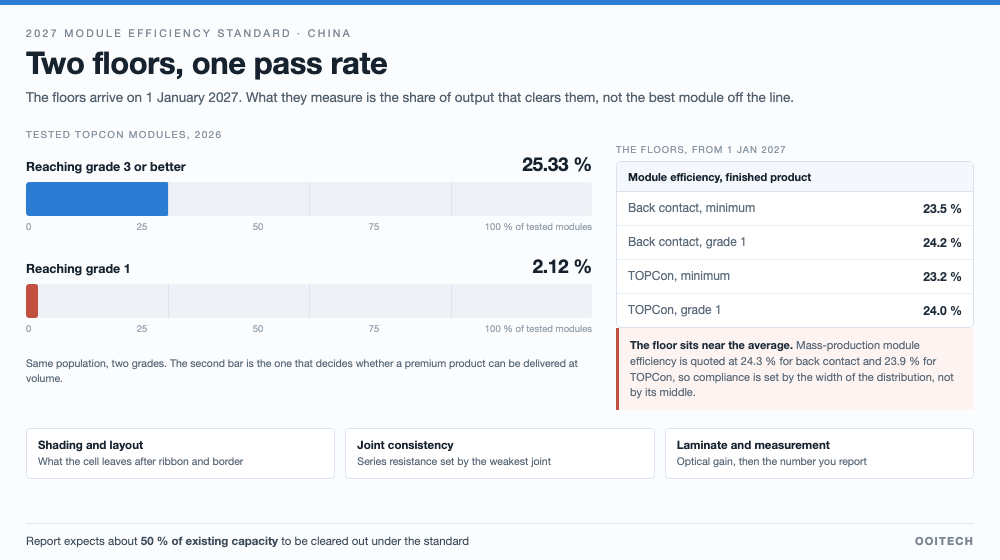
Quick answer: China’s module energy-efficiency standard takes effect on 1 January 2027, and its floors are set per technology: back-contact modules at 23.5 % minimum efficiency with grade one at 24.2 %, TOPCon at 23.2 % with grade one at 24.0 %. Compliance is not a record achieved by the best module off the line. It is the share of output that clears the floor. A 2026 market report puts that share at 25.33 % of tested TOPCon modules reaching grade three and 2.12 % reaching grade one, and it expects roughly half of current capacity to be cleared out. That gap is not closed in cell research. It sits in the loss stack between cell and module, in the consistency of every joint and every laminate, and in whether you can evidence a grade per module. What follows is a set of checks that cost process discipline rather than capital, in the order that saves the most money.
An efficiency standard reads like a target. It behaves like a pass rate, and the numbers published this month make that literal: a quarter of the modules tested reach the grade everyone assumes they already have.
What the standard actually measures
The rule is an energy-efficiency limit value, effective 1 January 2027, and it does not ask whether a technology is good. It asks which grade a finished module occupies. Back-contact modules have to reach 23.5 % minimum module efficiency, with grade one at 24.2 %. TOPCon modules have to reach 23.2 %, with grade one at 24.0 %. Both floors are close to the current mass-production averages, which is the entire point: a floor set below the average is a formality, and a floor set at the average is a sorting problem.
Three consequences follow, and all three land on the line rather than the cell.
- The measurement is on the finished module, after lamination, after framing, after the junction box. Everything that happens between the cell and the label is inside the number.
- The grade attaches to a product, not to a factory. Two lines with the same cells can report different compliance because of how they string, laminate and bin.
- A floor near the average means the tail decides. If your average is 23.9 % and the floor is 23.2 %, your compliance is set by the width of your distribution, not by your best module.
The number nobody quotes
The market report behind this article includes one figure that matters more than any efficiency record in it: among TOPCon modules tested in 2026, the share reaching grade three or better was 25.33 %, and the share reaching grade one was 2.12 %. The same report expects the standard to clear out roughly 50 % of existing capacity.
The same population, read two ways. In 2026 testing, 25.33 % of TOPCon modules reached grade 3 or better and 2.12 % reached grade 1. Source: the market report cited below.
Treat those percentages as a directional signal from a single source rather than an industry census. Even discounted heavily, they say something a factory can act on: the constraint is not the champion module, and it is not the average either. It is how many modules sit within a tenth of a point of the line you drew on the chart, and whether your process holds them there on a Tuesday afternoon in the fourth month of a campaign.
Where the points go between cell and module
A 27 % cell becomes a 24.3 % module. That two-to-three point gap is not waste in the abstract; it is a list of physical decisions, and each one has an owner.
To narrow the gap between a 27 % cell and a 24.3 % module, we program our lamination sequence to complete vacuum de-airing before applying thermal pressure, minimizing optical loss and cell micro-cracks across the finished laminate.
- Shading on the active face. Every ribbon covers silicon. Removing the busbar recovers part of it, which is why the 0BB shift is an efficiency story as much as a cost story, and why ribbon geometry and placement are process variables rather than consumables.
- Area that is not cell. Gaps between cells, the border, the string ends. Cell size and layout decide this before any equipment is ordered.
- Optical gain and loss in the laminate. The encapsulant changes the light reaching the cell and the light leaving the module. It also decides whether the laminate is clear after 1,000 hours, which is where voids along the joint row turn into a power loss instead of a cosmetic one.
- Resistance in the interconnection. Ribbon cross-section, solder joint quality and the number of joints all sit in series with the cell. Metallization sets the ceiling at the cell, and the stringing and bussing steps decide how much of that ceiling survives.
- Binning and mismatch. A module is a series string. Its current is set by the weakest cell, so the spread inside a bin costs more than the average of the bin.
None of these is a research problem. All of them are consistency problems, which is why a standard set at the average behaves like an audit of process control rather than an audit of technology.
The comparison the report publishes, translated
The report includes a five-row comparison of the two routes with 2026 data. It is worth reproducing because it separates what the standard measures from what it does not.
| Dimension (2026 data) | Back contact | TOPCon | Where the difference comes from |
|---|---|---|---|
| Mass-production module efficiency | 24.3 % | 23.9 % | About 0.4 points, and a higher power ceiling for back contact |
| Non-silicon cost | about 0.231 CNY/W industry average; 0.606 CNY/W for an ABC module | about 0.149 CNY/W industry average; 0.10 CNY/W at leading fabs | Leaders have reached parity; the industry averages have not |
| Bifaciality | 55–65 % | above 85 % | A product decision: ground mount versus distributed and BIPV |
| Market premium | 0.05–0.10 CNY/W above TOPCon | reference price | The premium covers the cost gap and pays for the differentiation |
| Mass-production yield | 98.5 % | 98.5 % | Process maturity is now level |
Read the rows by who owns them. Bifaciality is fixed by the cell architecture and closes the ground-mount market to back contact almost entirely, which is a portfolio decision. Non-silicon cost is an average against a leader figure, and the gap between those two numbers is where most factories actually live. Yield and module efficiency are the two rows a module line can still move after the cells arrive, and they are the two the standard counts.
Bifaciality decides the product, not the process
A back-contact module at 55 to 65 % bifaciality is not competing for a utility-scale field where the rear side contributes a meaningful share of yield; a TOPCon module above 85 % is. That is why the report can hold both statements at once, that back contact has a higher efficiency ceiling and that TOPCon keeps 87.6 % of the market. The two products are sold into different places.
For a line planner this is the first question, and it comes before any equipment comparison: which segment am I building for, and does the product I can make there clear the floor with margin? Distributed and BIPV work rewards the higher efficiency and the appearance; ground mount rewards the rear-side gain and the price. A line that tries to serve both from one configuration usually ends up with a bill of materials that serves neither well.
For BIPV structures designed around the 23.5 % efficiency threshold, we split the thermal cycle across two chambers, completing evacuation in the first stage to prevent bubbles before applying controlled pressure in the second.
The tender terms are the real specification
Standards set the floor. Buyers set the ask, and in 2026 the ask moved. Back-contact sections in central and state-owned enterprise tenders exceeded 10 GW, about 17 % of the total and 14 points higher than 2025, and back contact took 22 % of the awards where the technology was specified. Four buyers ran standalone back-contact sections totalling 6.5 GW with an explicit requirement of at least 635 Wp and 23.5 % module efficiency, and only eight companies were qualified to bid.
That combination is the useful part. A power floor of 635 Wp and an efficiency floor of 23.5 % describe a module size and a cell efficiency that have to arrive together, and the qualification list is short because the assembly is hard, not because the cells are scarce. For the equipment side the implication is direct: whatever you buy has to hold its specification on a module that is larger and thinner than the one the machine was specified against, which is the same conclusion the laminator specification has to survive.
Cost parity is a leader statistic
The headline is that back contact has reached cost parity with TOPCon, and the report supports it with a leader figure: an ABC module at about 0.606 CNY/W, roughly 0.016 CNY/W below TOPCon. The same table gives the industry averages as 0.231 against 0.149 CNY/W of non-silicon cost. Both numbers are true, and they describe different populations. Parity exists at the front of the distribution; the industry average still carries a gap of about eight fen per watt.
Three cost items sit outside the parity claim and inside a capital decision. Equipment for back contact is quoted at 4.5 to 5 billion CNY per GW, well above TOPCon, with depreciation concentrated in the years when the standard arrives. Patent licensing is a real line item: one manufacturer paid 1.65 billion CNY for a licence, about two fen per watt. And the retrofit market itself is large, with about 13 billion CNY of disclosed upgrades across more than 100 GW in 2026, most of it aimed at reaching the top grade on existing TOPCon lines rather than converting them.
Five checks before you quote a line
If compliance is a pass rate, then the questions to ask a supplier are about distribution and evidence, not about peak numbers. These are the five we would put in a specification review, in the order that saves the most money.
| Check | Why the standard makes it matter | What to ask for |
|---|---|---|
| Front-side handling | A back-contact cell has its active pattern on the rear; contact on the front is a yield loss that shows up as a grade loss later | Rear-side-only transport, and the belt or pad material in writing |
| Joint consistency | Interconnection resistance sits in series with the cell, and one weak joint sets the module current | Pull-strength distribution after ageing, not a median at day zero |
| Laminate quality | Voids and delamination cost optical gain and eventually power, after the grade has been quoted | Void count at the joint row after the recipe you will actually run |
| Per-module measurement | A grade has to be evidenced per serial number, and the standard is audited on records | Whether the IV and EL data is stored against the module or only displayed |
| Recipe portability | The second product from a different cell or film lot is a different experiment | A documented recipe, and a way to record which one ran |
The measurement question deserves a note of its own, because it is where the standard is won quietly. An IV curve taken at a different temperature, a different sweep or a different reference device can move a module across a grade boundary without anything changing in the laminate. If two factories report different compliance rates on the same cells, the first thing to compare is the measurement, not the yield.
Where these numbers come from
The floors, the grade structure, the pass rates, the tender terms, the cost figures, the capacity numbers and the market shares all come from a Chinese-language market report on the back-contact and TOPCon competitive landscape published in October 2026, whose own market data is attributed to Hundsun Juyuan. It is an investor-facing document, and we are reading it as manufacturers: none of the stock allocations or price targets in it are relevant here, and nothing in this article is investment advice.
Two figures in the source are tables. The comparison table above is a translation of the first, reproduced with its numbers unchanged. The second is a portfolio allocation by investment horizon, which is why it is not reproduced: it answers a question this audience does not ask. The one forward-looking fact in its framing is worth keeping, though. The report projects back contact at 19 % of the market in 2028 and the combined TBC and HBC architectures at 28 % by 2036, which is a statement about what a line should be able to become, not what it should buy today.
We have not audited the pass-rate figures, and a single report is a single source. What we can say from the equipment side is narrower: the checks above are the ones that decide whether a compliant module comes off the line on the two-hundredth day as well as the second.
Frequently asked questions
What efficiency does a module need for the 2027 standard?
The report states 23.5 % minimum for back-contact modules and 23.2 % for TOPCon, with grade one at 24.2 % and 24.0 % respectively. Because the floors sit near current mass-production averages, the practical question is what fraction of your output clears them.
Is this a cell problem or a module problem?
Both, in sequence. The cell sets the ceiling and the report puts that at 27 % with a module at 24.3 %. Everything between those two numbers is module assembly: shading, edge area, optical behaviour of the laminate, interconnection resistance, mismatch across the bin.
Why do the pass rates look so much worse than published module efficiencies?
Because they measure different things. A published efficiency figure describes a product type or a champion sample; a pass rate describes a population of tested modules, including the tail. A 23.9 % average with a wide spread is consistent with a quarter of samples clearing a 23.2 % floor.
Does a higher cell efficiency guarantee compliance?
No. It raises the average, and the standard counts the tail. A line with excellent cells and inconsistent stringing can report a worse compliance rate than a line with average cells and tight process control.
Can we reach grade one with TOPCon?
The report sets the grade-one floor at 24.0 % for TOPCon, above its stated mass-production average of 23.9 %. That is a statement about how much of the current fleet reaches it, not about whether it is physically possible, and it is why the report describes upgrades aimed at the top grade rather than conversions.
Does bifaciality affect compliance?
It affects the product decision more than the measurement. A 55 to 65 % bifacial module and one above 85 % are sold into different segments, and the standard applies to whichever you build. What changes is the market you can address, not the floor.
How does the tender spec relate to the standard?
The tenders in the report ask for at least 635 Wp and 23.5 % module efficiency, which is the standard floor plus a power requirement. Passing the standard gets a module onto the market; meeting the tender term gets it into an order.
What should we fix first if our compliance rate is low?
Measure first, then fix. Compare the measurement setup, then the pass rate by bin and by shift, then the joint row. In our experience of retrofit projects the largest single lever is usually consistency at the interconnection, because it is where a small process drift turns into a series resistance change that shows up as a grade boundary.
Final thoughts
A standard set near the average is not a technology verdict, whatever the market commentary around it says. It is a sorting machine, and sorting machines reward the factories whose output is narrow rather than the ones whose best sample is high. The five checks above are cheap compared with a grade failure found in an audit, and only the first two require new money: the rest are records you either keep or do not.
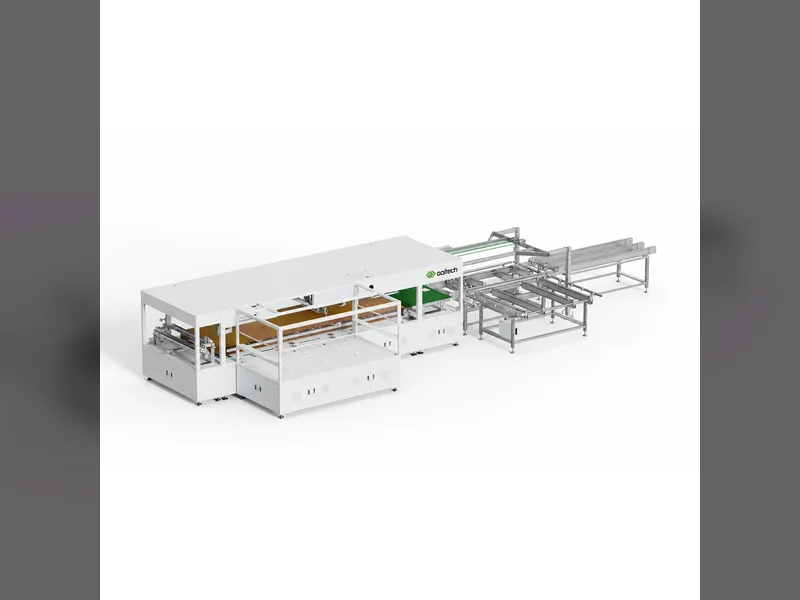
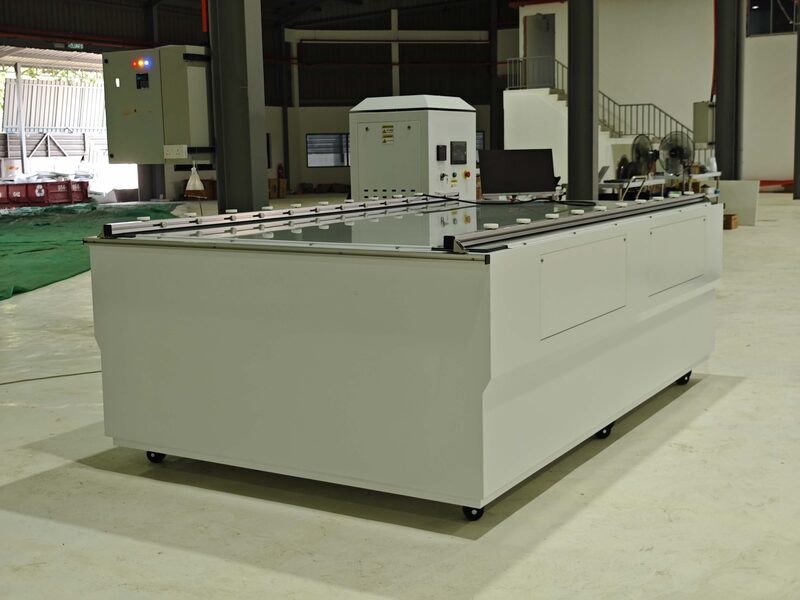
We supply the OTcy 2754DD single-layer double-chamber BIPV laminator to handle degassing and curing for demanding architectural modules. If you are qualifying new constructions to meet efficiency limits, send us your glass drawings, module stack specifications, or material samples for process evaluation and thermal profile testing.