Ooitech, a Professional solar energy solutions provider, has more than 15 years of experience in renewable energy and industrial laser application.
As a global leading provider for turn-key PV module manufacturing plant and smart energy solution, Ooitech offers the One-Stop service for M2-M12 (156-210) solar panel manufacturing plant.
We have export our machines to Poland, Korea, Mexico, Hungary, India, Egypt, Kazakhstan, Algeria, Saudi Arabia, Syria, etc country.
We supply 50MW-800MW-1.2GW and bigger solar panel production including solar cell tabber stringer, solar panel layup machine, solar string bussing machine, solar panel tapping machine, solar panel laminator, solar panel framing machine, EL tester, IV tester, full automatic conveyor plant, and PV energy inverters, solar plant, etc.
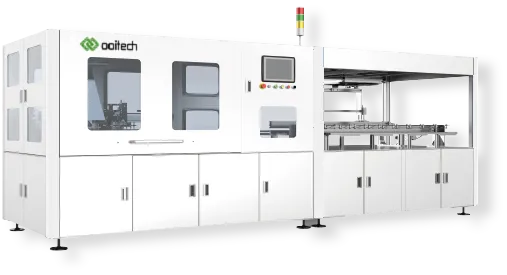
Solar panel layup and bussing machine combining string layup and bus ribbon soldering in one station, for 10W to 600W modules and TOPCon, BC, PERC and HJT cells, running inline with a stringer or standalone.
Quick answer: The Ooitech Layup and Bussing Machine combines two steps that are usually separate pieces of equipment — laying up solar cell strings onto the glass and soldering the bus ribbons — into a single station. It handles modules from 10 W to 600 W and works with TOPCon, BC, PERC and HJT cells. The machine runs in two modes: inline, connected to your stringer, or standalone, fed manually from trays. That second mode is what makes it practical for smaller lines, pilot production and R&D work, where a full inline layout cannot be justified.
PV Module Manufacturing · by Jerry, Ooitech
Product Introduction
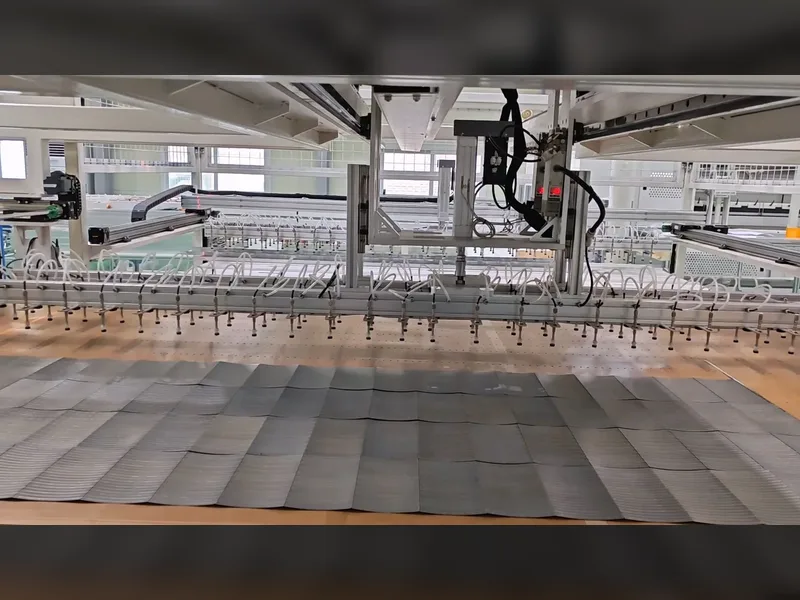
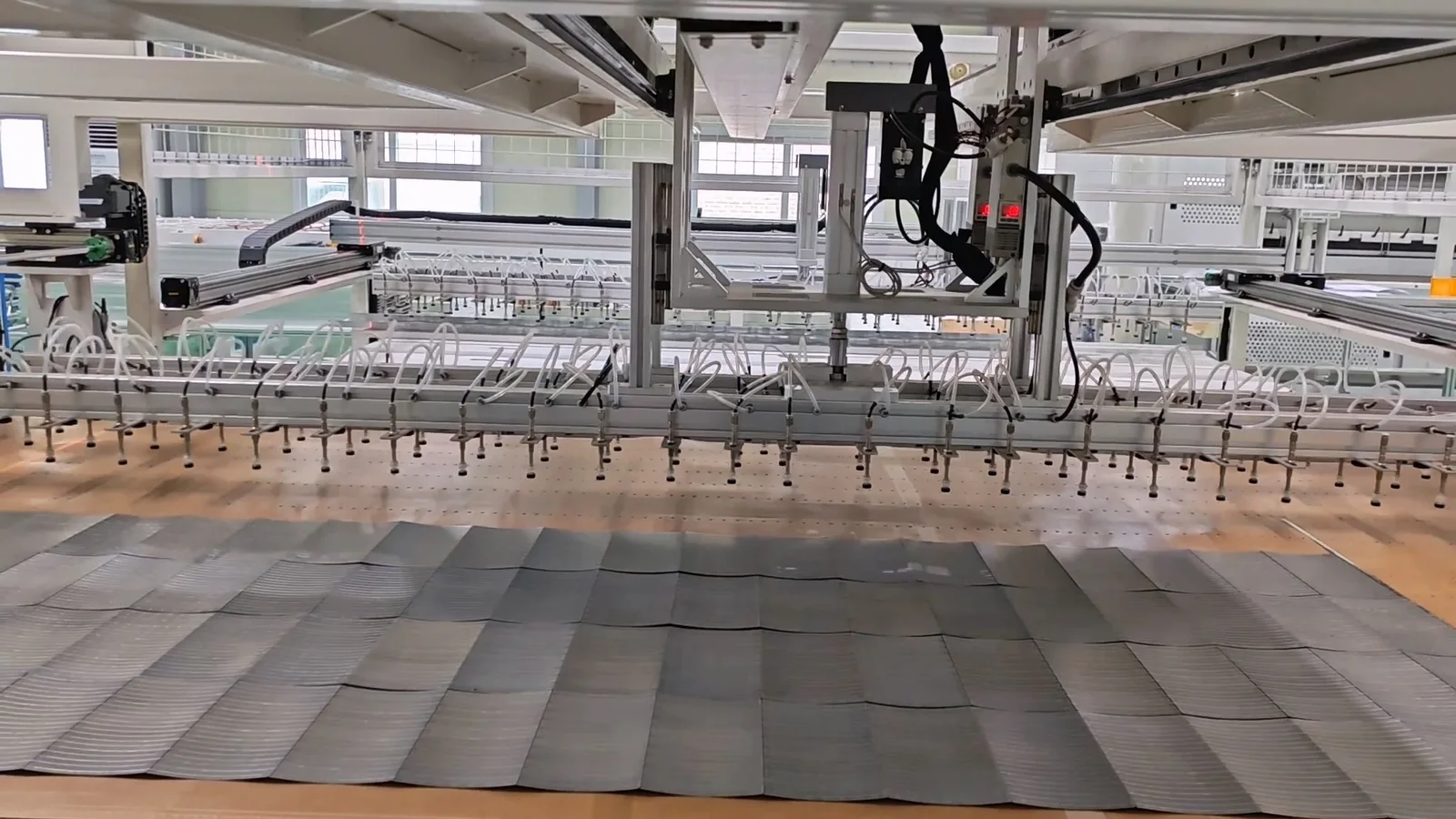
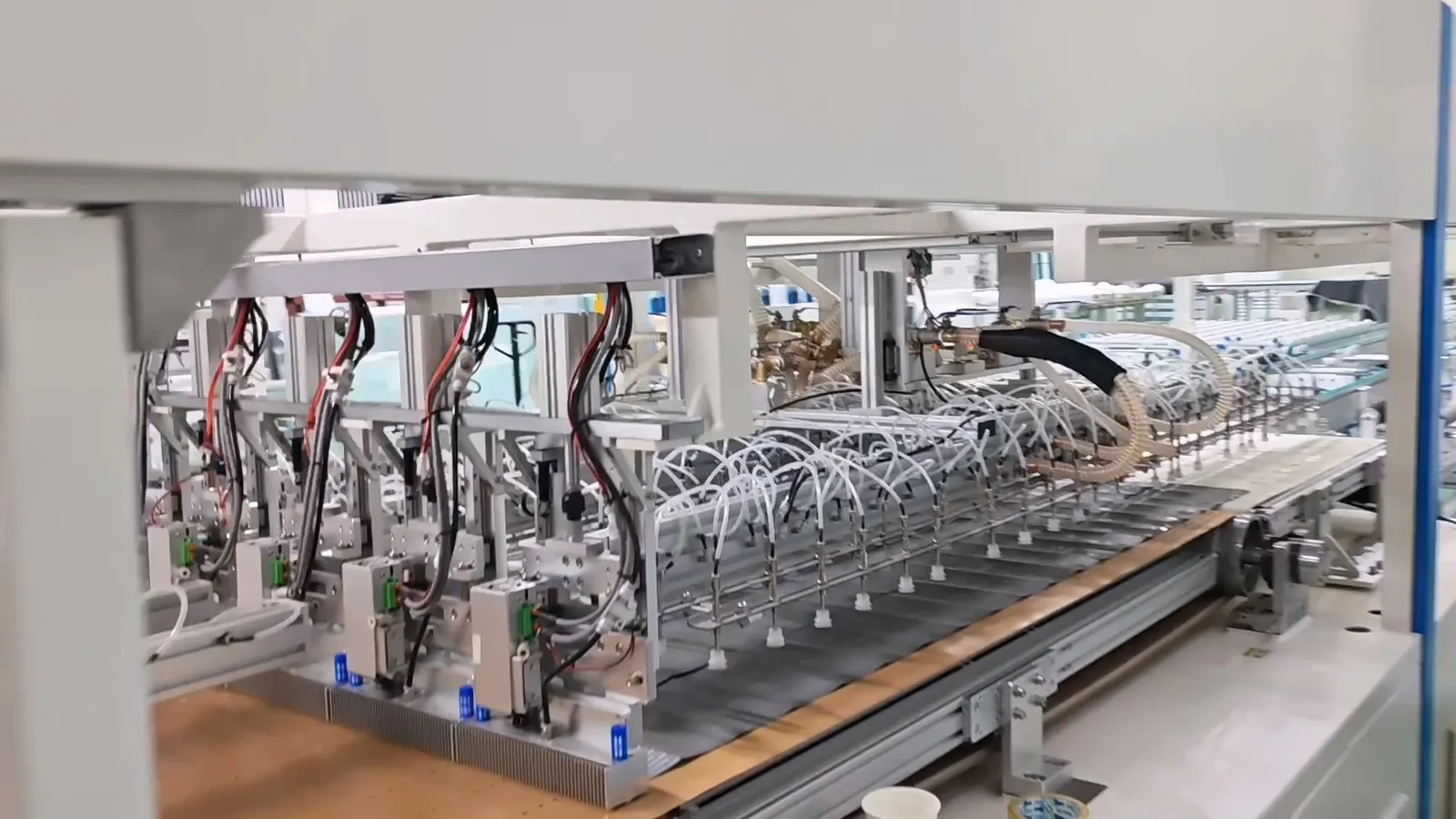
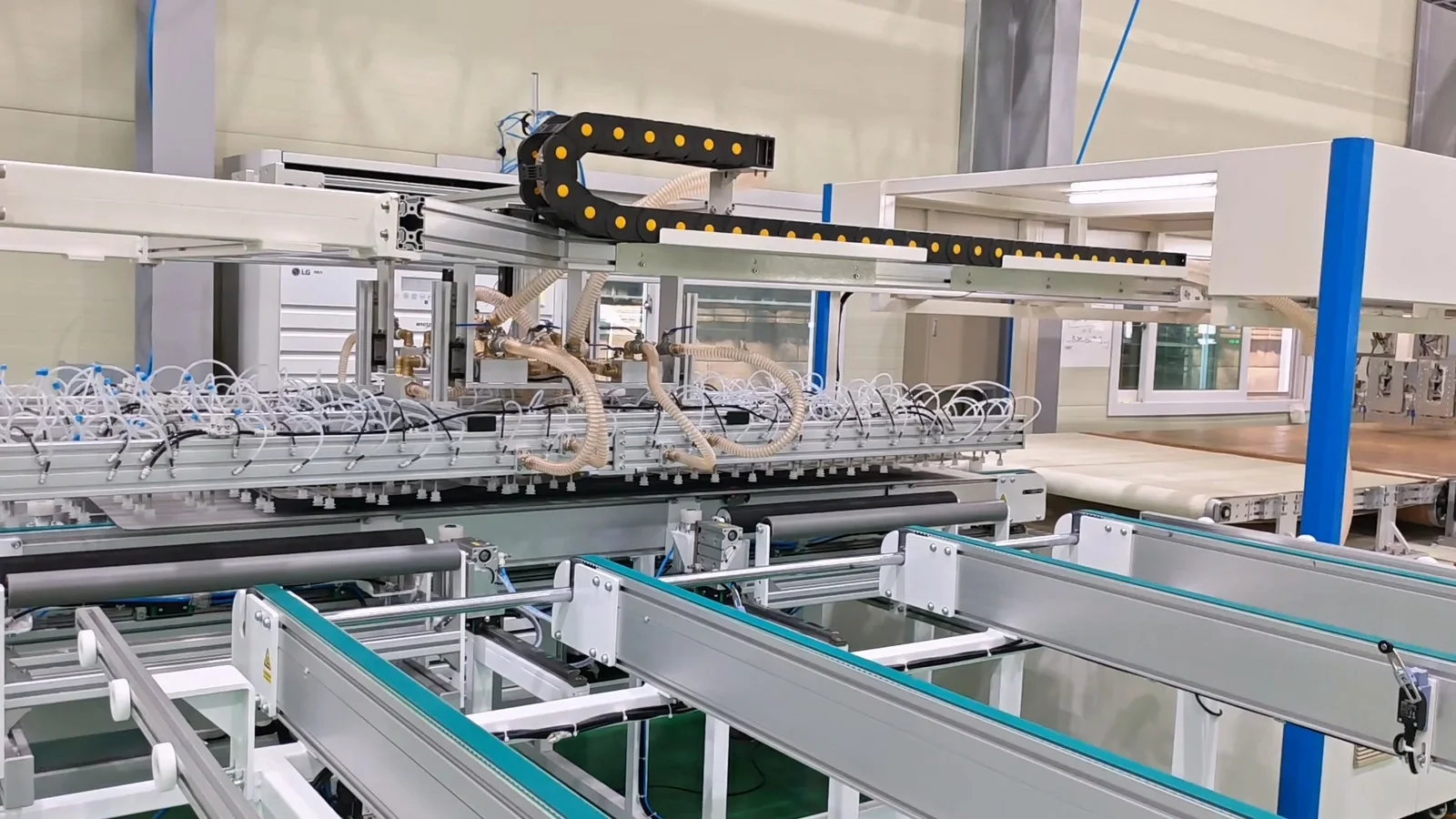
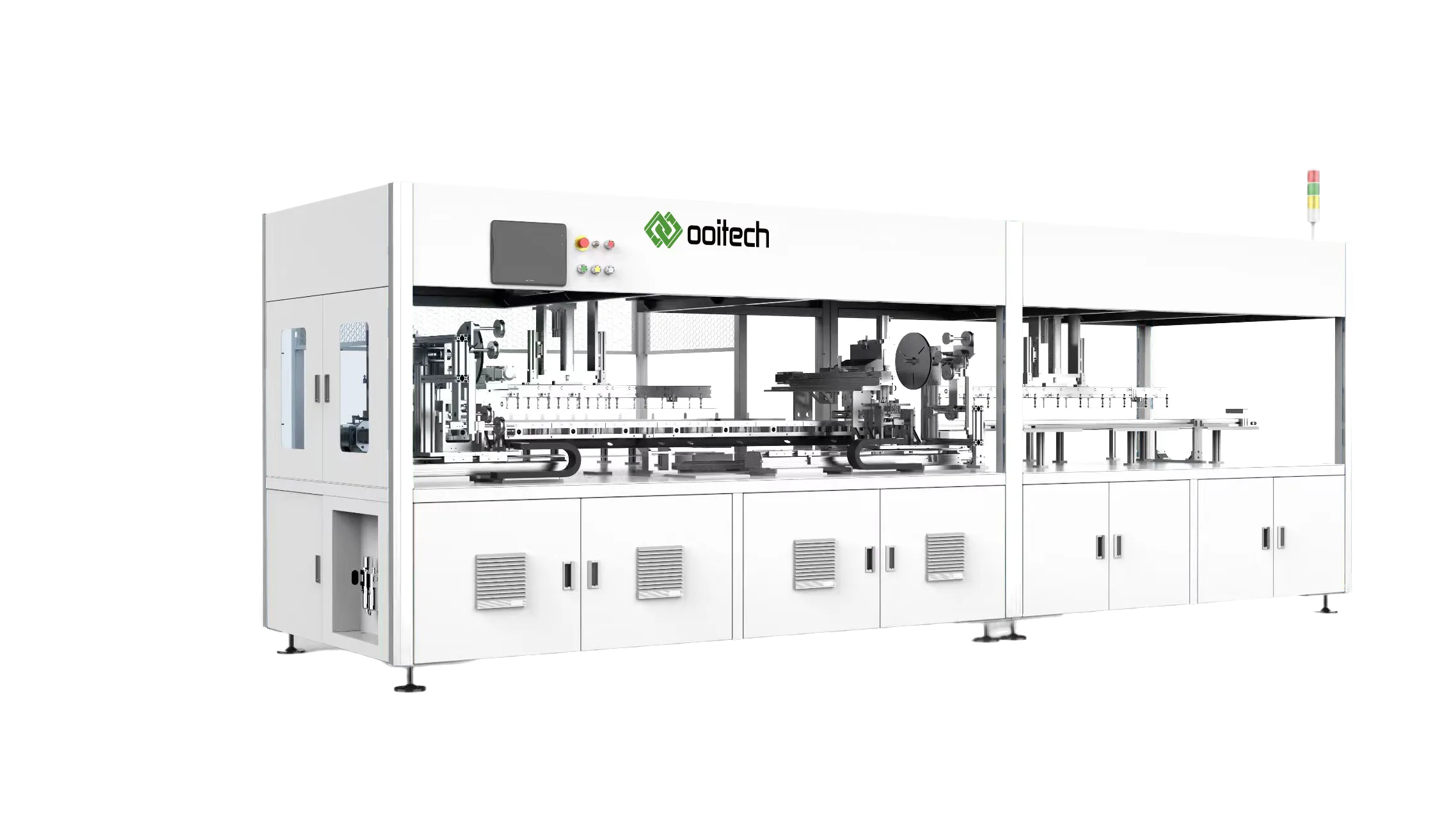
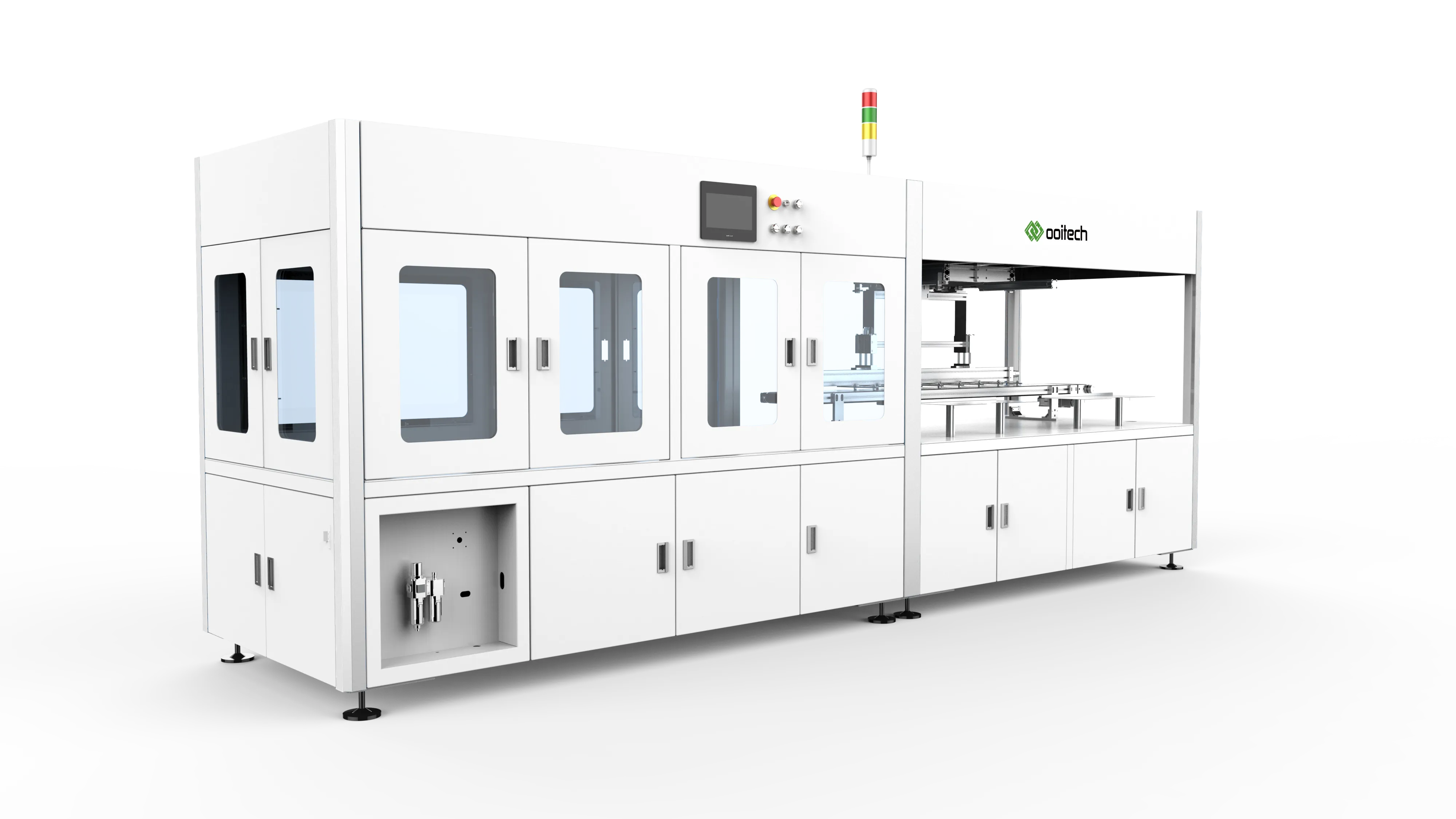
The Ooitech Layup and Bussing Machine is an all-in-one station for solar cell string layup and bus ribbon soldering. It is built around a high-frequency electromagnetic welding system with automatic temperature control, and it takes cell strings either from a connected stringer or from operator-loaded trays.
The machine consists of a loading transfer arm, fibre-optic sensing and mechanical positioning, a ribbon handling unit, the high-frequency welding head assembly, a cell string transfer section, a temperature control system, a junction box lead wire welding station, and an unloading transfer arm. A reserved port allows automatic loading to be added later without replacing the machine.
Why Layup and Bussing in One Machine
On most lines, layup and bus soldering happen at two different stations with a buffer between them. Every transfer between stations is a chance to misalign a string, and every extra station costs floor space, operators and another set of handling hardware.
Combining the two steps removes that transfer. The string is positioned once, held, and the bus ribbons are soldered in the same fixture. In practice this shows up as three things:
Fewer handling steps — one pick-and-place instead of two, which reduces the mechanical stress on cells and the chance of micro-cracks.
Smaller footprint — one station instead of two, which matters most when retrofitting an existing building.
Tighter alignment — layup position and solder position are referenced to the same fixture, so ribbon-to-string registration does not drift between stations.
Two Operating Modes: Inline or Standalone
This is the feature that separates the machine from a fixed inline tool.
Mode 1 — Inline, connected to a stringer
The machine accepts cell strings directly from an upstream stringer through the automatic loading port. The loading transfer arm takes two strings at a time, the vision or mechanical positioning system aligns them, the ribbon handling unit cuts and feeds the bus ribbon to the set length, and the welding head solders the string ends or the mid-points. The unloading arm then places the finished string group onto a pre-positioned glass station on the conveyor.
Running inline keeps throughput predictable and removes the manual loading step entirely. It is the right configuration for a line that already has a stringer and a conveyor.
Mode 2 — Standalone, manual tray loading
The same machine can run completely on its own. The operator loads strings from trays into the magazine station; everything after that — positioning, ribbon cutting, soldering, and transfer to the glass station — is automatic.
Standalone operation is what makes the machine usable in situations where a full inline layout does not make sense:
Pilot and R&D lines testing new cell formats or new bill-of-materials
Smaller module assembly shops without a conveyor backbone
Lines where the stringer and the layup station are deliberately kept apart for scheduling reasons
Backup capacity: if the inline stringer stops, the machine keeps producing from trays
Switching between the two modes is a configuration choice, not a different machine. That means a line can start standalone and move to inline later as volume grows, without buying a second tool.
Cell Technology Compatibility
The machine is specified for the four cell technologies that dominate current module manufacturing:
TOPCon — the current mainstream for high-efficiency modules; the machine handles the thinner wafers these cells use.
BC (back-contact) — back-contact strings can be upgraded with a 2+2 isolation-paper removal station, since BC layouts need the separator paper handled during layup.
PERC — the established technology still running on a large share of installed capacity.
HJT — heterojunction cells are temperature-sensitive, which is why the welding system uses high-frequency electromagnetic heating with closed-loop temperature control rather than a fixed thermal profile.
Cell thickness range is 0.13–0.25 mm, which covers the thin-wafer direction the industry is moving toward.
Module Size Range: 10 W to 600 W
The machine covers small-format modules from about 10 W — the kind used in garden lighting, small off-grid kits and consumer products — through to 600 W and above for utility-scale modules. String length runs from 300 mm up to 2,500 mm depending on model, and string width from 83 mm to 210 mm.
That span matters because it lets one machine serve a product line that includes both small consumer modules and full-size panels, instead of needing separate tooling for each.
Model Range and Specifications
Five models cover the range from small-format through to large-format modules:
Specification
SAW-300A
SAW-400A
SAW-500A
SAW-500L
SAW-600A
Module format (L × W)
≤1580 × 850 mm
≤1600 × 1150 mm
≤1950 × 1150 mm
≤2500 × 1150 mm
≤2500 × 1250 mm
String length
300–1500 mm
300–1600 mm
300–1950 mm
300–2500 mm
600–2500 mm
String width
83–210 mm
83–210 mm
83–210 mm
83–210 mm
166–210 mm
Cycle time
≤15 s/group
≤15 s/group
≤15 s/group
≤15 s/group
≤16 s/group
Welding heads
4+1
6
6
5
6
Positioning
Mechanical + fibre-optic
Mechanical + fibre-optic
Mechanical + fibre-optic
Mechanical + fibre-optic
CCD vision
Power
AC380V/50Hz, 8 kW
AC380V/50Hz, 8 kW
AC380V/50Hz, 8 kW
AC380V/50Hz, 8 kW
AC380V/50Hz, 10 kW
Machine dimensions (L×W×H)
6780×1676×1400 mm
6560×1676×1400 mm
6560×1676×1400 mm
8560×1676×1400 mm
5700×4800 mm (multi-section)
Shared Specifications Across All Models
Parameter
Value
Cell breakage rate
≤3‰ (grade-A cells)
Cell thickness
0.13–0.25 mm
Bus ribbon specification
4–8 × 0.15 mm
Welding method
High-frequency electromagnetic welding
Flux application
Ribbon immersion
Operating mode
Inline (connected to stringer) or standalone (tray loading)
Machine failure rate
≤3%
Electrical system
PLC + touch screen + servo + linear modules
HMI
Touch screen with centralised numerical parameter setting
0.6–0.8 MPa, 300 L/min, dried compressed air, 12 mm inlet
Machine colour
Traffic white
Software
Developed in-house; lifetime free upgrades
Core Components
The machine uses a mix of domestic and imported components, selected for serviceability rather than for brand name:
Component
Origin / maker
Function
Steel frame
Domestic, Q235
Machine chassis
Servo motors
Domestic
Linear modules
Welding heads
Domestic, custom
High-frequency electromagnetic heating
Sensors
Imported
Positioning and detection
Pneumatic components
AirTAC / SMC
Whole machine
Circuit breakers
Chint
Control system
AC contactors
Schneider
Control system
Touch screen
MCGS, 10″
Control system
Guide rails and screws
WON 1620
X/Y modules
Consumables and Maintenance
Three items carry a defined replacement interval, which keeps planned maintenance simple:
Item
Specification
Recommended interval
Suction nozzles
—
30 days
Belts
PTFE
90 days
Air filter element
AFC30
90 days
Watch the Machine Run
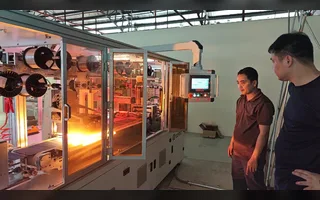
The clip below shows the machine laying up cell strings and soldering the bus ribbons in a single pass.
Choosing Between the Models
Model selection comes down to the largest module you intend to build and whether you need vision positioning:
SAW-300A — small-format modules and compact lines; the entry point of the range.
SAW-400A — standard 60-cell and 72-cell formats up to 1600 mm string length.
SAW-500A — longer strings up to 1950 mm, still within a 6560 mm machine length.
SAW-500L — the same width as the 500A but extended to 2500 mm strings; for large-format modules.
SAW-600A — the widest format (up to 2500 × 1250 mm) and the only model with CCD vision positioning, which is the better choice when cell formats change often.
About Ooitech
Ooitech supplies turnkey solar panel production line equipment and manufacturing solutions, from individual machines through to complete 5 MW to 1 GW module assembly lines, with equipment design, delivery, installation, operator training and after-sales support. To discuss whether the layup and bussing machine fits your line, contact the Ooitech team.
We deliver exceptional value, maximizing results while optimizing budgets for clients.
Our Experience Team
Our skilled professionals specialize in innovative solutions and tailored strategies.
15+ Years Industry Experience
Deep expertise ensures reliable, trend-aware, and proven outcomes for success.
Testimonials
What Our Client Say's about us
Client testimonials praise our deep understanding of their challenges, which leads to innovative solutions and strong ROI. Long-term collaborations—some over a decade—demonstrate their trust and satisfaction. Their success stories drive us to continually exceed expectations.
Know More
Thanks to Ooitech for providing the fully automated production equipment—your installation and after-sales service have been excellent.
Amjad
Thanks to Ooitech for providing highly suitable BC solar cell experimental equipment.
KTECH
A man with a big soul. Thank you very much for your visit Mr Wu. Thank you very much for the services provided in installing equipment and training my students. The kindest person and professional in his field
Jizzakh Polytechnic Institute
Thank you again so much again for the very big big help for improving and fixing the factory and also teaching the workers how to use the machines
Mark
BIPV Philippines
thank you for ooitech's professional support and on time after service.
In 2014, Indian company Cosmic Solar purchased a 5MW semi-automatic solar panel production line from Ooitech, marking an important milestone in Ooitech
In 2014, a green energy company from the United States purchased the Ooitech automatic ribbon cutting and bending machine for their solar panel production