Quick answer: Your first solar panel making machine set does not need to be a complete automated line — it needs to cover the steps you cannot do by hand, in the order that keeps quality visible, and leave the rest to phased purchases or outsourcing.
Solar Panel Making Machine: Choosing Your First Line
Most people who start a module factory arrive with the same question: what do I actually have to buy first? The answer depends far less on budget than on which steps you can perform consistently and which ones quietly destroy yield when done badly. A solar panel making machine is only worth its cost if it removes a step that a human cannot repeat reliably — soldering, for instance — rather than a step a small team can do well for the first year.
This guide is written for the new entrant: someone sizing a first line, possibly a second, and trying to compare quotations that are not formatted the same way. For the wider commercial picture, the guide to starting a solar panel manufacturing business covers markets and business models.
The nine steps, and the machine behind each
Every crystalline silicon module follows the same build order. Small factories skip some steps by buying pre-cut or pre-tabbed material; large ones automate all of them. What matters is knowing which step each solar panel making machine owns.
- Cell inspection and sorting. Incoming cells are checked and grouped so that one panel is not built from mismatched material — the mismatch shows up as a power loss that testing will attribute to the whole module.
- Cell cutting. Half-cell and shingled products require the cell to be divided by laser. If you buy pre-cut cells, you skip this station entirely at the start.
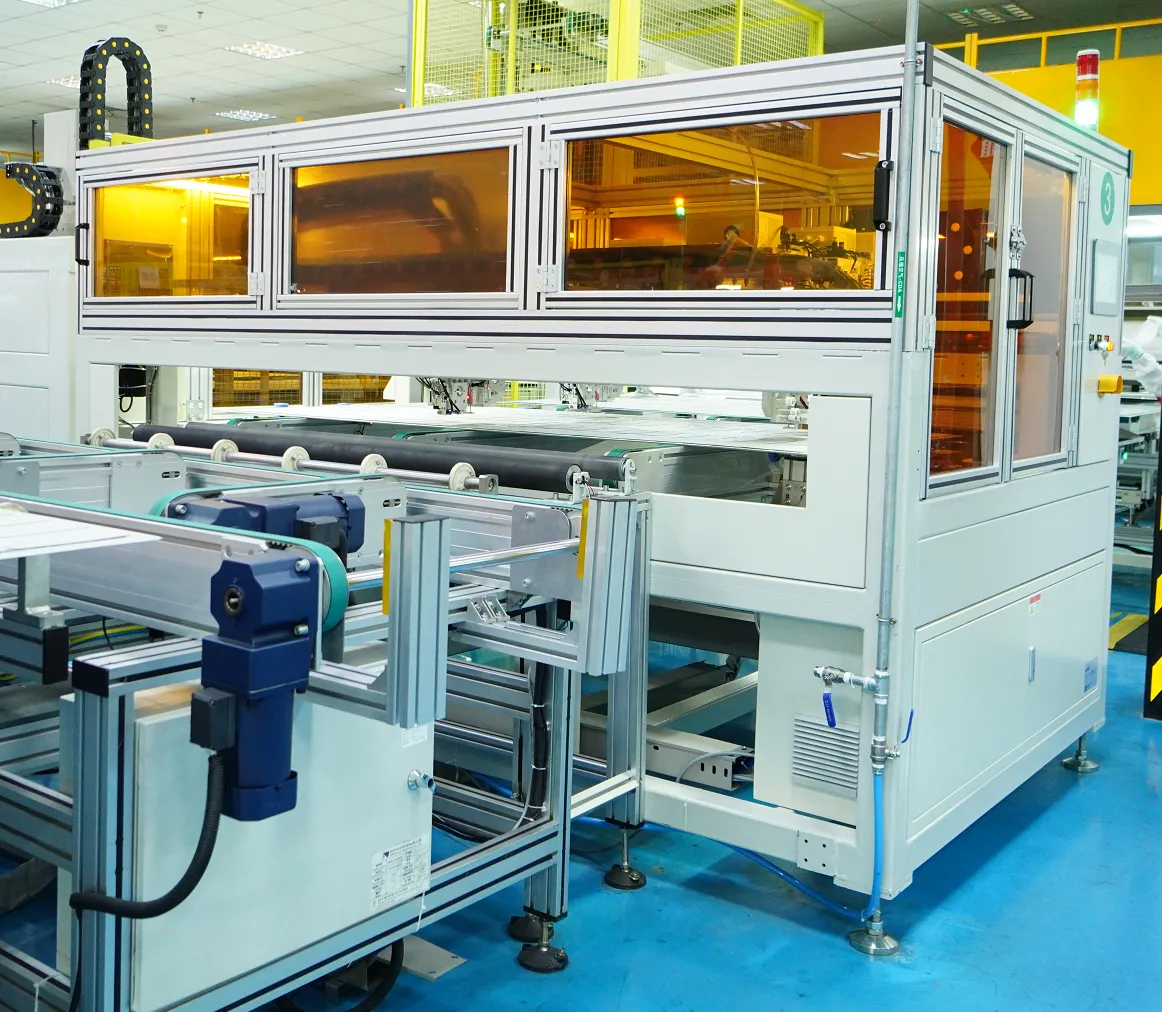
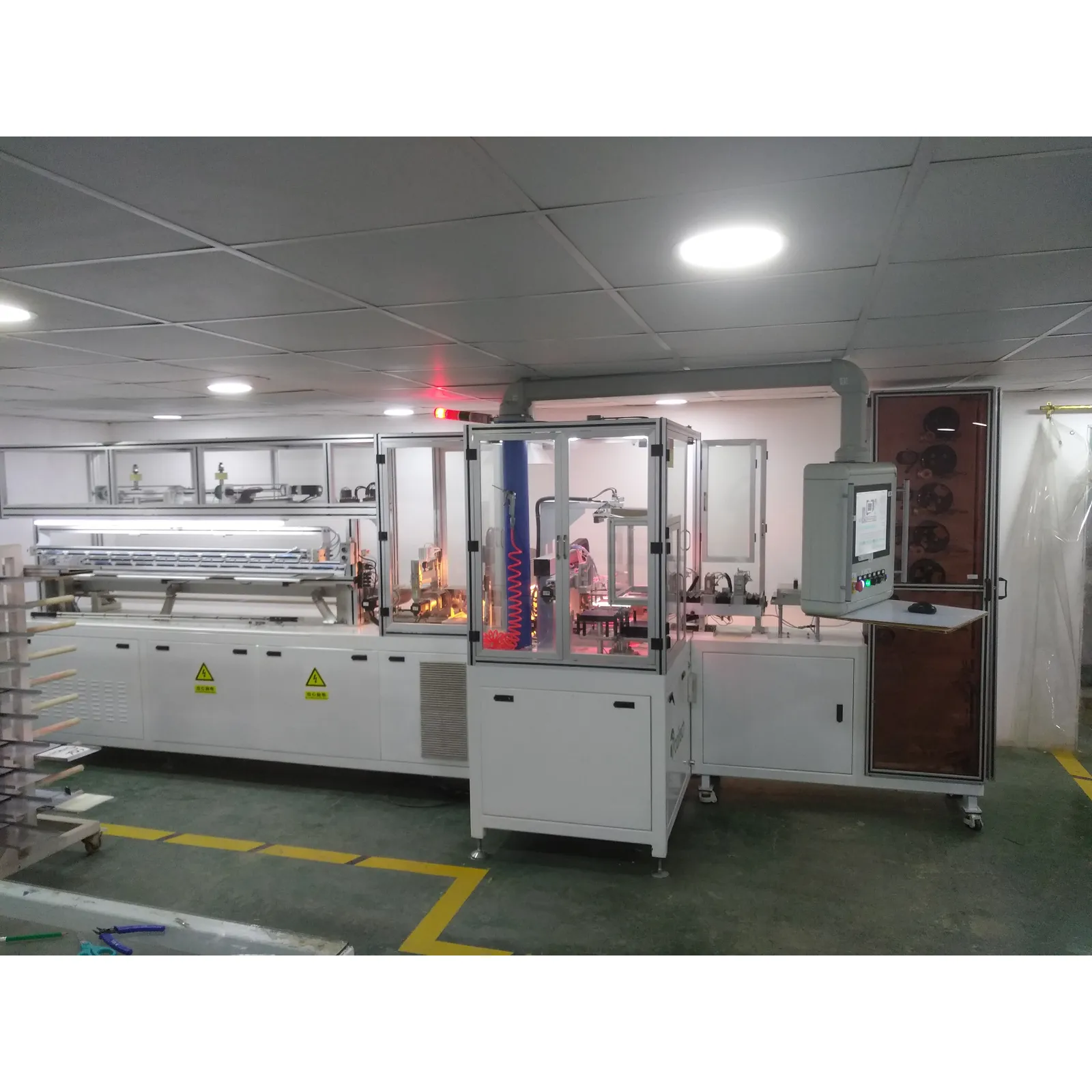
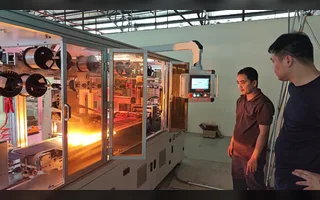
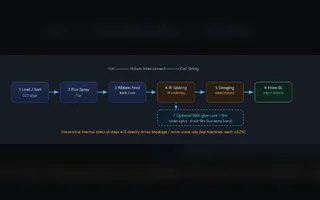
- Tabbing and stringing. Ribbon is soldered to the cell and cells are joined into strings. This is the step almost nobody should do by hand beyond pilot volume, and it is the first real machine most new factories buy.
- Layup. Glass, encapsulant, strings, more encapsulant and backsheet are stacked in order. Manual layup works at small scale and is the last step to automate.
- Bussing. String ends are soldered into the busbar layout that leads to the junction box.
- Lamination. The stack is bonded under vacuum, heat and pressure. This is the step with the least tolerance for improvisation.
- Framing. The aluminium frame is pressed on with structural adhesive.
- Junction box. The box is welded to the busbars and potted so the connection is sealed.
- Cleaning and testing. The panel is cleaned, then inspected by electroluminescence and measured on a sun simulator before it ships.
The process and machines breakdown expands each of these, and every step and every check covers the inspection points in between.
Semi-automatic first, or straight to automatic?
The honest answer is that semi-automatic is the normal first purchase and automatic is the second. Semi-automatic means the machine performs the critical physical operation while an operator loads, unloads and moves the work between stations. It costs less, it tolerates lower and irregular volume, and — importantly for a new team — it keeps the process visible, because an operator standing at the machine notices when something is wrong.
Fully automatic lines make sense when volume is already committed and labour is the constraint rather than capital. They reward stable input material and punish variation: an automatic layup robot fed inconsistently cut encapsulant will stop more often than a person would.
| Consideration | Semi-automatic path | Fully automatic path |
|---|
| Typical starting point | First line, pilot or regional volume | Committed volume, export contracts |
| Labour per panel | Higher, with operators at each station | Lower, with technicians supervising |
| Sensitivity to material variation | Tolerant — a person compensates | Requires consistent incoming material |
| Skill required to run | Process understanding at operator level | Maintenance and controls competence |
| Expansion route | Add stations as volume grows | Add a second line rather than upgrade |
| Where the risk sits | Operator consistency | Uptime and spare-part logistics |
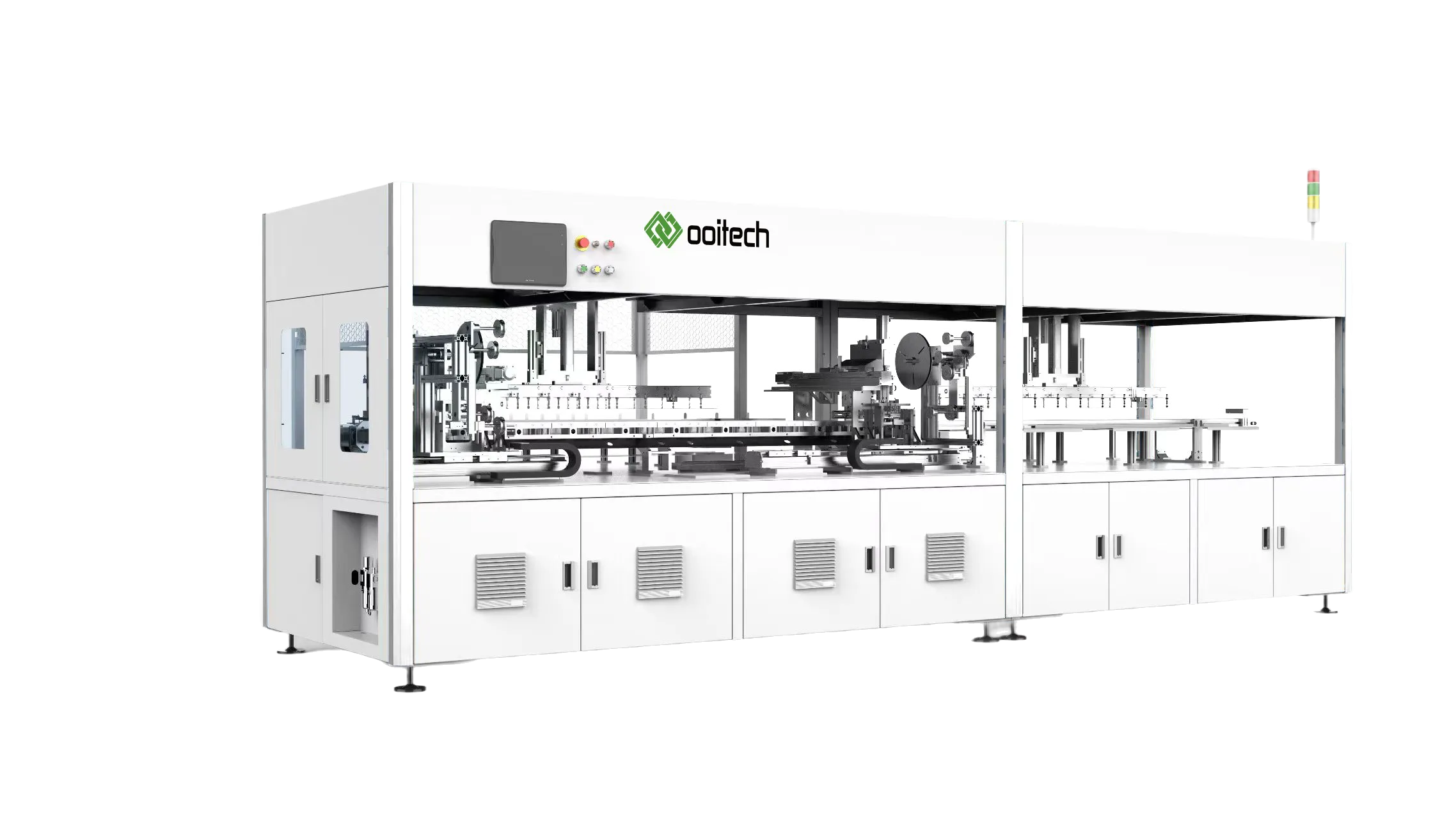
Ooitech builds both, and the entry configurations are documented as the 5 MW semi-automatic line and the 60 MW semi-automatic line for medium scale.
What you can outsource in the first year
Outsourcing is not a compromise; it is a way to buy time while you learn which step actually limits you. The steps most commonly outsourced at the start are cell cutting (buy pre-cut half-cells), ribbon preparation (buy pre-cut and pre-shaped ribbon), and frame or junction box sub-assembly if a local supplier will deliver them ready to fit.
What should not be outsourced is testing. A factory that cannot measure its own output is buying blind, and defect data is the only feedback loop a new line has. If budget forces a choice, keep the tester and postpone the automation.
Facility requirements in practical terms
Rather than quoting floor areas, think in terms of what the building must provide. You need a controlled indoor environment, because encapsulant and cells are sensitive to humidity and dust. You need floor loading adequate for a laminator, which is the heaviest and most vibration-sensitive unit on the line. You need power capacity that matches the heating loads of the stringer and laminator rather than the total connected load of every motor. You need compressed air at stable pressure, drainage or containment for cooling water on some configurations, and a layout that lets a full-size panel move between stations without being rotated through a doorway.
Plan the material flow before the machine positions: glass in at one end, finished panels out at the other, with the laminator placed so that neither the layup side nor the framing side becomes a queue. Cost planning at this stage is covered in the plant cost overview.
Staffing and skill levels
A semi-automatic line is normally run by a small team: operators at layup, framing and junction box; one person owning the stringer and laminator recipes; one technician covering electrical and mechanical faults across all stations; and one person responsible for incoming material and outgoing test data. That last role is the one new factories most often leave unfilled, and it is the reason bad cells get built into good panels for weeks before anyone notices.
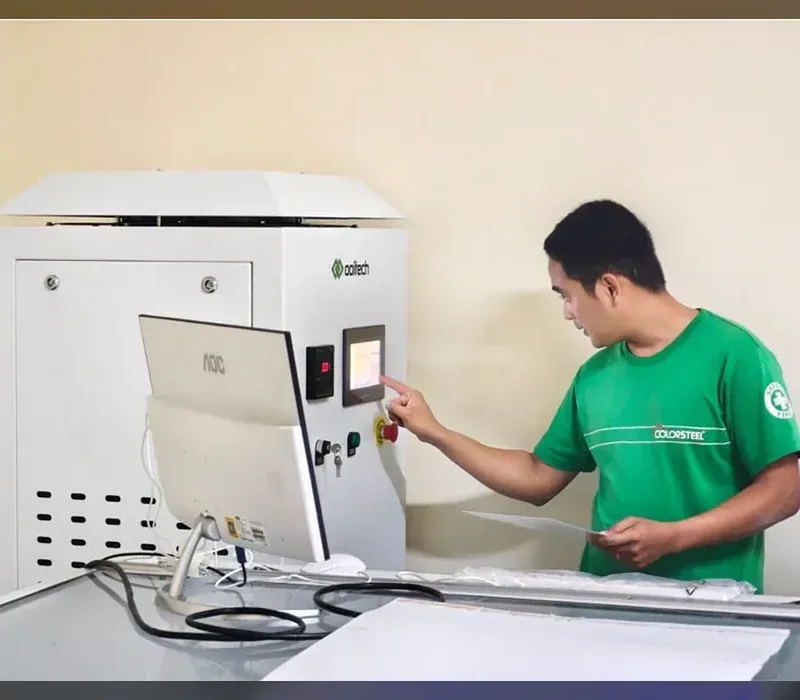
Training matters more than headcount. A solar panel making machine delivered with operator training and after-sales support transfers process knowledge along with the hardware; one delivered as a crate does not. Ask any supplier what training is included, where it happens, and in what language.
Phasing from one line to a second
The cheapest second line is usually the first line, duplicated. Copying a configuration you already understand avoids a second learning curve and lets you share spares, recipes and trained staff. Before you commit to a second line, confirm that the first one is genuinely stable — meaning yield is predictable and downtime has identifiable causes. Adding capacity on top of an unstable process multiplies the instability rather than the output.
The alternative phasing route is to upgrade the bottleneck station on line one (often the stringer or the laminator) and buy a second unit of that station rather than a whole new line. That decision should be driven by where panels actually queue, not by where the quotation looks simplest.
What to prepare before the machines arrive
Installation delays are usually civil works, not equipment. Before shipment, have the floor prepared and level, power and air brought to the correct positions, the layout marked on the ground, material storage set up with humidity control where required, and the operating team hired and available to receive training on arrival. Confirm who is responsible for unloading and rigging — this is a frequent gap between supplier and buyer — and confirm the utility specifications against the actual site rather than the datasheet.
How to compare quotations fairly
Two quotations for a solar panel making machine rarely describe the same scope, which is why the lowest figure is often not the cheapest outcome. Normalise them before comparing: is the price for the machine only or for a commissioned line; are tooling and changeover parts included; is training included; what is the spare-part list and its cost; what are the payment and delivery terms; and what does the warranty actually cover.
Then ask each supplier to state, in writing, what their machine assumes about incoming material and about the station before and after it. Suppliers who can answer that precisely have thought about integration, and integration is where first-time buyers lose the most time. A structured way to read the numbers is in the price guide, which explains what drives a solar panel making machine price up or down without quoting figures.
FAQ
Do I need a full line to start, or can I begin with one machine?
You can begin with a single machine, and many factories start with the tabber-stringer because soldering is the step least suited to manual work. The catch is that every later purchase must match the panel size and handling method of what you already own.
Is semi-automatic equipment a dead end?
No. Semi-automatic stations stay useful as buffer or secondary capacity after an automatic line is added, and many factories run both side by side for different product types.
How long should installation and commissioning take?
It depends on the number of stations, the civil works readiness and the availability of your team for training, so any supplier who quotes a fixed duration before seeing the site is guessing. Ask instead for a staged plan with dependencies named.
What is the single most common first-line mistake?
Buying automation before the process is understood. A manual or semi-automatic step that is visibly wrong teaches the team something; an automatic step that is invisibly wrong just produces rejects at a steady rate.
If you want a configuration matched to your building, budget and target product, send us the details and we will prepare a quotation covering the stations, tooling, training and after-sales scope.