Where Are Solar Panels Manufactured? The 2026 Production Map
Table of Contents
Solar panels are manufactured in two stages that happen in very different places: cells are made in a small number of concentrated, capital-heavy factories, mostly in China, and then assembled into finished modules in a much wider ring of countries that includes China, Vietnam, Malaysia, Thailand, India, the United States, Turkey, Brazil and a growing list of others. So the honest answer to where solar panels are manufactured is that the module — the framed, glass-fronted panel you bolt to a roof — is assembled in many countries, while the cell inside it usually comes from far fewer of them. China holds the largest share of capacity at every stage of the chain, from polysilicon to finished module, but the gap between stages is enormous: wafer and cell production is clustered in a handful of provinces, while module assembly is genuinely dispersed and easy to relocate. That single asymmetry, more than any ranking table, explains why country-of-origin labels on solar panels tell you less than most buyers expect.
This article maps the geography of module and cell production stage by stage, explains what drives each region’s position in the chain, and answers the question buyers actually care about — whether any country makes better panels than another.
Why Cell Manufacturing and Module Assembly Move Differently
Almost every misunderstanding about solar manufacturing geography comes from treating cell production and module assembly as one industry. They share a customer but almost nothing else.
A cell fab is a semiconductor factory. It runs diffusion furnaces, PECVD and ALD deposition tools, laser dopers, wet benches, screen printers and firing furnaces, and it depends on high-purity polysilicon, silver paste, specialty gases and chemicals that come from a narrow supplier base. It needs hundreds of megawatts of capacity before unit economics work, continuous process control, and a workforce that can hold tight tolerances across dozens of steps. A cell line cannot be built from shipping containers and commissioned in a few months, and its economics collapse if it runs below a high utilization rate. That is why cell capacity concentrates: once a region builds the supplier ecosystem, the scale and yield advantage compounds.
A module assembly line is closer to a light manufacturing operation. Cells arrive already tested; the line then solders them into strings, lays them on glass with encapsulant, laminates, frames, mounts the junction box, cures and flash-tests. The critical inputs are cells, glass, encapsulant, backsheet or rear glass, ribbon, flux and frames — all of which travel well. A line is modular, can be installed in a leased industrial shed, and can be scaled in steps. The physical process is well documented in our guide to the solar panel manufacturing process, and the equipment itself is the subject of a separate article on what a solar module assembly line is.
The practical consequence is that module assembly follows policy, freight cost and labor availability, while cell manufacturing follows capital, supply chains and process know-how. Move a tariff wall and assembly migrates within a couple of years; the cell capacity underneath it does not move at all.
| Dimension | Cell manufacturing | Module assembly |
|---|---|---|
| Capital intensity | High per MW; process tools dominate the budget | Moderate; buildings and handling equipment matter as much as process tools |
| Minimum efficient scale | Large; utilization below a high threshold destroys margin | Smaller; 5–50 MW lines can be commercially sensible |
| Supplier ecosystem | Critical; polysilicon, paste, gases and chemicals must be local or imported cheaply | Moderate; most inputs are traded commodities |
| Time to commission | Long; process stabilization takes months after installation | Short; a line can be producing saleable modules quickly |
| Geographic mobility | Low; sunk cost and know-how keep capacity in place | High; equipment is relocatable and the process travels with it |
| What drives location | Scale, power cost, industrial policy, engineering talent | Tariffs, trade access, freight, labor, local content rules |
The Geography of Capacity, Region by Region
What follows is a structural map rather than a scoreboard. Capacity numbers in solar move fast — announced, under construction, ramping and idle are four different things, and most published figures mix them. Treat every figure you read, including any you find here, as something to verify against a current primary source before you build a business case on it.
China: The Base of the Chain at Every Stage
China is the largest producer at every link: polysilicon, ingots and wafers, cells and modules. The IEA’s work on solar PV supply chains found that global PV manufacturing capacity shifted from Europe, Japan and the United States to China over the past decade, with Chinese investment in new supply capacity running roughly an order of magnitude above European investment. Whatever the exact number today, the pattern is not in dispute.
Wafers are the most concentrated stage of all, with a small number of very large producers, and cells are next. The cell makers most often cited globally include LONGi, JinkoSolar, Trina Solar, JA Solar, Tongwei and Aiko, with a long tail of regional producers behind them. Module capacity is spread across many more companies and provinces, and the same names appear on both lists because most large Chinese cell makers also assemble modules.
Two structural features matter for anyone thinking about entering the chain. First, Chinese cell and module capacity is far larger than Chinese domestic demand, so a substantial share of output is exported or assembled abroad. Second, the ecosystem is dense: equipment suppliers, paste and ribbon makers, glass and encapsulant producers, and a deep pool of process engineers all sit within a few hundred kilometers of each other in the main manufacturing provinces. That density, not cheap labor, is the durable advantage.
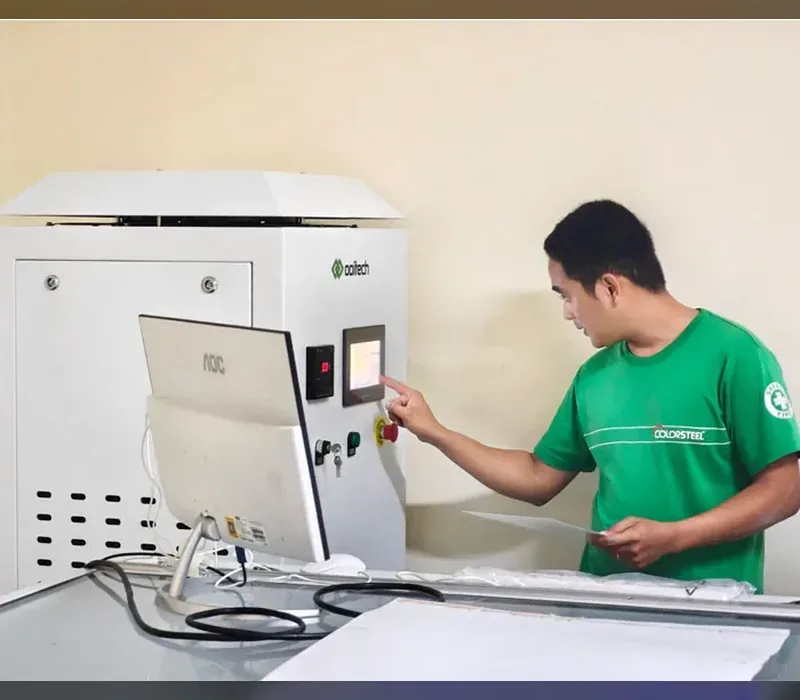
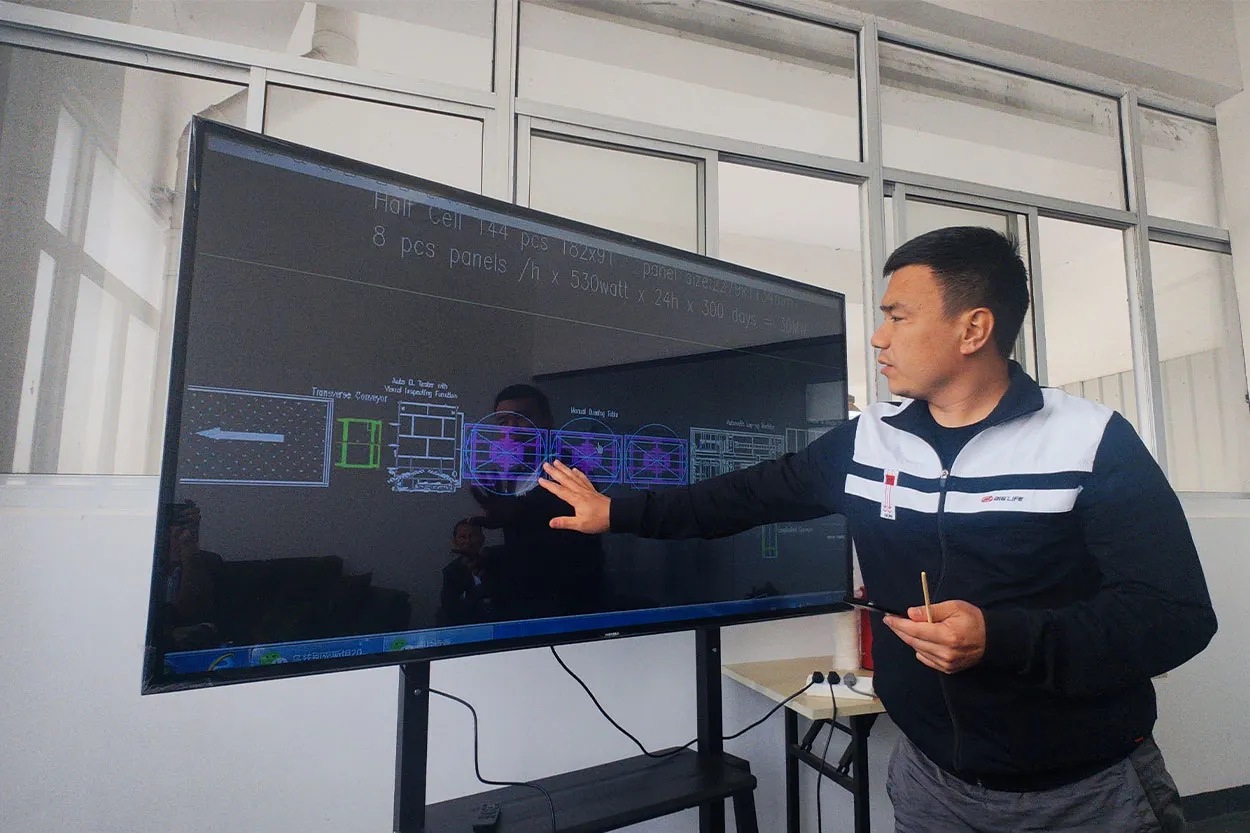
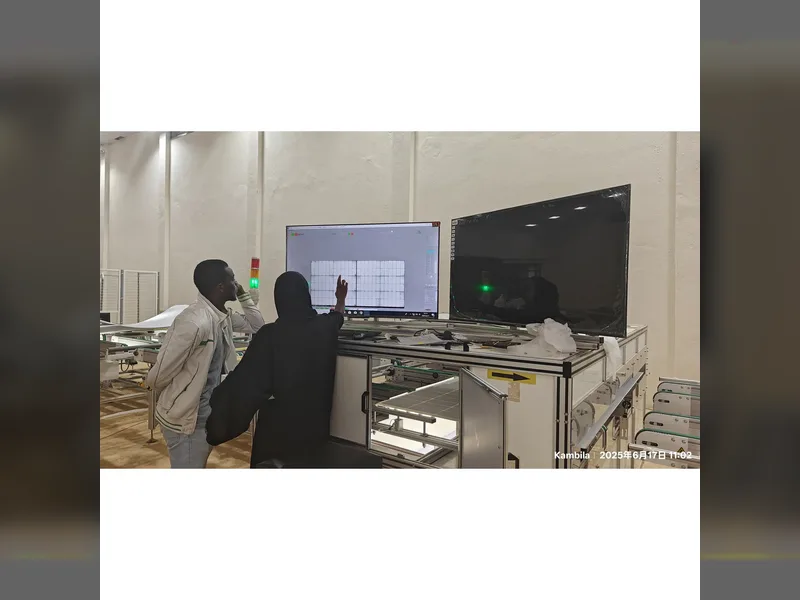
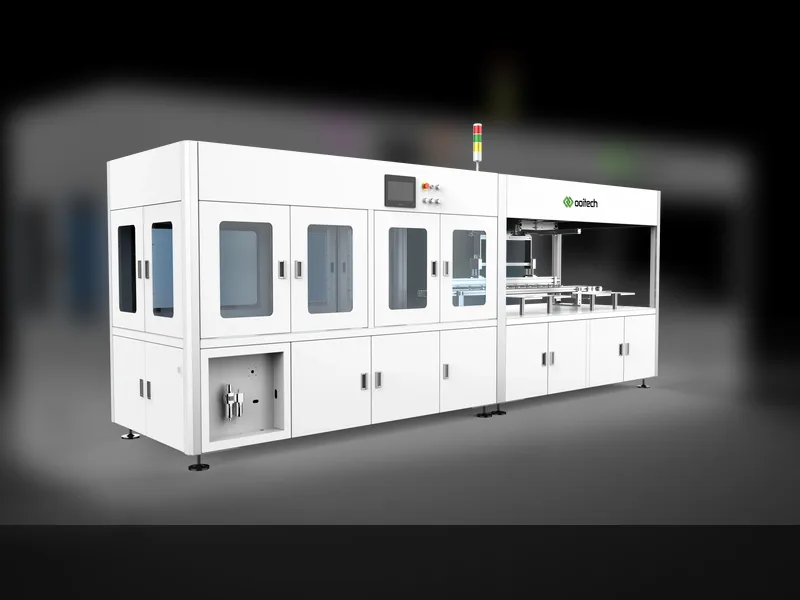
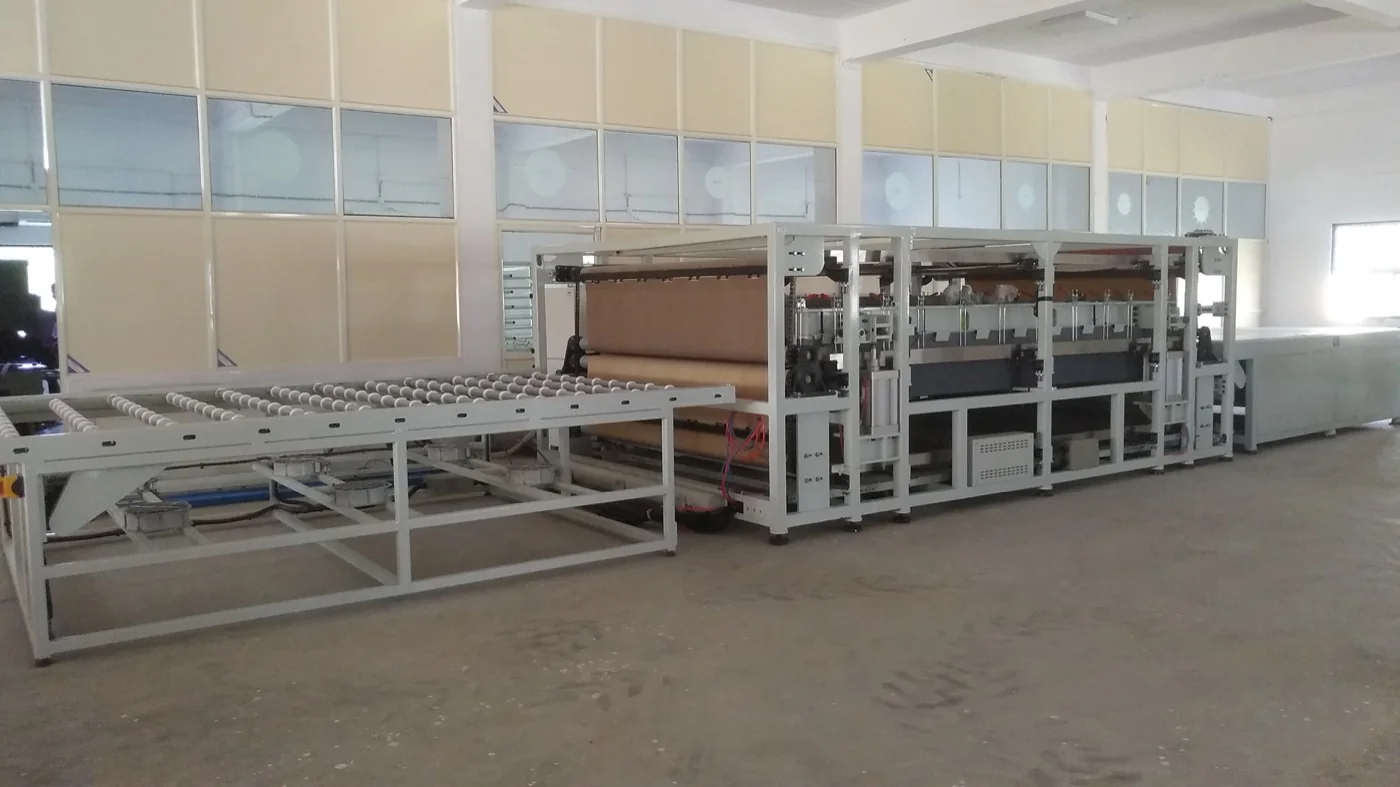
Equipment of this class belongs to module assembly, which is the part of the chain that can move between countries.
Southeast Asia: The Assembly and Transshipment Belt
Southeast Asia became a major module assembly region because it offered a way to serve export markets — above all the United States — from outside China. Chinese manufacturers built cell and module plants in Vietnam, Malaysia, Thailand, Cambodia and later Laos and Indonesia, and the region grew into a substantial module capacity base; industry mapping has put Southeast Asian module capacity in the tens of gigawatts, with Vietnam, Malaysia and Thailand among the largest contributors.
The belt is not homogeneous. Some plants run full cell-to-module production, while others assemble modules from imported cells. Some were built explicitly for a tariff route that later changed. US trade cases on cells and modules from several Southeast Asian countries, together with domestic content rules in the Inflation Reduction Act, have repeatedly reshaped which plant serves which market. When the rules change, the assembly capacity often stays — it just changes customer and configuration.
That is the transshipment lesson for a new entrant: module assembly is the movable part of the chain, and the countries that capture it are the ones that combine trade access with a workable industrial base. Cells, by contrast, tend to keep coming from the same concentrated sources regardless of where the module is finally framed.
India: Capacity Built Behind a Domestic-Content Wall
India built a large module assembly base behind policy that favors domestically produced modules, most visibly the Approved List of Models and Manufacturers and associated domestic content requirements for publicly supported projects. Module capacity in India is now substantial and spread across a long list of producers, including Waaree, Adani, Vikram Solar, Premier Energies, Tata Power Solar and many others.
Cells are the harder half. India’s cell capacity has grown considerably and several large integrated players now run cell lines alongside module lines, but cell output still lags module assembly capacity, so a meaningful share of modules are built from imported cells. That gap is the same pattern seen everywhere: policy can pull assembly into a country in a few years, while cell capacity arrives more slowly because it needs scale, process talent and a chemical and materials supply chain.
For a buyer planning a factory, India illustrates a general rule. If your target market has a local content rule, the rule creates demand for the assembly step first and the cell step later. Planning a line against a policy window is legitimate, but the plan should say what happens when the window narrows.
The United States: Module Assembly First, Cells Later
Where those imports actually come from, and how tariffs reshaped the routing without ending the dependence, is covered separately in where the US gets its solar panels from. The United States has rebuilt a significant module assembly base under the Inflation Reduction Act, which created manufacturing tax credits that made domestic assembly economic at a scale it had not been for years. Module capacity announcements and completed plants multiplied, with both established international manufacturers and new domestic entrants building lines, and first solar stands as the largest US-based manufacturer with its own thin-film technology rather than crystalline silicon cells.
Cell capacity in the United States has lagged module capacity. Building a crystalline silicon cell fab in the US means importing much of the process equipment and competing for engineering talent in a market where little cell production has run for a decade. Several companies have announced cell plants to close the gap, and some are operating; the direction of travel is toward more domestic cell capacity, but the ratio of module assembly to cell production remains tilted toward assembly.
This is why a module labeled as made in the USA may still contain imported cells. Origin rules for trade and for procurement programs look at where specified transformations happen, and the transformation that turns a cell into a module is assembly. A buyer who needs to know where the cells came from has to ask a different question than where the panel was made.
Europe, Turkey and the Rest of the Map
Europe once led global PV manufacturing and now holds a much smaller share of capacity. What remains is policy-driven: pilot and gigafactory projects supported by national and EU instruments, a strong equipment and materials sector, and a research base that feeds process innovation. European module assembly exists but is small relative to demand, so most modules installed in Europe are imported.
Turkey occupies an interesting middle position, with a substantial module assembly industry serving domestic and nearby markets, and it is also a source of production equipment and certification services for the wider region — Ooitech’s CE certification for exported lines, for example, is issued through a Turkish certification body. Elsewhere, Brazil, South Korea, Japan and parts of the Middle East and North Africa host assembly capacity of varying depth, usually built against a local content rule, a tariff, or a national industrial program.
| Region | Role in the chain | What drives its position |
|---|---|---|
| China | Dominant at every stage: polysilicon, wafers, cells and modules | Scale, integrated supplier ecosystem, power cost, industrial policy and engineering depth |
| Southeast Asia | Large module assembly base, with some cell production; export-oriented | Trade access to the US and EU, investment incentives, Chinese manufacturers building abroad |
| India | Large module capacity; cell capacity growing but still behind assembly | Domestic content rules and public procurement, plus a large domestic demand base |
| United States | Rebuilt module assembly; cell capacity smaller and catching up | Manufacturing tax credits, trade policy, and demand from utility-scale projects |
| Europe | Small capacity share; strong equipment, materials and research base | Policy support, innovation funding, and a large installation market it largely imports for |
| Turkey, Brazil, MENA, East Asia | Mid-sized assembly capacity serving domestic or regional markets | Tariffs, local content requirements, freight economics and national industrial programs |
Which Country Makes the Best Solar Panels?
No country does. There is no national quality ranking for solar panels, because panels are not made by countries — they are made by specific manufacturers, on specific product lines, to specific bills of materials, under specific quality systems. Two factories in the same province can differ more in field reliability than two factories on different continents.
What actually separates a durable module from a fragile one is verifiable and largely independent of geography: the quality of the cells and how they were sorted and binned, the soldering process and whether microcracks were caught before lamination, the encapsulant and its gel content after cure, the lamination recipe, the frame sealant, and whether electrical testing was done inline on every unit or sampled. Our article on PV module reliability tests and failure causes covers the failure modes that decide whether a panel survives fifteen years in the field, and almost none of them are national characteristics.
The country label usually reflects where the final assembly step happened, which is a fact about logistics and tariffs, not about quality. A panel assembled in one country from cells made in another, using glass from a third and encapsulant from a fourth, has no single country of origin in any meaningful engineering sense.
| What buyers ask | What actually predicts quality |
|---|---|
| Which country makes the best panels? | Which manufacturer, which product line, which bill of materials |
| Is a panel from country X better than country Y? | Whether testing is inline and 100% or sampled, and what the EL images show |
| Does domestic assembly mean domestic content? | Where the cells were made, which is a separate question |
| Is a well-known brand automatically safer? | Whether the specific model has a traceable process record and a real warranty entity behind it |
Which Solar Panels Are Made in the USA?
Several manufacturers assemble or produce modules in the United States, and the list changes as plants open and lines are reconfigured. First Solar manufactures thin-film modules domestically at multiple sites. Among crystalline silicon producers with US manufacturing, Qcells operates a large Georgia complex, and other manufacturers including JinkoSolar, Trina Solar, Silfab, Mission Solar and Meyer Burger have operated or announced US module capacity, while a set of newer entrants has been building assembly plants against the IRA manufacturing credits.
Two cautions apply to that list. It is not exhaustive and it ages quickly, so verify current plant status and product lines with the manufacturer rather than relying on any published list, including this one. And a US-assembled module is not automatically a US-made cell: for crystalline silicon, a large share of US module assembly runs on imported cells, which is exactly the gap the domestic cell buildout is intended to close.
If domestic content matters to your project — for a tax credit, a procurement rule, or a customer requirement — the question to ask a supplier is not where the panel was assembled but where each major component originated and what documentation supports it.
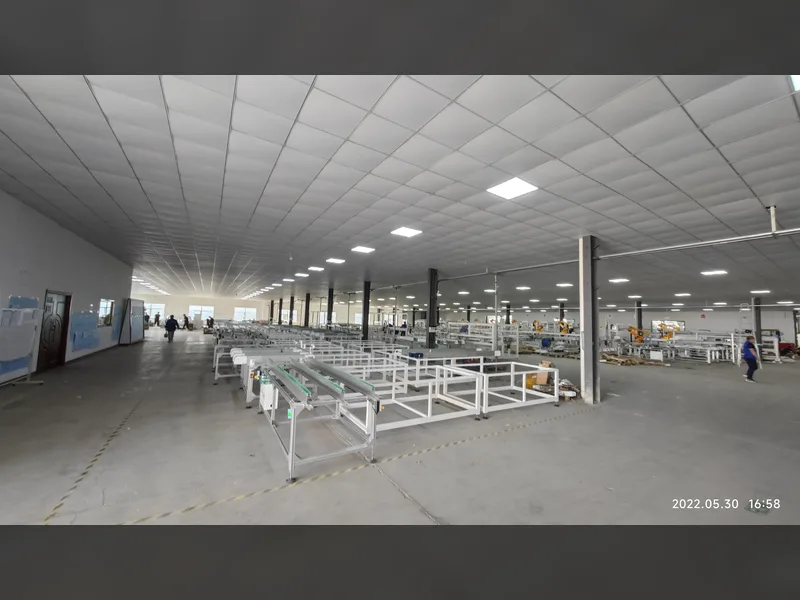
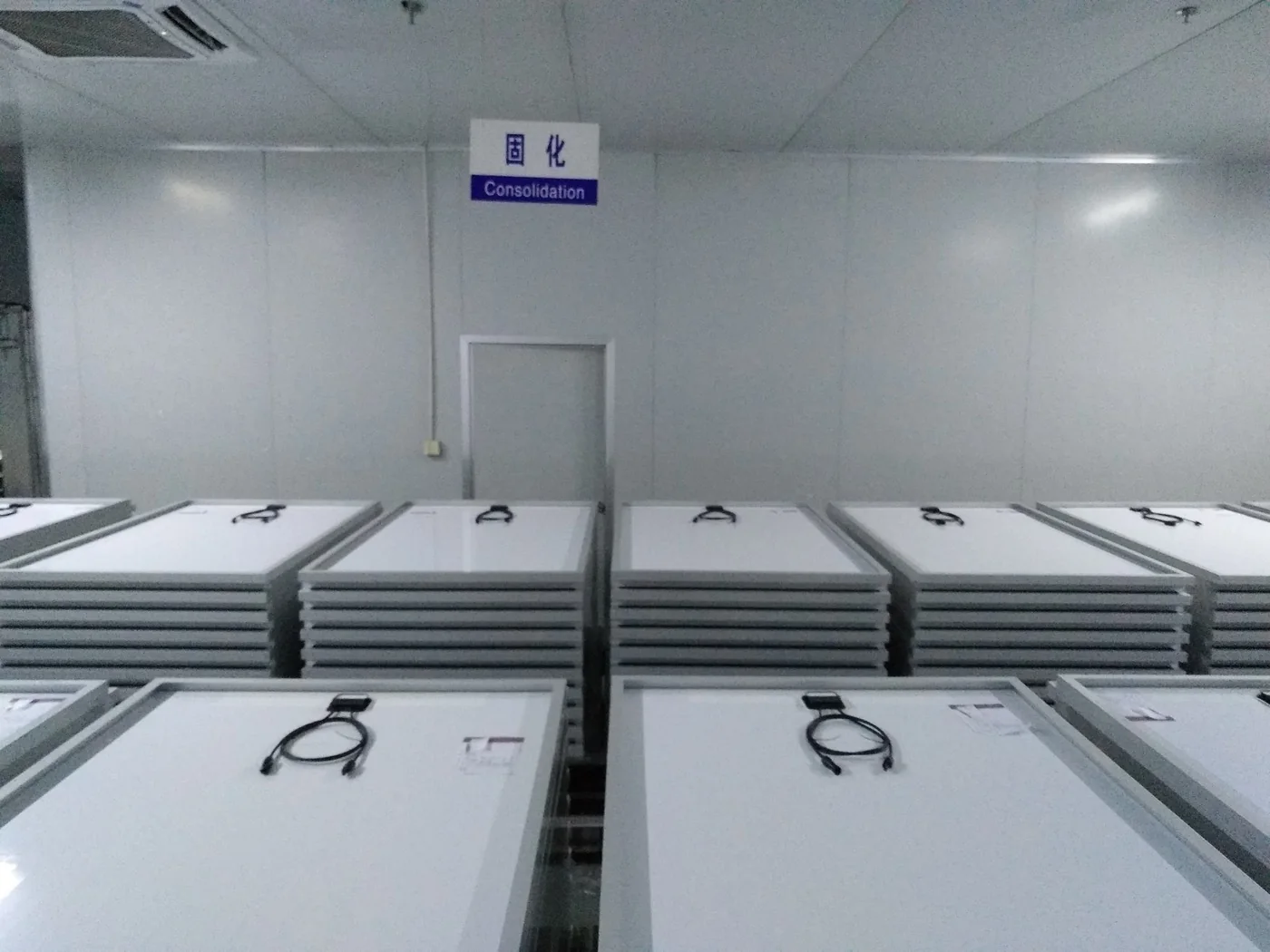
Finished modules waiting in consolidation show the stage most new entrants actually plan for: assembly, handling and dispatch.
What This Geography Means If You Are Planning a Production Line
The map above has direct commercial consequences for anyone considering a factory.
Module assembly is the entry point that travels. If you are building a factory, you are almost certainly building module assembly, because that is the step that can be sited near a market, sized to a market, and commissioned in months rather than years. The equipment is modular, the process is well understood, and capacity can start small. Our guide to starting a solar panel manufacturing business works through the sequence, and the cost structure of a plant is covered separately in the article on solar panel manufacturing plant cost.
Cell sourcing is a strategic decision, not a purchasing detail. Because cell capacity is concentrated, most module makers buy cells rather than make them. That means your cell supplier relationship, binning consistency and incoming inspection matter more than any local advantage. Inconsistent cell supply shows up as power binning spread and mismatch loss, not as an obvious defect. For the technical distinction between the two businesses, see solar cell versus solar panel manufacturing.
Policy windows shape the business case more than geography does. The regions that gained assembly capacity in recent years did so because a rule, a tariff or a credit made assembly there profitable. Those rules move. A line specified to be flexible — able to run different cell formats and module sizes without a rebuild — survives a policy shift far better than one optimized for a single format and a single market.
Line specification should follow the market you can actually reach. A 20 MW semi-automatic line serving a domestic market with a content rule needs a different configuration from a 200 MW automatic line exporting into a competitive market. The right capacity is the one your order book can fill, because utilization, not equipment sophistication, decides whether the factory makes money.
Frequently Asked Questions
Where are solar panels manufactured?
Finished solar panels are assembled in many countries, with China, Vietnam, Malaysia, Thailand, India, the United States, Turkey and Brazil among the largest. The cells inside them come from a much smaller set of countries, dominated by China. Assembly is dispersed and relocatable; cell production is concentrated and capital-intensive.
Which country makes the best solar panels in the world?
None, in any meaningful sense. Quality is set by the manufacturer, the product line and the bill of materials, not by nationality. A well-run factory anywhere can produce durable modules, and a poorly controlled one anywhere can produce modules that fail in the field. Judge specific models and specific process evidence rather than country labels.
Which solar panels are made in the USA?
First Solar produces thin-film modules in the United States, Qcells runs a large Georgia manufacturing complex, and a number of other manufacturers assemble crystalline silicon modules domestically or have announced plans to. The list changes as plants open and lines are retooled, so confirm current status and product lines directly with the manufacturer.
Does made in the USA mean American cells?
Often not. Much US module assembly runs on imported cells, because domestic cell capacity has lagged module capacity. If you need verified domestic content for a credit or a procurement rule, ask for the origin and documentation of each major component, not just the place of final assembly.
Why is cell manufacturing so concentrated in China?
Because scale compounds. Cell production needs large capacity to be economic, a local supplier base for polysilicon, paste, gases and chemicals, and a deep pool of process engineers. China built all three over more than a decade, and the resulting cost and yield advantage is difficult to match from a standing start.
Can a new factory be competitive making modules only?
Yes, and that is how most entrants start. Module assembly requires far less capital than cell production, can begin at 5–30 MW, and serves a regional market where freight, tariffs or delivery time give local production an edge. Competitiveness then depends on cell sourcing, yield and utilization rather than on owning the whole chain.
How quickly do these capacity maps change?
Faster than most published figures suggest. Plants are announced, financed, built, ramped, idled and retooled on a rolling basis, and trade rules can redirect an entire region’s output within a year or two. Before committing capital, verify current capacity and policy with primary sources rather than relying on any single map or ranking.
For a factory builder, the geography matters most as a guide to which step you are actually entering. Cell production is a scale and know-how business that stays where it is. Module assembly is a flow business that follows markets and rules — and if you are building a line, that is almost certainly the step you are investing in. Ooitech supplies module assembly lines from 5 MW to 600 MW, semi-automatic through fully automatic, and can quote against a specific capacity, market and cell format; see the capacity-by-capacity cost breakdown or the factors that drive machine price for the commercial framing.