Solar Cell vs Solar Panel: What Machine Names Don't Say
Table of Contents
Quick answer: The short answer: a solar cell and a solar panel are made by two different industries in two different factories. Cell manufacturing starts with a silicon wafer and uses diffusion furnaces, PECVD and screen printers to produce a device about 0.5 V to 0.6 V, and roughly 95% of commercial cells are crystalline silicon. Panel, or module, manufacturing starts with finished cells and uses a tabber stringer, layup station, laminator, framing machine and tester to assemble 60 to 144 of them into a sealed module rated 400 W to 700 W. Cell plants need above 800 °C furnaces and cleanroom conditions; a module line runs at lamination temperatures near 150 °C in an ordinary industrial hall. Ooitech builds module lines from 5 MW to 1.2 GW and does not make cell fabrication equipment. The naming confusion is real even in our own catalogue, where machines that handle cells during module assembly carry solar cell names.
By Jerry, Product Marketing at Ooitech
I get a version of this question most weeks: a buyer asks whether we manufacture solar cells, and what they actually want to build is a module line. Sometimes they have compared cell fab quotations for a while before anyone asks what goes in at the start of their process.
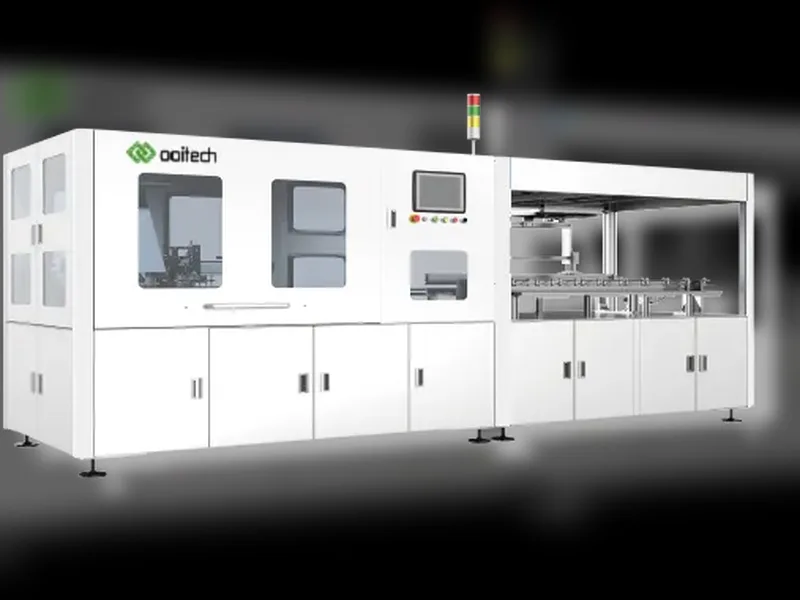
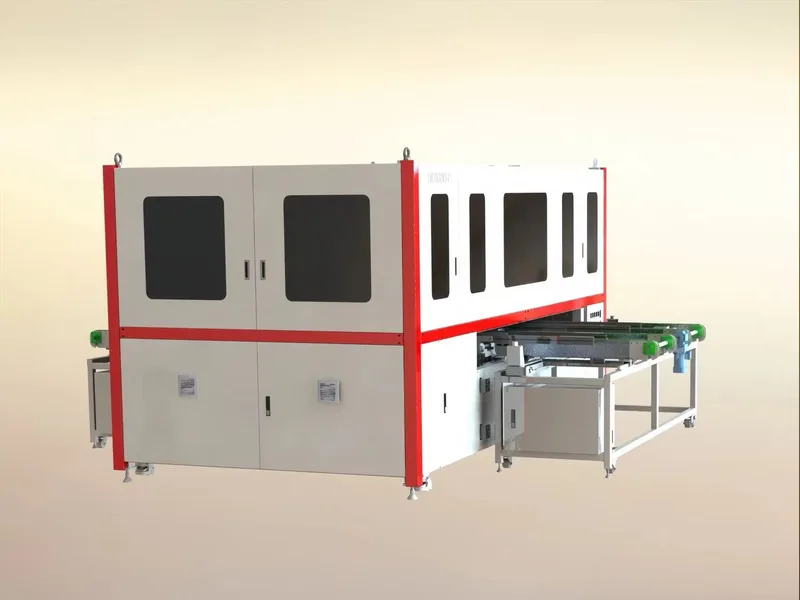
This happens constantly, and it is not the buyer's fault. Our own machines are called things like Solar Cell Laser Cutting Machine and Solar Cell Tabber Stringer. They handle cells, and they live in a panel factory.
Two plants, two different businesses
A solar cell is a single photovoltaic device — roughly 16 to 23 cm across, producing about 0.5 to 0.6 volts. A solar panel contains many of them wired in series to raise voltage, then in parallel to raise current.
That is the whole of the relationship. The two products are made by two industries.
| Cell manufacturing | Panel (module) manufacturing | |
|---|---|---|
| Input | Silicon wafer | Finished, graded cells |
| Output | One cell at ~0.6 V | One sealed module, 400–700 W |
| Signature equipment | Diffusion furnaces, PECVD, screen printers, firing furnaces | Tabber stringer (solders cells into strings), laminator, framing machine, EL and IV testers |
| Process temperature | Above 800 °C, plus vacuum deposition | Lamination near 150 °C; soldering is a short, low-thermal-budget step |
| Who runs it | A small number of very large manufacturers | 5 MW to 1 GW plants, including regional entrants |
We at Ooitech supply panel production lines from 5 MW to 1.2 GW. We do not make diffusion furnaces, PECVD systems or screen printers. If you are building a cell fab, I am the wrong person to ask.
Where cell manufacturing ends
Cell manufacturing starts with polysilicon and ends with a box of tested cells. Five steps, roughly.
Polysilicon is melted and either cast into multicrystalline ingots or pulled into a monocrystalline ingot by the Czochralski process. The ingots are sliced into wafers, cleaned and textured so they trap more light.
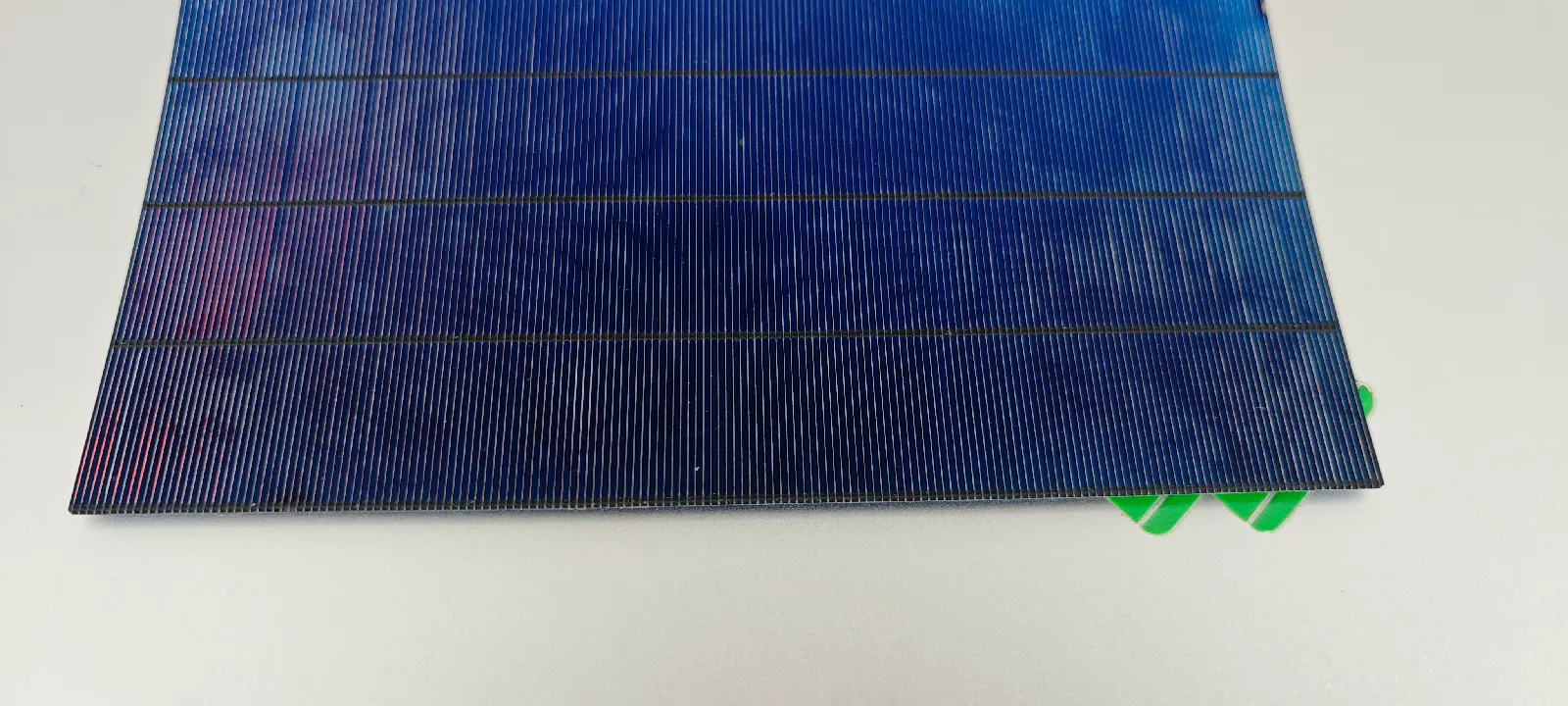
Half-cut monocrystalline solar cell with busbars, before module assembly
Then doping. Boron and phosphorus are diffused in to create a p-n junction, and the conductive path that forms around the wafer edge is removed to prevent short circuits. An anti-reflective coating goes on next, usually silicon nitride deposited by plasma-enhanced chemical vapour deposition. Finally, metal contacts are screen-printed in silver or copper paste and fired.
When that finishes you have a cell. It gets tested, binned by current, packed, and sold. That is the end of one industry.
About 95% of commercial PV cells are crystalline silicon, and the remainder is mostly cadmium telluride thin film. Cell fabrication is capital-heavy and dominated by a handful of large players. Every generation change, from Al-BSF to PERC and from PERC to TOPCon, was driven by the same concentrated group of manufacturers. PERC alone added roughly 12% more energy output over the older Al-BSF structure.
Where panel manufacturing begins
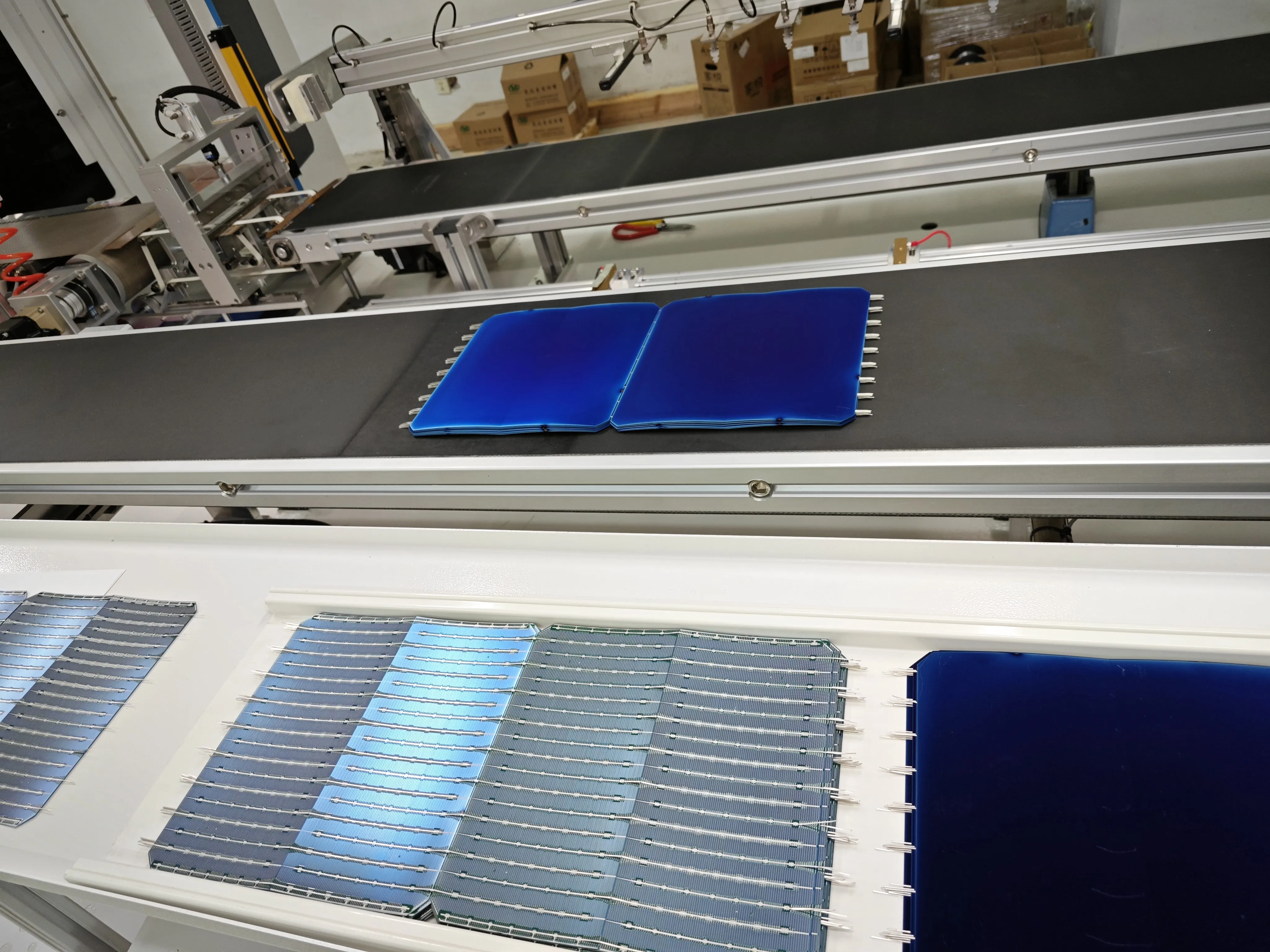
Graded solar cells feeding into a module assembly line on a conveyor
Module assembly picks up the box of cells and turns it into a product. Six stations, in order.
It starts with a laser that cuts cells to size for half-cut and shingled formats. A laser set too hot damages the cell edge, and the micro-crack it leaves stays invisible until electroluminescence — by which point the module is already sealed. Then the stringer solders ribbon onto every cell and joins them into a series string. On our AM050FH the cell range runs from 161 mm to 230 mm, cell breakage stays under 0.2% and soldering yield is above 95%. Neither defect can be fixed downstream. A cracked cell that goes into the laminator comes out as scrap, not as rework.
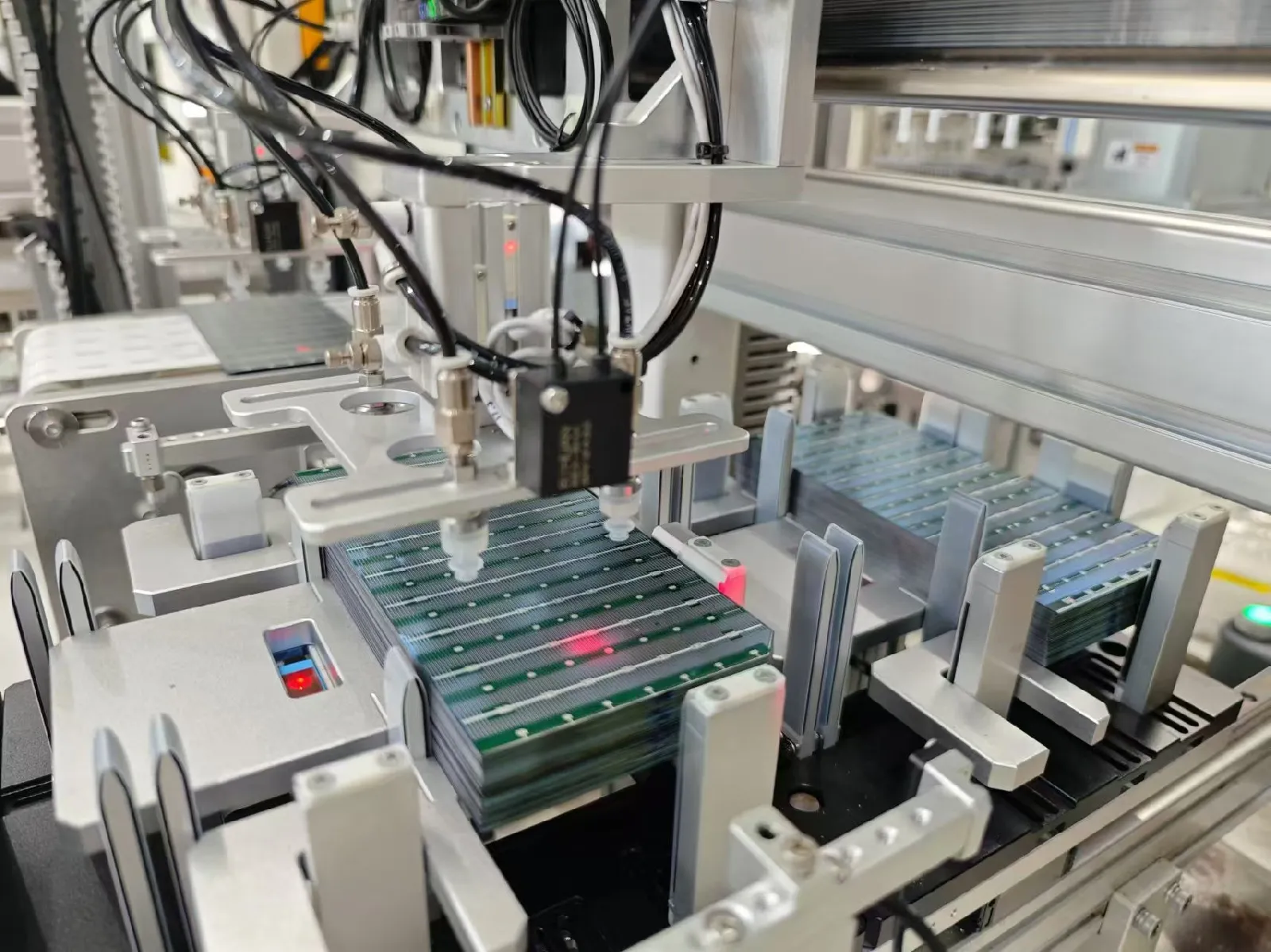
Soldering head placing copper ribbon onto solar cells
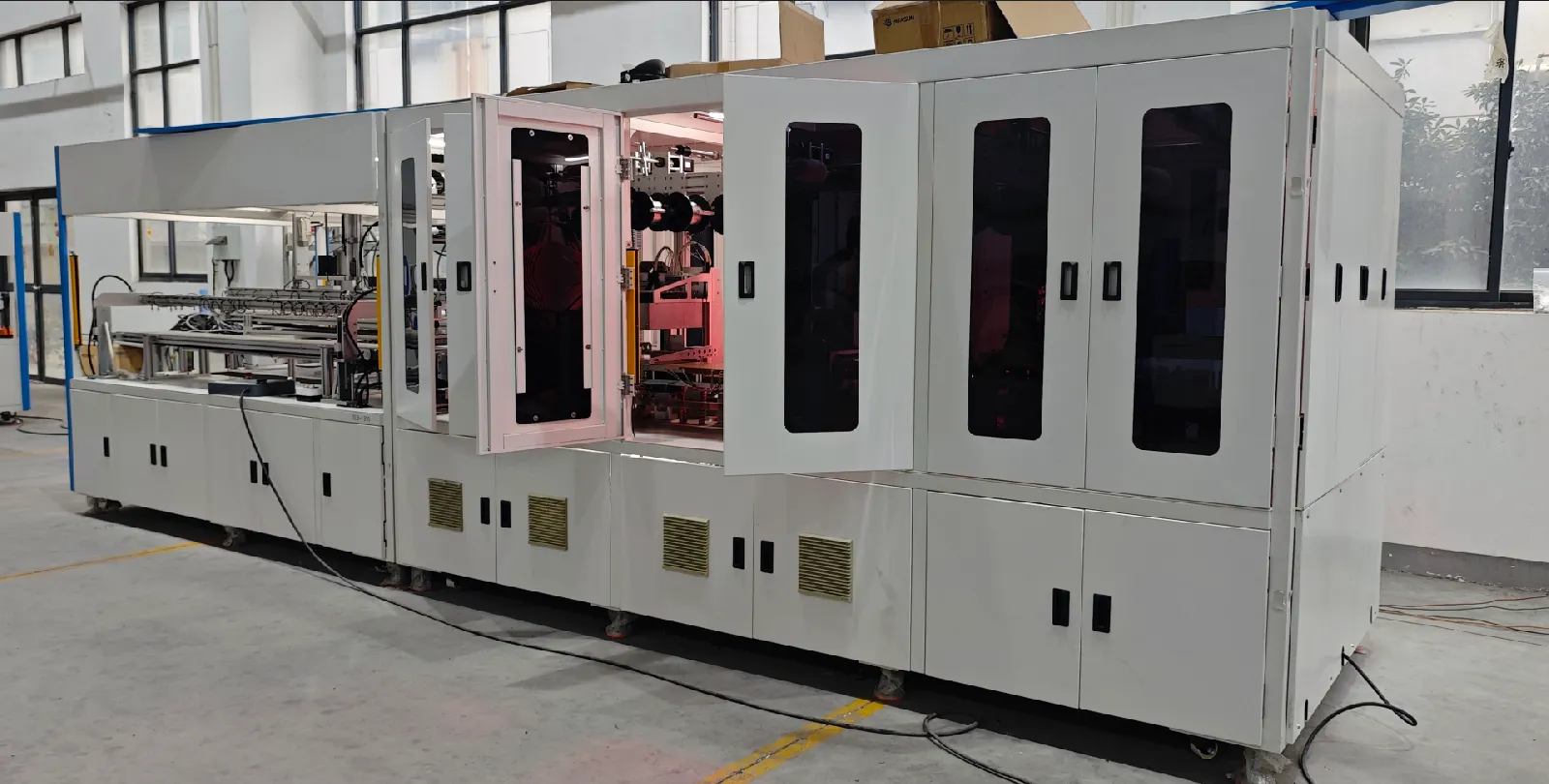
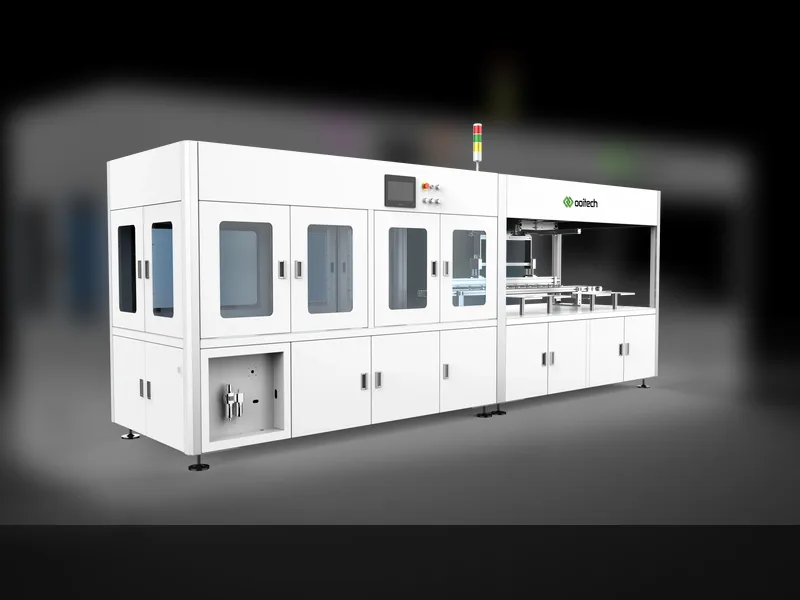
Automatic solar cell tabber stringer machine in a module plant
Layup is where the stack comes together: strings laid on glass, with the encapsulant (EVA) above and below and the backsheet on top. Then the laminator pulls vacuum, applies pressure and holds the stack near 150 °C until the EVA crosslinks into one sealed unit. That temperature window is narrower than the equipment brochures suggest, and a platen with a cold corner leaves uncured encapsulant that will delaminate years later. The laminator itself is where most of that risk sits. Framing, the junction box and final testing finish the module off, and the two test gates belong inline rather than at the end of the line. A plant that only tests finished modules has already laminated every stringing defect into a product it cannot rework.
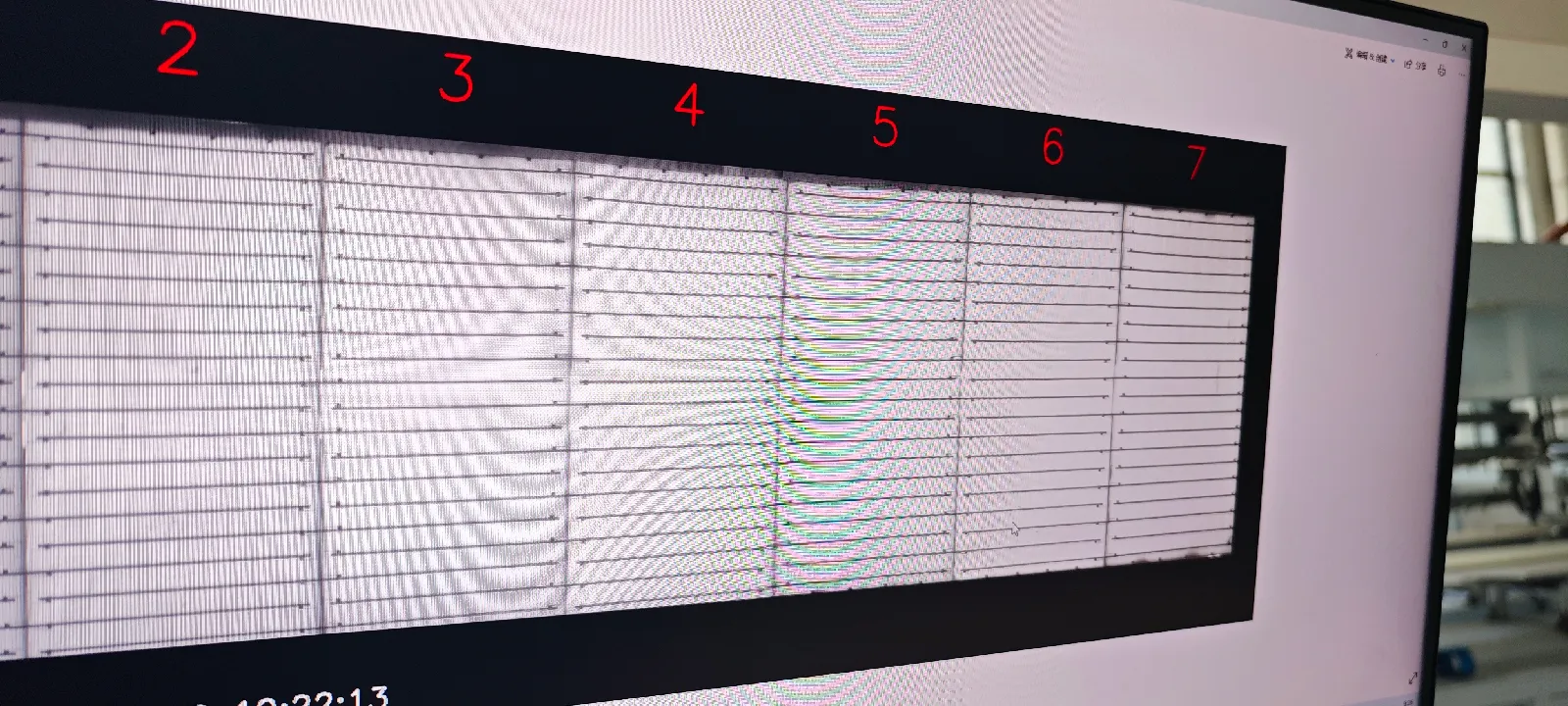
Electroluminescence inspection of soldered cell strings
Every machine in that list lives on a module line, including the ones named after cells.
The cell side is written up separately in our TOPCon solar cell manufacturing process guide.
Why the mix-up costs money
Getting this wrong changes your capital plan by an order of magnitude.
A cell fab needs high-temperature furnaces, vacuum deposition and a cleanroom-class environment. A module plant needs an industrial hall, moderate power, and a technical team that can be trained in months. For the same nominal output the investment differs by roughly an order of magnitude. That gap shows up in the building you lease, the power connection you apply for, the permits, the skills you hire, and how long you wait before the first saleable module leaves the door. Buyers who budget for the wrong one either over-raise capital they cannot deploy, or under-raise and stall halfway through the building with a shell and no equipment in it.
There is a second trap. Suppliers quote annual MW, and annual MW is partly a wattage calculation. Take a machine processing 24 modules per hour. Rate the module at 275 W and you get roughly 57 MW a year. Rate the same module at 550 W and the same machine suddenly produces 114 MW. Nothing in the chamber, the pumps or the cycle changed. When you compare quotations, ask for saleable modules per hour and convert to MW yourself using the product you will actually build.
Global installed PV capacity reached about 1,185 GW by the end of 2022, supplying over 6% of world electricity, and the cost of solar electricity has fallen about 85% since 2010. Growth like that pulls a lot of new entrants into module assembly, which is exactly why so many first-time buyers arrive at a cell-versus-panel question.
Why the confusion persists
The 95% figure makes cell manufacturing sound like a broad industry when it is really a narrow, concentrated one. The bigger factor is closer to home. Module lines buy cells, handle cells, cut cells and test cells all day, so naming the equipment after the thing it touches is natural. That habit stops being useful the moment you are trying to work out what you are being sold.
Four things to ask before you compare quotes
Ask these before you compare any two quotations.
Start by asking for the station list. A module line quote lists stringer, layup, laminator, framing and tester — the full sequence is here — while a cell line quote lists furnaces, deposition and printing. That one reply usually settles it.
If it does not, ask what goes in at the start of the process. Wafers means cell manufacturing; boxes of finished cells means module assembly. Ask what the building looks like — a cleanroom class hall with a heavy power supply points to a cell fab, an ordinary industrial hall to a module line. And ask what the output is measured in: modules per hour is a module line, wafers per hour is a cell line.
A supplier who cannot answer the first question clearly has answered it.
FAQ
Is a solar panel just many solar cells? Electrically, yes — 60 to 72 cells in series, or 144 in half-cut format. Physically it is a different product from a different plant. The cells arrive finished and graded; the module line's job is to interconnect, encapsulate and protect them.
Can one company run both? Some large manufacturers do, on the same site. They are separate buildings with separate equipment and usually separate teams, and most module makers buy their cells from specialist cell producers.
My supplier quoted a "solar cell machine". Which plant is it for? Check the process. If it solders ribbon, cuts cells for half-cut layouts, or tests finished modules, it is module line equipment.
Which is more profitable? Module assembly, on the numbers I see, but the advantage is thinner than the capital gap suggests. A module line needs less capital and reaches production in months, so several plants compete for the same orders and margins stay tight. Cell fabrication needs far more capital and is dominated by a handful of owners, which keeps prices steadier but makes entry almost impossible without a large balance sheet. Either way, utilisation decides the outcome long before technology does.
Does the cell efficiency limit what my module can reach? Yes, and that ceiling is fixed before the cells ever reach you. A module line can preserve cell efficiency or lose it, through micro-cracks, cold solder joints or EVA that never fully crosslinked. It cannot add efficiency the cell did not have. A module line protects a ceiling it did not create.
My quotation is in MW per year. Is that comparable? Only if both quotes use the same module wattage and the same uptime assumptions. Convert to saleable modules per hour first, then apply your own product's wattage.
What to do next
Next time you send an enquiry, put one line at the top of it: please include the full station list with cycle time per station. Suppliers who have it will send it in two minutes. Suppliers who do not will send an annual MW figure instead.