Solar Cell Stringer Machine Market
Table of Contents
Quick answer: The automatic solar cell stringer is the highest-value and most technically demanding machine on a module line, which is why its market tracks cell technology rather than general manufacturing growth. Global module capacity in recent planning rounds has run in the 620 GW to 680 GW band, against an earlier figure around 317 GW and a 200 GW threshold before that. Stringer demand scales with that capacity and also with format churn: each move from full to half-cut, and half-cut to third- or four-cut, re-tools the stringing step. Because the stringer sets module power and the ceiling on line yield, buyers rarely buy it on price alone — they buy on breakage rate, placement accuracy and the range of cell formats the platform can accept without a rebuild.
PV Module Manufacturing · by Jerry, Ooitech
Introduction
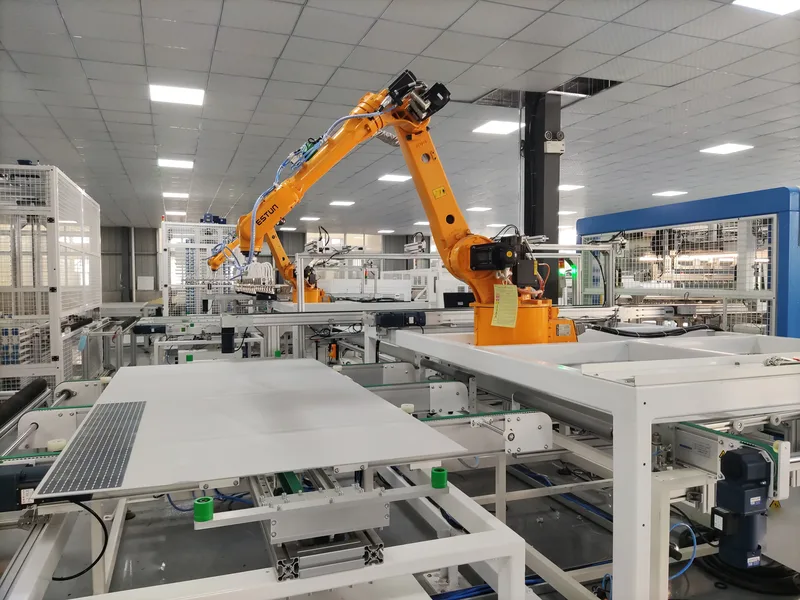
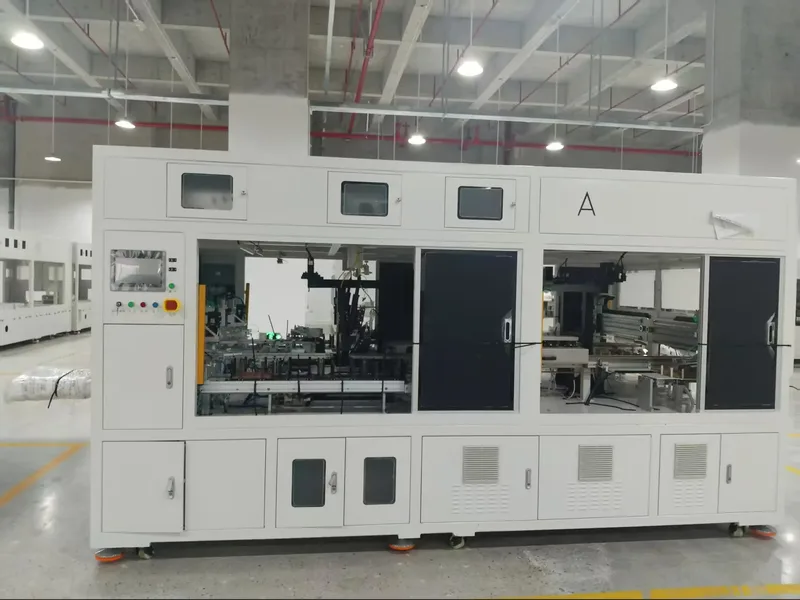
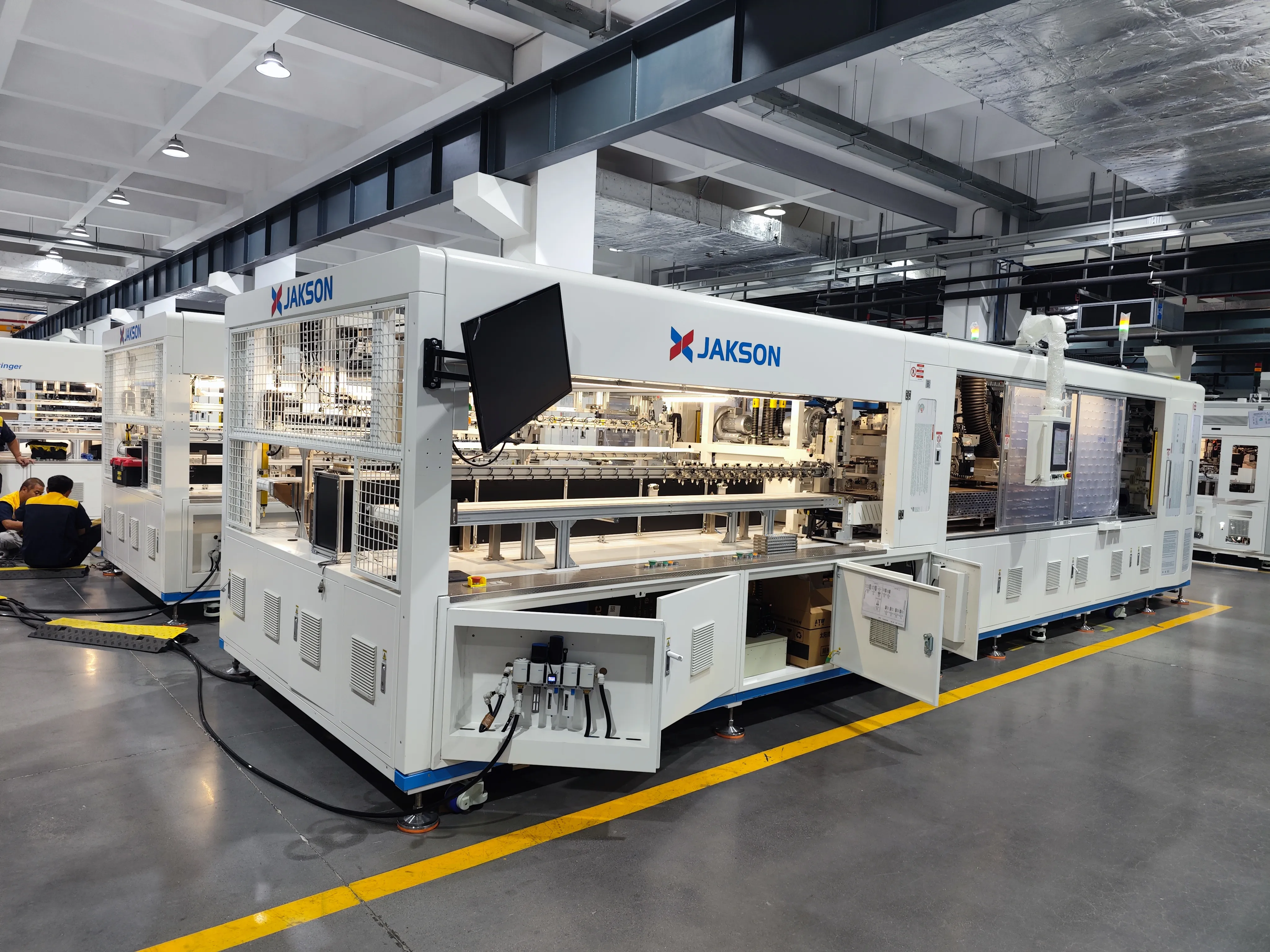
The automatic solar cell stringer is one of the highest value and most technically demanding pieces of equipment in crystalline silicon module manufacturing. It handles cell interconnection, ribbon laying, soldering into strings, machine vision positioning, tension control, defect detection and string transfer, and it directly determines module power, yield, micro-crack rate, welding reliability and line takt.
Between 2020 and 2025 the Chinese stringer industry moved rapidly from the PERC era toward high-efficiency routes such as TOPCon, HJT, BC and 0BB. As of July 2026 the growth logic has shifted again. 2025 was a peak installation year in China, while 2026 enters a phase of adjustment and industry consolidation. The demand driver has moved away from raw capacity expansion toward technology upgrades, brownfield retrofits, 0BB/BC adaptation, overseas localized module plants and small-to-medium flexible lines.
Industry Background and Market Environment
From scale expansion to efficiency competition
For the past decade the global PV mainline was scale, cost reduction and iteration. PERC was once dominant, but as its conversion efficiency approached the ceiling, N-type TOPCon, HJT and BC became the new competitive focus. In 2025 China still led global manufacturing, with polysilicon, wafer, cell and module output of roughly 1.34 million tons, 680GW, 660GW and 620GW, each with global share above 85%.
Yet the manufacturing side faces clear pressure: structural overcapacity, persistently low prices, squeezed margins and slow exit of obsolete capacity. 2025 is widely seen as the pivot from scale expansion toward quality and efficiency. From 2026 onward, module makers investing in stringers should weigh technology compatibility, yield, silver reduction, welding reliability, OEE, after-sales capability and upgrade potential above pure speed.
2025 installation peak and the 2026 adjustment
China added about 317GW of PV in 2025, up 14% year on year, with cumulative capacity reaching about 1,200GW by year end, up 35%. In the first quarter of 2026 new grid-connected PV was 41.19GW, and by end of May 2026 total solar capacity reached about 1,260GW, up 16.3%. The market remains large but the pace has clearly slowed compared with the 2025 rush. Industry roadmaps expect new installations of roughly 180 to 240GW in China in 2026, with a return to the upward channel expected after 2027.
Electricity price marketization reshapes expansion pace
The 2025 reform pushing new-energy power fully into market trading changed project return models, especially for distributed PV. For manufacturing this means downstream customers care more about module cost, efficiency, warranty risk and localized supply. As a result large greenfield line additions slow, while demand rises for high-efficiency, BC, 0BB, low-silver modules and overseas localized lines.
Market Size and Demand Structure
Global market still growing but slowing
Stringer demand is tied to module output, new lines, technology upgrades and retrofits. In 2025 global cumulative PV approached 3TW with about 698GW newly added, China accounting for roughly 60%. Commercial research puts the 2025 global stringer equipment market at around RMB 14.2 billion, up over 18%, projected to reach about RMB 22 billion by 2030 at a CAGR near 7%. These are commercial estimates rather than official statistics, but they indicate the order of magnitude: 2025 was still supported by module demand, while after 2026 upgrades and replacement retrofits gain weight.
China shifts from capacity pull to structural upgrade
From 2020 to 2023 the Chinese stringer market grew fast, from about RMB 1.75 billion to RMB 4.53 billion, driven by module expansion, multi-busbar adoption, large wafers and the N-type transition. From 2024 to 2026 the logic changed, with capex more cautious. The main demand now comes from continued TOPCon line optimization, PERC-to-TOPCon/BC/0BB retrofits, dedicated BC/XBC stringers for premium modules, high-end HJT low-temperature and 0BB interconnection equipment, and rising overseas localized plant demand pulling Chinese equipment exports.
Overseas markets as a key growth point
Europe, the US, India, the Middle East, Southeast Asia and Africa are pushing local module manufacturing. New overseas entrants typically do not build multi-GW super factories at once; they start with 10MW, 30MW, 60MW, 120MW, 200MW or 500MW lines to complete local certification, team training, customer development and market validation. These customers usually have limited budgets, need compatibility with multiple cell sources, need fast local worker training, need full turnkey design, installation, commissioning, raw material advice and remote after-sales, and want a line that can run mainstream TOPCon/PERC while also trialing BC/HJT. A strongly compatible, moderate-investment, scalable stringer therefore suits the first stage of a new overseas plant.
Technology Routes: PERC, TOPCon, BC, HJT and 0BB
PERC: large installed base, declining as a new mainstream
PERC long dominated modules, but by 2025 to 2026 its position for new investment clearly declined. It retains installed lines, low-cost modules and some price-sensitive demand, yet is progressively replaced by TOPCon and BC in high-efficiency competition. From a procurement view, a pure PERC machine no longer suits a new line as a long-term core; even entrants starting with PERC modules should prefer equipment that also handles TOPCon, HJT and BC to avoid obsolescence within two to three years.
TOPCon: the mainstream volume technology around 2026
TOPCon is the most mature and highest-capacity N-type route, with about 87.6% cell market share in 2025. It demands higher soldering precision, stable low-stress welding, SMBB/multi-busbar/thin-ribbon adaptation, support for half-cut, three-cut and rectangular formats, and integration with EL testing, vision positioning, auto-layup and MES traceability. For most new overseas plants TOPCon remains the most realistic main product route, so a stringer must first guarantee stable TOPCon mass production.
HJT: high efficiency, higher barriers
HJT offers high efficiency, low temperature coefficient and high bifaciality, but demands higher investment and process control. Because HJT passivation layers are temperature sensitive, interconnection often needs low-temperature soldering or conductive adhesive, making dedicated HJT stringers more expensive and more demanding on teams, materials and process windows. For early overseas entrants HJT can be a reserved capability or premium direction rather than the sole first-stage mainline.
BC/XBC: the differentiation path for premium modules
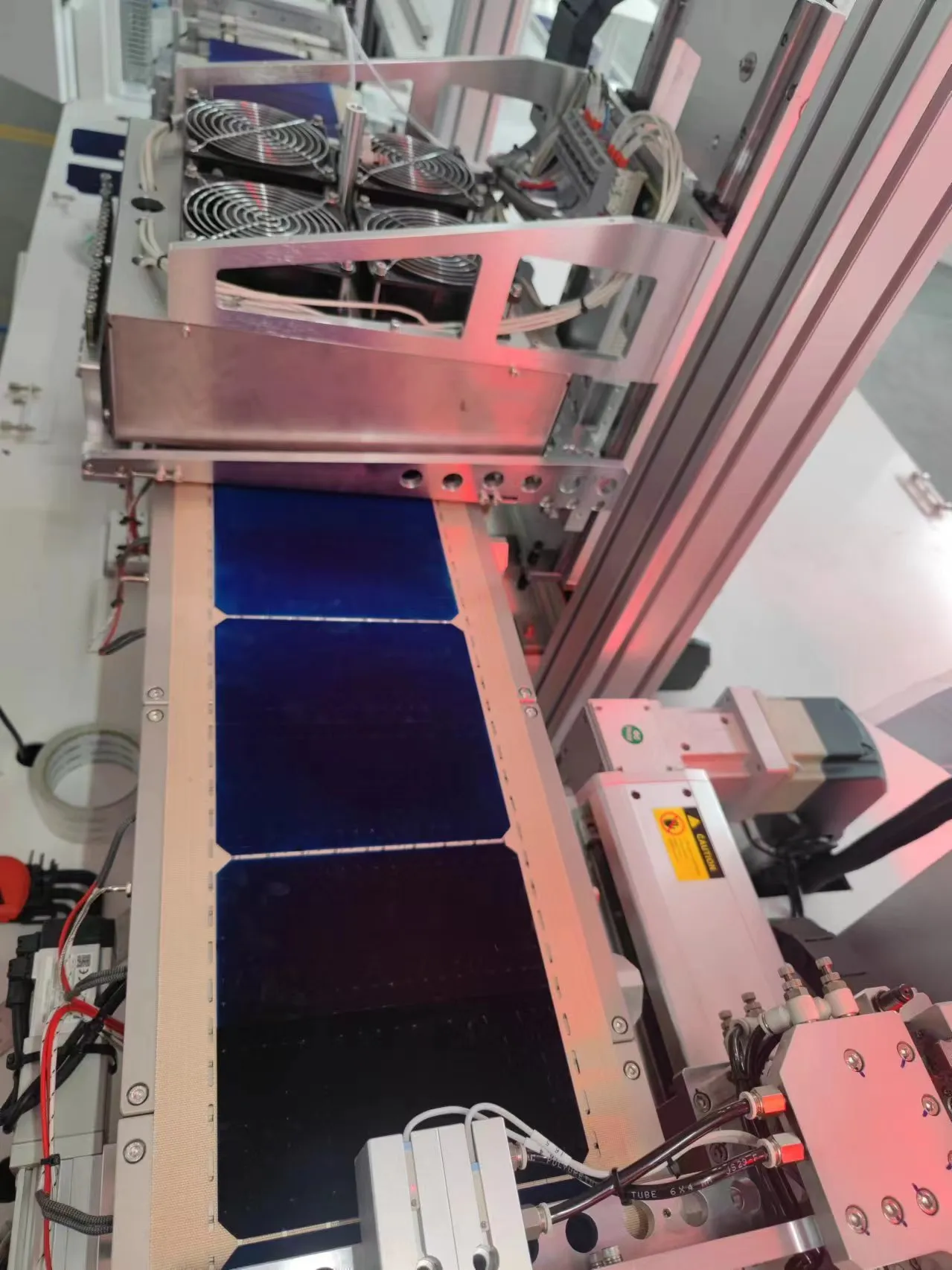
Back Contact places both positive and negative electrodes on the cell rear, reducing or eliminating front metal shading to raise front light capture and improve appearance. HPBC 2.0 uses a back-contact design with an unshaded front, with commercial module efficiency up to 24.8% and power up to 670W on the Hi-MO X10 platform; ABC, also a full back-contact route, has reached a record commercial efficiency of 26% on N-type bifacial modules. IBC is the classic interdigitated back-contact route with rear-only electrodes. BC imposes requirements very different from front-side soldering: higher vision positioning precision for complex rear electrode patterns, finer control of ribbon path, pressure, temperature and tension, higher consistency demands with no front busbars, strong adaptability across differing HPBC, ABC and IBC structures, and greater sensitivity to yield, reliability and long warranty because BC targets the premium market. A BC stringer is therefore not a simple MBB upgrade but a redesign of positioning, welding, clamping, transfer and inspection logic.
0BB: a key path to lower silver consumption
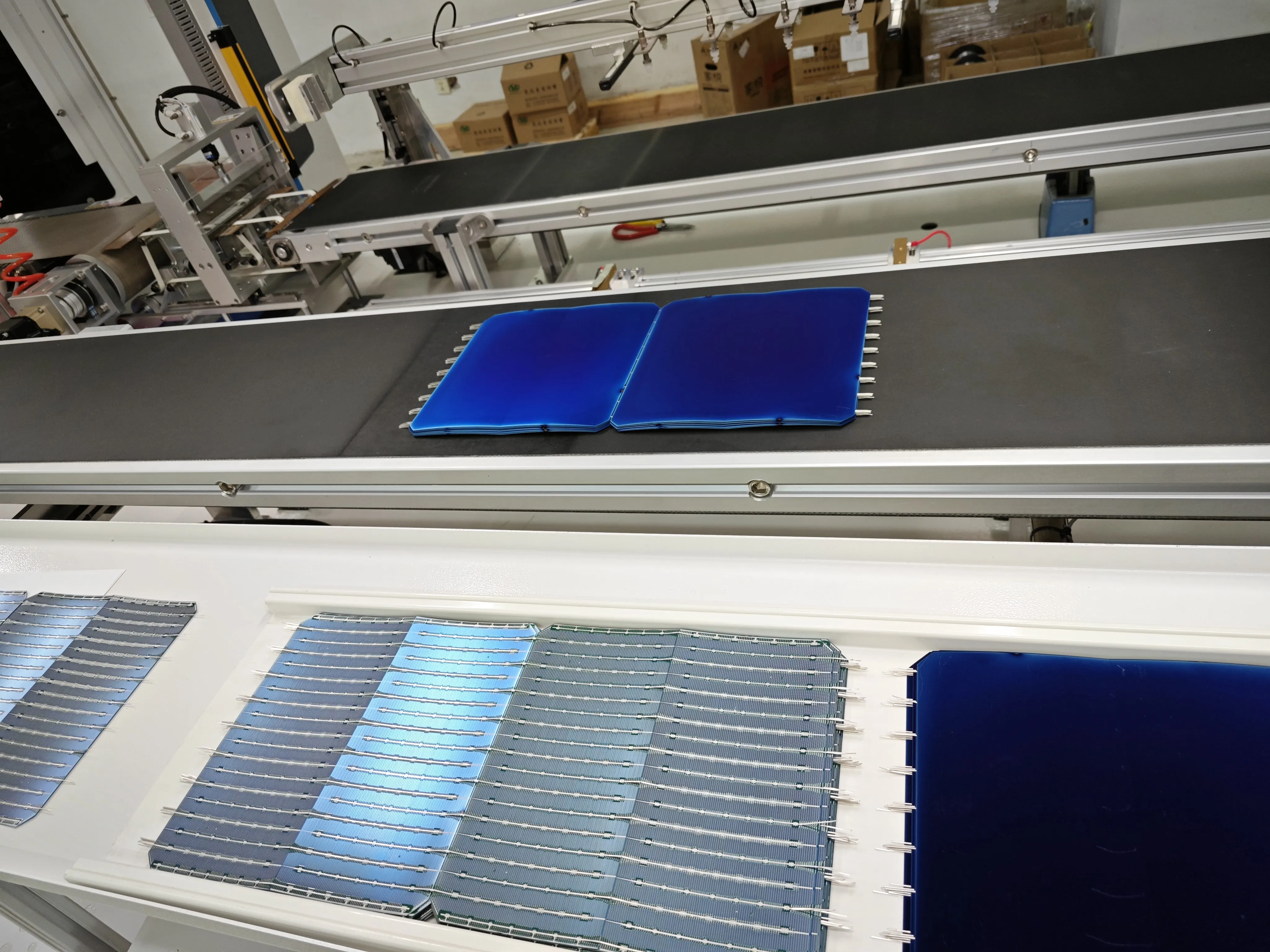
0BB, or busbar-free technology, aims to cut silver paste use and metallization cost while improving current collection through finer, denser wires. Since 2024 it has entered accelerated industrialization, driving upgrades across stringers, ribbons, encapsulants, inspection and repair equipment. It demands higher positioning precision, stable fine-wire tension control, more complex clamping and welding paths, stricter EL and appearance inspection, and harder repair processes. For early overseas customers 0BB can be a reserved upgrade direction, but the equipment platform should ideally allow compatibility or later upgrade.
Stringer Parameter Evolution
Throughput and precision
Over five years stringer speed rose from 1,000 to 2,000 pcs/h up to 6,000 to 10,000 pcs/h and above, with mainstream high-speed models around 6,800 to 8,000 pcs/h. But speed is not the only metric. For a new overseas plant, stability, commissioning difficulty, yield, training time and after-sales response often matter more than peak speed; a fast machine with a narrow process window, hard-to-train staff or slow spare parts can deliver real OEE below its design value. Precision requirements also rose sharply: PERC needed relatively loose positioning, while TOPCon, SMBB, BC and 0BB require far tighter accuracy. BC in particular, with rear-only electrodes, needs rear-pattern recognition, dual positioning of cell edge and electrode pattern, tight ribbon placement control, consistent welding head pressure and post-weld EL defect identification.
| Parameter | Typical Range / Requirement |
|---|---|
| Throughput | About 6,800 to 8,000 pcs/h (high-speed) |
| Cell sizes | G1, M6, M10, M12, half/third/rectangular |
| Ribbon types | Round wire and flat ribbon |
| Technology routes | PERC, TOPCon, HJT, BC |
| BC compatibility | HPBC 1.0/2.0, ABC 1.0/2.0, IBC |
| Inspection | EL and machine vision positioning |
Ribbon compatibility: why round and flat both matter
Ribbon is a key interconnection material. Conventional modules mostly use flat ribbon, while multi-busbar, SMBB, 0BB and high-efficiency modules increasingly push round, shaped and ultra-fine ribbons. Round ribbon helps optical reflection and current collection, while flat ribbon is mature and stable in traditional processes. Support for both round and flat ribbon is important for overseas entrants because they often face unstable cell and ribbon supply chains. Single-ribbon equipment limits later supplier or route changes, so dual compatibility reduces raw-material sourcing risk, route-switching risk, order-spec change risk, future SMBB/BC/0BB upgrade risk and spare-part inventory pressure.
Multi-route compatibility
After 2026 the most valuable stringer is not a single-route machine but a flexible platform covering PERC, TOPCon, HJT and BC cells across G1, M6, M10 and M12 sizes. Equipment that already demonstrates TOPCon and HJT compatible BC stringing, and adapts to HPBC, ABC and IBC cells, lets a customer run PERC/TOPCon volume production while reserving BC/HJT premium development, which fits overseas early-stage plants and multi-route pilot production well.
Competitive Landscape
The global market has a clear leader in high-speed stringing, serving over 1,000 production bases with above 60% share and all top ten module suppliers as customers, strong in high-speed machines, top-tier validation and 0BB retrofit reserves, but better suited to well-funded customers building GW-class premium lines. Other players offer strong whole-line automation and multi-route layouts for large enterprises and smart-manufacturing upgrades, or multi-busbar stringers reaching 9,500 to 10,000 pcs/h with AI-assisted recognition, EL and appearance inspection for customers with capable technical teams, or deep niche expertise in infrared soldering and cut-string integration. Positioned differently, turnkey suppliers focused on overseas customers emphasize small-to-medium line landing, raw material supply, equipment combination, training, installation and commissioning, offering staged solutions from a few MW to several hundred MW, allowing customers to start with lower-risk semi-automatic lines and upgrade gradually, with a latest BC stringer compatible with PERC, TOPCon, HJT and BC routes for markets where the technology choice is still uncertain.
Price Trends and Procurement Cost
Price stratification
Stringer prices vary widely by automation level, throughput, route compatibility, vision system, welding process, inspection modules, brand and after-sales.
| Type | Application | Price Feature |
|---|---|---|
| Manual / semi-auto | Lab, small batch, low budget | Low investment, labor dependent |
| Standard full-auto | PERC/TOPCon conventional | Mature, highly competitive |
| High-speed MBB/SMBB | Large-scale TOPCon | High takt, higher cost |
| HJT low-temperature | HJT premium modules | Complex process, high price |
| BC/XBC dedicated | HPBC, ABC, IBC | High barrier, custom adaptation |
| 0BB stringer | Silver-reduction route | Clear technology premium |
In 2026 prices are not uniformly rising or falling but clearly diverging: conventional PERC/TOPCon equipment faces intense competition and price pressure, while BC, 0BB and HJT retain premiums due to technical barriers.
Real overseas cost and value
Overseas buyers must look beyond machine price to full lifecycle cost: purchase, shipping and customs, installation and commissioning, tooling and spares, worker training, ramp-up losses, consumable adaptation for ribbon, cells and flux, downtime repair and later upgrade cost. For early overseas plants the most expensive item is often the second investment after choosing the wrong route. A multi-route compatible stringer, though priced above a plain PERC machine, carries lower lifecycle risk and better supports a start-then-upgrade path where PERC/TOPCon output builds cash flow before BC premium modules are developed on the same platform.
R&D and Small-Line Demand
As routes diversify, R&D centers, university labs, small module plants and overseas pilot plants increasingly need small stringers that prioritize compatibility, flexibility and process validation over peak speed. Such machines should offer multi-size cell compatibility, MBB/SMBB/BC/IBC adaptation, adjustable temperature, pressure and speed, small-batch trials, data logging and traceability, fast changeover, simple interfaces and low maintenance. Overseas early-stage and R&D customers share needs: uncertainty over the future main cell type, frequent changeover, validation of different ribbon, encapsulant and cell combinations, limited team experience, and a preference for stable small-scale production before scaling. A single platform compatible with PERC, TOPCon, HJT, HPBC, ABC and IBC and supporting round and flat ribbon can cover R&D, pilot and early overseas volume production alike.
Procurement Decision Guidance
| Customer Type | Recommended Strategy |
|---|---|
| Chinese top GW module maker | High-speed TOPCon/0BB/BC dedicated lines |
| Mature overseas module maker | High-automation TOPCon plus BC upgrade platform |
| Overseas new entrant | Flexible stringer for PERC/TOPCon/HJT/BC |
| R&D institution | Small, multi-parameter, highly compatible unit |
| Cost-sensitive buyer | PERC/TOPCon compatible now, reserve BC upgrade |
| Premium rooftop module maker | Focus on HPBC, ABC, IBC BC routes |
A phased path suits first-time overseas entrants: stage one, a 10 to 60MW pilot line to train the team, master the process and build local sales, with stable, easy-to-maintain and compatible equipment; stage two, upgrade to a 60 to 200MW growth line introducing mainstream TOPCon and testing BC and small premium orders; stage three, expand beyond 300 to 600MW with route-specific TOPCon, BC, HJT or 0BB equipment. Before purchase, confirm supported cell sizes such as M10, M12 and rectangular, support for HPBC 1.0/2.0, ABC 1.0/2.0 and IBC structures, TOPCon/PERC/HJT ordinary soldering, round and flat ribbon support, ribbon spec range, welding temperature range and control precision, changeover time, yield, breakage and peel-strength metrics, integrated EL or vision inspection, remote diagnosis and software upgrade, overseas spare-part lead time, and process-package advice for cells, ribbon, encapsulant and flux.
Risk Analysis
Route risk remains as BC, HJT and 0BB evolve fast with large structural differences between makers, so avoid binding to a single route; stronger compatibility lowers this risk. Demand risk rises as 2026 Chinese additions fall from the 2025 peak and the global market grows more rationally, so build capacity in stages by orders, certification, local policy and financing rather than overbuilding. Supply-chain risk is high overseas for cells, ribbon, glass, EVA/POE, frames and junction boxes, so equipment must accept multiple material combinations. Training risk is significant because stringing is process-heavy, and without experienced process engineers even premium machines can suffer low yield, high breakage, cold or misaligned welds and downtime. After-sales risk is decisive: buyers must confirm remote diagnosis, English documentation, spare-part lists, video training, on-site installation and long-term support, since response speed often sets the ramp-up pace.
Conclusion
As of July 2026 the stringer industry has entered a new phase: expansion drove 2020 to 2023, accelerated route switching marked 2024 to 2025, and 2026 onward combines industry consolidation, technology upgrades, brownfield retrofits and overseas localization. TOPCon remains the mainstream volume route, BC/XBC is the key premium direction, HJT keeps its efficiency edge at higher cost and barriers, and 0BB represents the silver-reduction and interconnection upgrade trend. For buyers the priority in 2026 is not raw speed but a platform with long-term adaptability, judged by multi-route compatibility, ribbon compatibility, BC adaptation, low-stress welding, vision positioning, yield stability, changeover efficiency, after-sales and upgrade potential. The keywords for 2026 stringer procurement are compatibility, flexibility, low risk, upgradability and overseas suitability.
Ooitech's View
As a global solar panel production line supplier focused on module (not cell) manufacturing turnkey lines, Ooitech sees the 2026 stringer decision as fundamentally a risk-hedging one rather than a speed race. For overseas entrants building 10 to 200MW lines, a BC stringer that natively supports round and flat ribbon and adapts across PERC, TOPCon, HJT and back-contact structures like HPBC, ABC and IBC lets a plant earn cash flow on mainstream N-type volume while keeping a low-cost door open to premium BC output on the same platform, which is far cheaper than rebuying equipment after a wrong route bet. Readers who want to see how these stringing and full-line processes actually run on the floor are welcome to follow and subscribe to Ooitech's YouTube channel at www.youtube.com/ooitech for more solar factory insights.