No-Clean Halogen-Free Flux for N-Type Cells: Why Residue Decides Module Life
Table of Contents
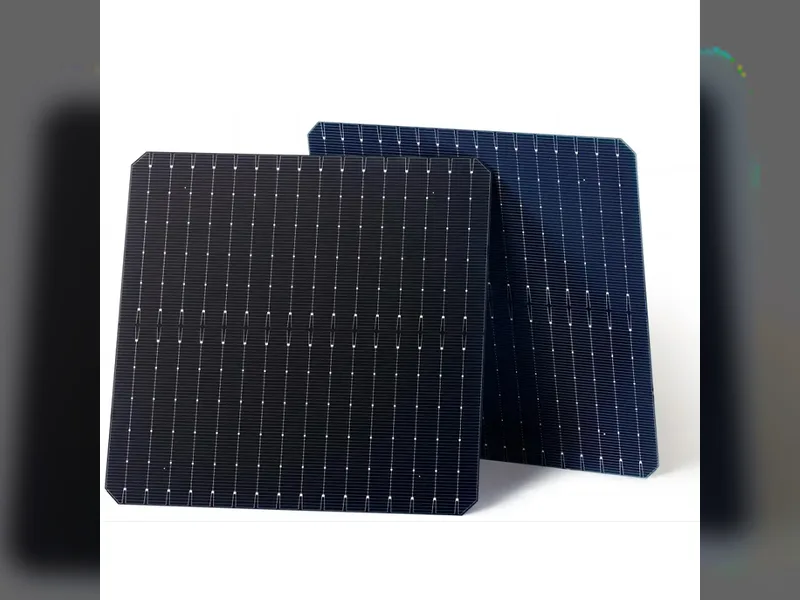
Flux is the smallest consumable on a module line and the one most likely to decide whether a 25-year warranty survives damp heat. As N-type cells — TOPCon, HJT and XBC — replaced PERC, the flux that worked on thick wafers and wide fingers stopped being adequate: the same activity that once cleaned a busbar cleanly now attacks ultra-fine fingers and thin passivation layers, and the solvents that once evaporated harmlessly now leave residue that shows up as insulation loss and delamination after 85 °C / 85 %RH ageing. The N-type era does not need a stronger flux. It needs a milder, cleaner and more predictable one.
Why the Old Flux Stopped Working
The failure modes are not theoretical; each one maps to a defect that a stringer operator already recognises.
| What changed | How the old flux fails | What you see on the line |
|---|---|---|
| Fingers are far finer, wafers far thinner | High-activity, strongly acidic flux attacks the silver finger and the passivation layer | Microcracks, efficiency loss, EL-dark areas along the finger |
| N-type cells demand a low-temperature soldering window | Poor low-temperature activation; the activator flashes off in preheat before it can work | Cold joints, unsoldered joints, peel strength below specification |
| Reliability is now judged after damp heat | High-boiling-point solvents leave residue that looks clean but is not | Insulation resistance drop, ion migration, EVA/POE peel strength decay after 85/85 |
| Cold-weather production | Dibasic acid activators crystallise at low storage temperature | Batch-to-batch activity variation, seasonal yield swings |
| Halogen restrictions tightened in export markets | Halogen-containing formulations fail incoming inspection | Rejected shipments, failed spot checks in the EU, Japan, Korea and Southeast Asia |
The third row is the one that costs the most and shows up the latest. A flux residue that is invisible at the end of the stringer can still be sitting on the cell surface when the module goes into damp heat, where it becomes an ionic pathway. That is why the industry framing has shifted from treating flux as a consumable to treating it as a process material with a reliability consequence.
What Now Defines a Photovoltaic Flux
Four properties have moved from nice-to-have to specification items:
- Mild, controllable activity. Enough to break the oxide on the ribbon and pad at low temperature, not enough to etch the finger or the passivation layer.
- Extremely low residue, genuinely no-clean. Not merely invisible after soldering — electrically benign after accelerated ageing.
- Global compliance. Halogen-free and low-VOC, with the test documentation to prove it at the border.
- Mass-production stability. No crystallisation across the storage temperature range, so batch activity does not drift with the season.
These pull in different directions, and that is the whole difficulty. Higher activity gives better wetting and fewer cold joints, but attacks fine features. Lower activity is gentler but risks insufficient oxide removal. More solvent aids spreading but leaves more residue. A formulation is a compromise, and the useful question when comparing products is which compromise it made.
What a Formulation Actually Changes
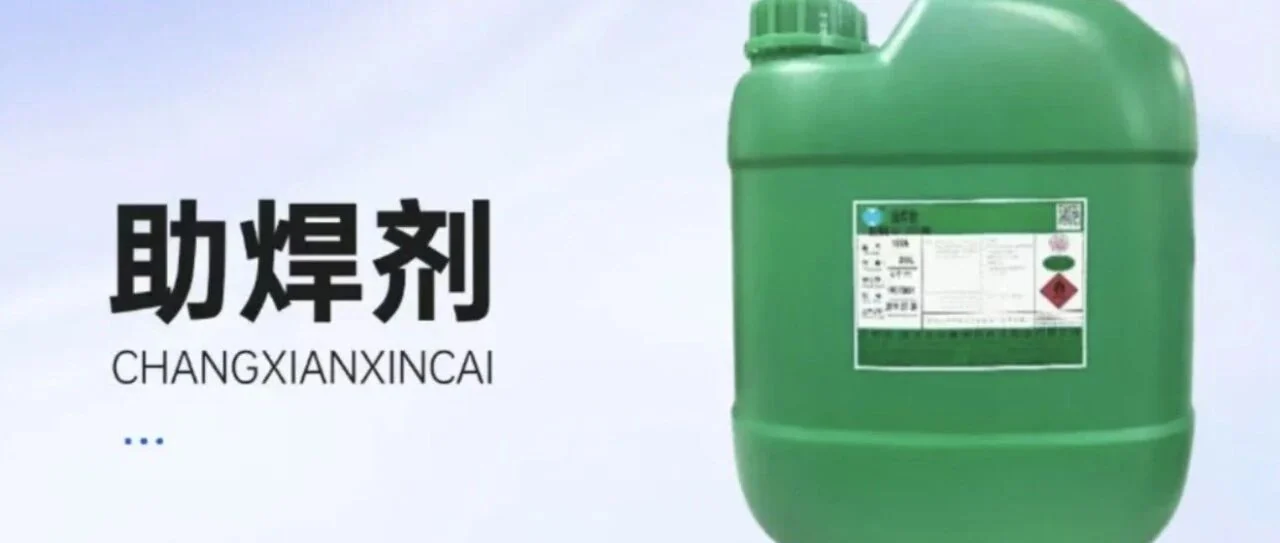
Taking one halogen-free no-clean product family as the worked example — the CX700/B/D series from Changxian, described in the Chinese industry article that is the source for this piece — the three levers are the solvent system, the activator system and the functional additives.
The solvent system
Many fluxes on the market rely on butyl-ether-type solvents: high viscosity, hard to evaporate, and the origin of the invisible residue problem. The alternative described here pairs a low-viscosity specialty solvent with dipropylene glycol methyl ether (DPM). The specialty solvent has no ether bond, atomises finely without clogging the nozzle, and evaporates early enough that preheat does not flash off the activator before it acts. DPM is added for wetting and solubilisation, and to suppress crystallisation at low temperature.
The activator system
Instead of a single aggressive acid, the described approach uses three mild organic acids — succinic, glutaric and adipic — together with a hydrocarbon-type activator, each doing a defined job. The intended behaviour is that the mixture works at low temperature to break the ribbon oxide, then activates fully during the high-temperature phase without corroding fine fingers, and largely volatilises afterwards so that acidic residue does not remain to drive PID.
The additives
A low-foam non-ionic surfactant supports high-speed spray lines — foam build-up is a real problem on automatic spray fluxers, and it causes uneven deposition. A benzotriazole (BTA) corrosion inhibitor is included to suppress oxidation discolouration on the copper side of the ribbon and to improve joint mechanical strength.
The vendor statements that accompany this formulation — solids content held at 1.4–1.7 %, no crystallisation after long storage at 5 °C, RoHS and REACH test reports, and GW-scale line results claiming 3–5 % yield improvement on TOPCon lines with reduced microcracking on HJT lines — are as published by the flux supplier. They are the supplier’s own figures, not an independent test, and should be read that way.
How Flux Faults Show Up on the Line
This is where it becomes an equipment question, and it is the part we deal with daily. When a customer reports a soldering defect, flux is rarely the first suspect and often the actual cause. The diagnostic pattern:
Cold joints and low peel strength
If peel strength is scattered rather than uniformly low, suspect the flux and the profile rather than the machine. An activator that flashes off during preheat produces joints that look soldered and fail on pull test. The tell is that the failure correlates with preheat dwell time or with ambient humidity, not with placement accuracy.
Ribbon not wetting the pad
Wetting failure with correct placement and correct temperature usually means the flux is not removing the oxide fast enough at that temperature, or it is being deposited unevenly. On an automatic spray fluxer, foam build-up and nozzle clogging are the mechanisms — both are formulation characteristics before they are machine faults.
Defects that only appear after lamination or damp heat
Insulation resistance drift, delamination at the cell surface, and discolouration that appears only after ageing point at residue. By the time these appear the modules are laminated, so the investigation is expensive. This is the strongest argument for qualifying flux by accelerated ageing rather than by how the joint looks off the stringer.
We build the stringers that run these processes — the SS-1500B, the SS-2500B and the AM050FH MBB stringer — and the practical rule we give customers is that the flux and the soldering profile have to be qualified together, on the target cell. A flux that performs beautifully on a PERC reference cell is not evidence for a 0BB TOPCon cell with finer fingers and a lower thermal budget. Our overview of how a tabber and stringer works covers the six stations and where the process window sits; the flux is what determines how wide that window actually is.
Compliance Is Now a Purchasing Criterion
Halogen content has moved from a technical curiosity to a trade barrier. The EU, Japan, Korea and several Southeast Asian markets now check halogen, VOC and hazardous residue content on incoming photovoltaic material, and a non-compliant flux is a rejected shipment rather than a quality discussion. The practical requirements are:
- Halogen-free and heavy-metal-free formulation, with a stated limit and the test method
- RoHS and REACH documentation covering the specific grade, not the product family
- Low VOC, which matters both for compliance and for the factory environment
- Batch-level certificates, because the compliance question is asked per shipment
What to Qualify Before You Switch
Changing flux is a process change, not a consumable swap. Before switching, run at minimum:
- Peel strength and joint appearance across the full preheat window, not at the nominal setting — the question is how much margin the new flux gives you before defects appear.
- EL inspection of the string, to catch finger damage and microcracks that visual inspection misses. If you do not have inline EL, this is the point at which an offline EL setup earns its cost.
- Insulation resistance and peel strength after damp heat, on laminated coupons. This is the only test that addresses the residue question.
- A cold-storage check. Store a sample at the lowest temperature your warehouse actually reaches, then verify activity and appearance — if your site experiences winter, this is not a theoretical test.
- Compliance documents for the exact grade, checked against the destination market before the first production batch rather than before the first shipment.
Frequently Asked Questions
What does no-clean actually mean for a photovoltaic flux?
That the residue left after soldering is electrically benign and does not require removal. In practice this means low solids content, activators that largely volatilise, and a residue that does not become conductive or hygroscopic after damp heat. It is a reliability claim, not an appearance claim — a flux can leave nothing visible and still fail the damp-heat insulation test.
Is halogen-free flux weaker than halogenated flux?
Not necessarily, but the activation chemistry is different. Halogen activators are very effective oxide removers, which is exactly why they are restricted. Halogen-free formulations achieve adequate activity with organic acid systems and careful solvent selection. The trade-off moves from raw activity to formulation control and process window width.
Why does flux residue matter more for N-type than it did for PERC?
Two reasons. First, N-type cells are more sensitive to the surface conditions that residue affects. Second, the industry test regime got stricter at the same time — damp heat and PID testing are now routine purchasing requirements, so defects that were previously invisible are now measured.
Can I change flux without re-qualifying the soldering profile?
You can change it, but you should not assume the profile still applies. Different solvent systems change how the flux behaves in preheat, and different activators change the temperature at which wetting starts. Re-run peel strength across the preheat window before committing.
Does flux choice affect 0BB lines differently?
Yes. Zero-busbar formats use thinner ribbon and finer connection points, so there is less thermal mass and less mechanical margin. The low-temperature activation behaviour and the gentleness of the activator matter more, not less. We covered the busbar format question separately in the stringer article linked above.
Where does the technical detail in this article come from?
The formulation description, the four claimed product properties and the line results come from the Chinese industry article published by 新能供应链, which describes the Changxian CX700/B/D halogen-free no-clean flux series. That is supplier-authored content and we have labelled the performance figures as supplier claims. The general soldering engineering — how activator chemistry, solvent residue and damp-heat reliability relate — is standard practice in electronics and photovoltaic assembly. The line-level diagnostic section reflects how we see these faults from the equipment side. Nothing here is based on our own laboratory testing of any flux.