How Difficult Is It to Manufacture Solar Panels? An Honest Assessment
Table of Contents
Manufacturing solar panels is moderately difficult, not extremely difficult — and the difficulty is almost never where first-time entrants expect it. Assembling cells into a finished module is a mature, well-documented industrial process that a competent team can run on a 10–50 MW semi-automatic line within a few months. Manufacturing the solar cells that go into those modules is a different business entirely: it is a thin-film, high-temperature, cleanroom-class semiconductor operation with a capital cost roughly an order of magnitude higher and a yield curve measured in years. Most people who ask whether this is hard are actually asking about module assembly, and the honest answer is that the machines are the easy part. What defeats first-time entrants is capacity selection, cell sourcing, yield ramp-up, certification, and finding buyers.
This assessment separates the difficulty into layers, rates each one, and says plainly what a new entrant gets wrong. If you want the mechanical sequence of the process itself, that is covered in the ten-step solar panel manufacturing process; this article is about difficulty, not steps.
Module Assembly Versus Cell Manufacturing: Two Very Different Businesses
The single most common conceptual error is treating “solar panel manufacturing” as one industry. It is two, and they sit at opposite ends of the difficulty scale.
Module assembly takes finished, electrically tested cells and mechanically and thermally combines them into a weatherproof package. The core operations are soldering, placement, lamination under vacuum and heat, framing, and electrical testing. There is no chemistry, no diffusion furnace, no photolithography. The tolerances matter, but they are mechanical and thermal rather than sub-micron. A trained operator workforce can be built from adjacent industries — electronics assembly, appliance manufacturing, metal fabrication.
Cell manufacturing starts from wafers and builds a semiconductor device. You are running diffusion or LPCVD furnaces above 800 °C, depositing passivation layers a few nanometres thick, printing and firing metallic contacts, and controlling doping profiles. A drifting furnace recipe or a contaminated tube costs you an entire batch, and the diagnostic tools to find out why are themselves six-figure instruments. Almost every team that fails at “making solar panels” has actually failed at trying to do too much of the cell side too early.
| Dimension | Module assembly | Cell manufacturing |
|---|---|---|
| Process type | Mechanical, thermal, electrical assembly | Semiconductor device fabrication |
| Skilled labour profile | Electronics or light assembly technicians | Process engineers, cleanroom-trained staff |
| Capital intensity for the same output | Baseline | Roughly an order of magnitude higher |
| Equipment lead time and complexity | Weeks to a few months, commissioning is straightforward | Long, multi-stage, tightly coupled lines |
| Time to stable rated yield | Typically two to six months | Typically one to three years |
| Main failure mode | Process discipline and material consistency | Yield, contamination, and process drift |
| Realistic first project | Yes, for a new entrant | Rarely, without prior semiconductor experience |
Everything below assumes you are entering at the module assembly end, because that is the only entry point that makes sense for a first project. The comparison between the two is examined in more detail in solar cell versus solar panel manufacturing.
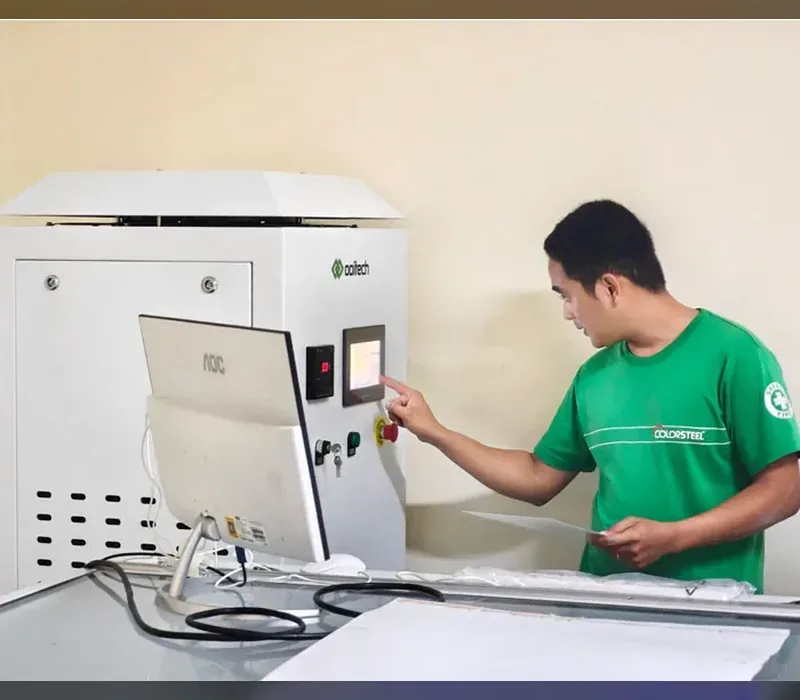
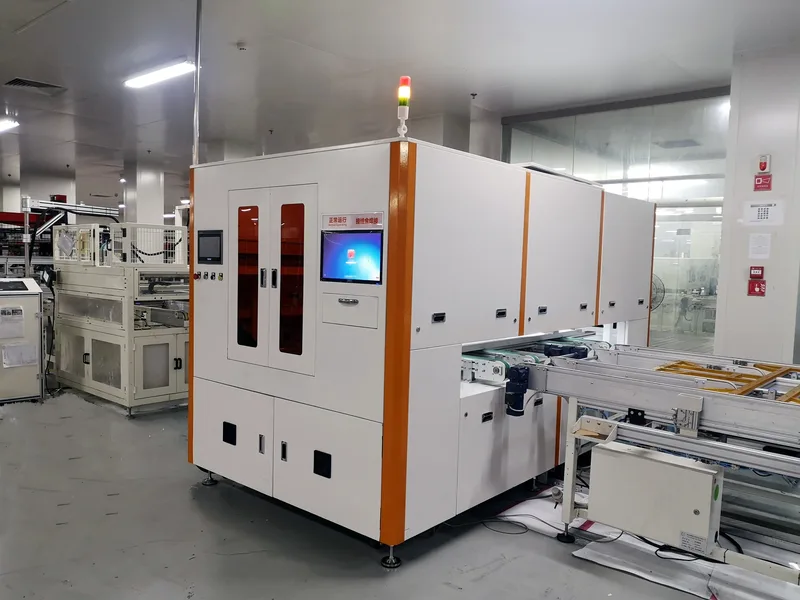
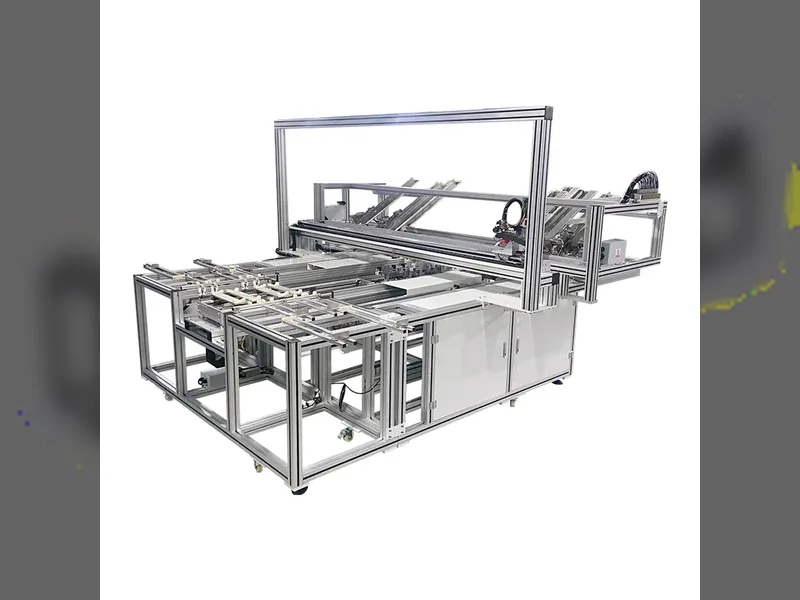
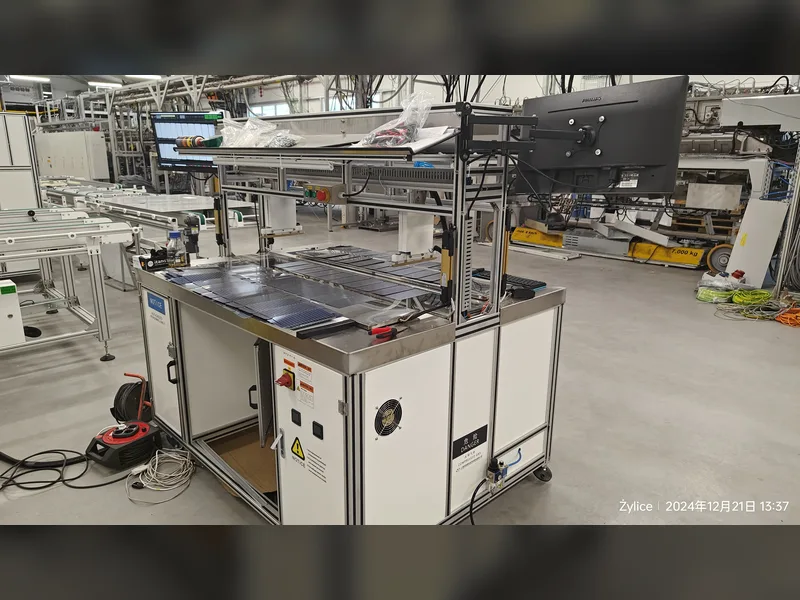
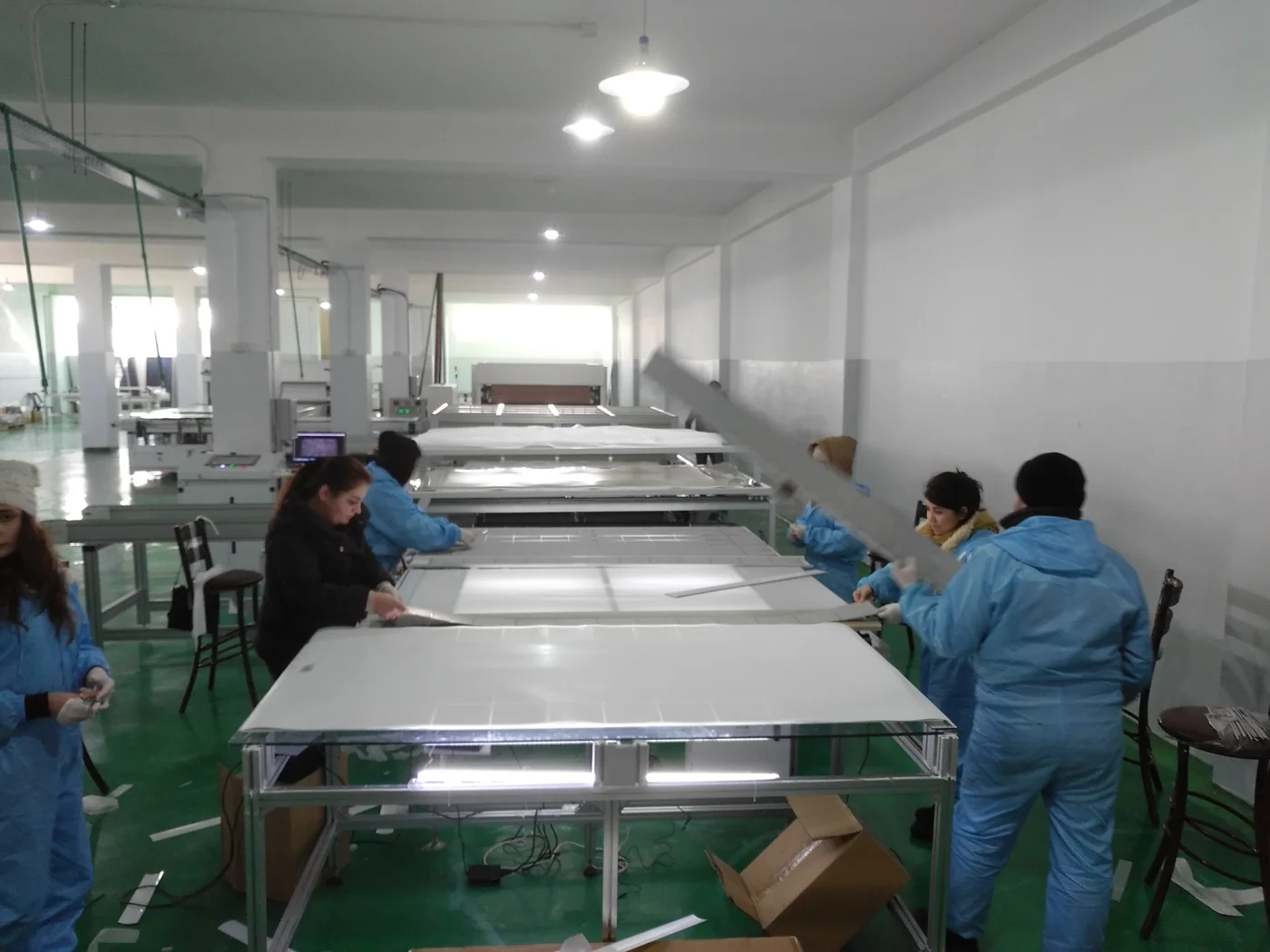
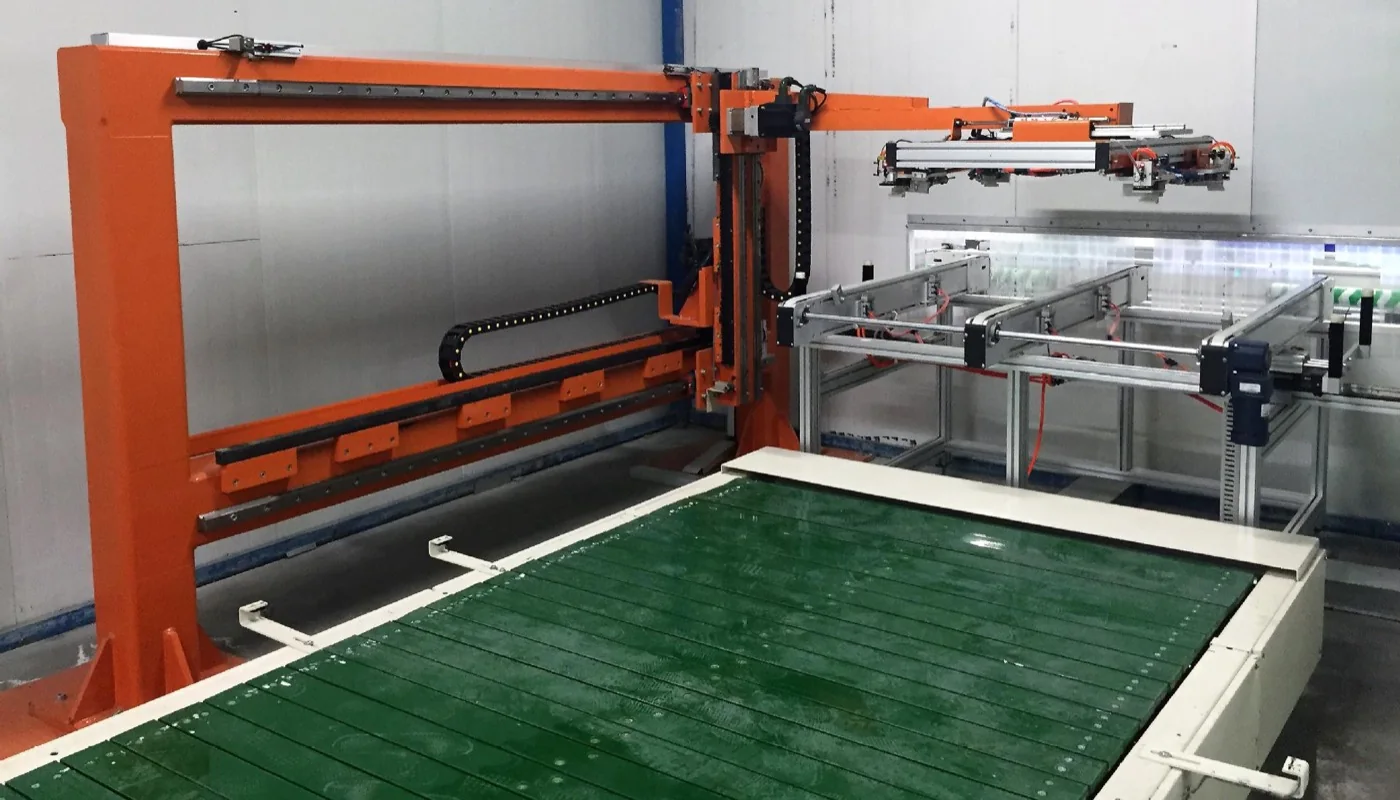
This kind of handling station is why buying the machines feels concrete: the harder decisions are in scope, capacity and specification.
Layer 1: Buying the Machines Is the Easy Part
Rating: 2 out of 10. This is the layer that feels hardest before you start and turns out to be the simplest once you do.
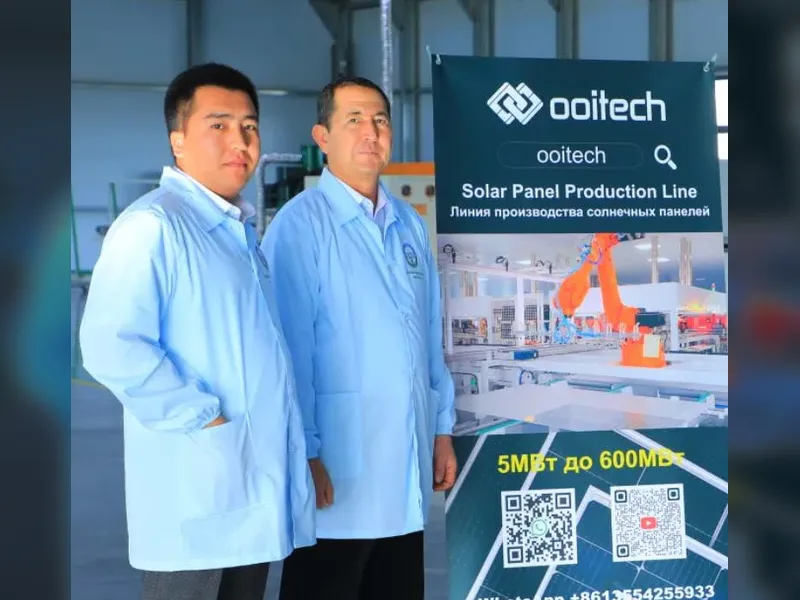
Solar module equipment is a competitive, well-supplied market. Multiple Chinese manufacturers — Ooitech included — build complete lines from 5 MW to 600 MW, semi-automatic through fully automatic, and quote them as turnkey packages. You will receive a station list, layout drawings, utility requirements, a commissioning plan, and operator training. Equipment for the mainstream station types is essentially a commodity purchase with an established supplier base, spare parts channel, and format flexibility.
The genuine risk here is not technical difficulty, it is scope misjudgement. Two quotations for what a buyer thinks is the same 100 MW line can differ by a factor of two, and the difference is not margin — it is what is inside the battery limits. Inline electroluminescence testing included or optional. Automatic versus manual bussing. Robotic handling versus mechanical transfer. Number of spare cell-format kits. Whether commissioning, training, and a spare-parts package are priced in. Whether the framing line includes automatic glue dispensing and corner punching.
That is why the machine layer is easy and dangerous at the same time. Nothing about it is technically hard; almost everything about it is easy to get wrong on paper. The factors that actually move a machine price are broken down in what drives solar panel manufacturing machine price.
Layer 2: Choosing Capacity and Automation Level
Rating: 6 out of 10. Not difficult technically, but unforgiving, because this is the decision you cannot cheaply reverse.
Capacity and automation are one decision, not two, and they are coupled to your business model. The rule of thumb that holds up in practice is that automation pays when labour cost per module exceeds the amortised cost of the automation, and that threshold arrives earlier than most first-time buyers assume in markets with rising wages. A semi-automatic line at 10–30 MW is a legitimate business. It is also a line where a bad shift, an absent operator, or an inconsistent paste or flux batch shows up directly in your scrap rate.
The specific mistakes cluster in four places. First, sizing for a target that the market cannot absorb — buying 100 MW of nameplate capacity and then discovering that your addressable order book is 15 MW a year, which leaves you with idle capital and a laminator nobody can justify. Second, under-buying automation at the stringer, which is almost always the throughput bottleneck of a module line and the station where manual intervention costs the most yield. Third, buying a line whose format range is too narrow — a line that cannot run half-cut, multi-busbar, or back-contact formats will need replacing, not upgrading, within a couple of years. Fourth, ignoring the upstream and downstream utility envelope: power capacity, compressed air, chilled water, floor loading, and cleanroom or humidity control for the lamination area. These are not equipment problems, but they stop commissioning schedules cold.
There is a useful discipline here: pick the automation level by the station, not for the whole line. Automate the stringer, the layup, and the testing stations first; those three determine yield and throughput. Semi-automate where manual work adds genuine flexibility rather than cost.
Layer 3: Raw Materials and Cell Sourcing
Rating: 7 out of 10. This layer is where lines that were delivered correctly still fail to run at rate.
A module is roughly a dozen inbound material streams: cells, ribbon, flux, encapsulant film, backsheet or rear glass, front glass, frame, junction box, sealant, potting, labels, and packaging. Each one has specifications that matter, and each one has a supply chain that behaves differently. Cells are the dominant cost and the dominant quality variable — a change of cell supplier mid-project changes your soldering recipe, your power binning, and possibly your warranty exposure.
The consistency problem is underrated. Encapsulant that varies in gel content or moisture uptake laminates differently. A different flux chemistry changes residue behaviour and long-term reliability, which is precisely why fluxes are formulated for specific cell metallisation — no-clean halogen-free flux for n-type cells is a good example of a material decision that quietly determines module life. Glass that arrives with inconsistent texture affects light transmission and adhesion. A new entrant typically qualifies one supplier, gets a good result, and then discovers on the second purchase order that the material is “equivalent” rather than identical.
The practical implication: treat material qualification as a project deliverable with its own schedule, not as a purchasing formality. Qualify two suppliers per critical material, hold incoming inspection standards written down, and freeze the specification before you start commissioning recipes. A line that runs well on one supplier’s material and badly on another has not been commissioned; it has been borrowed.
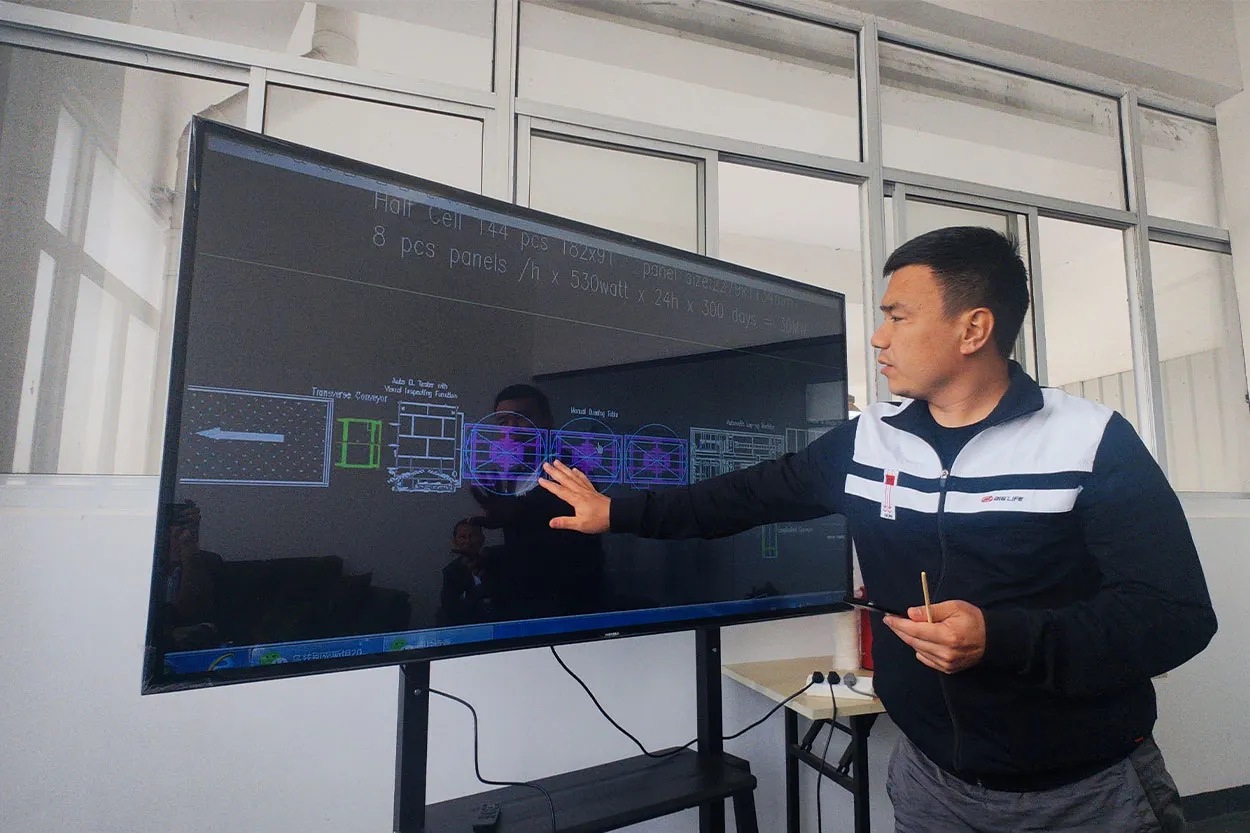
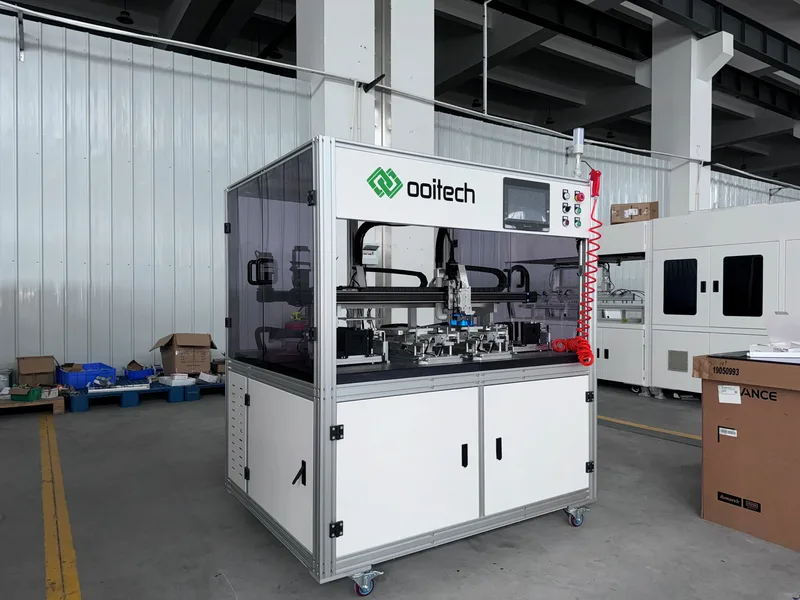
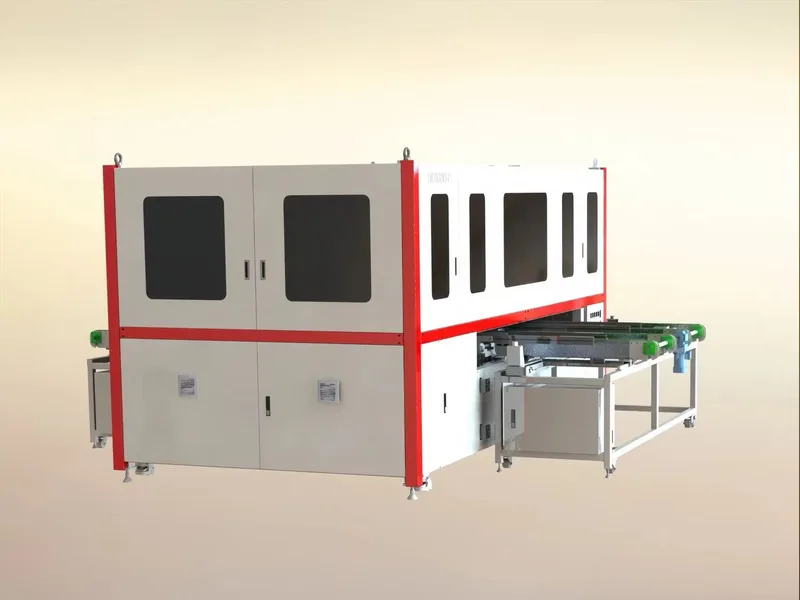
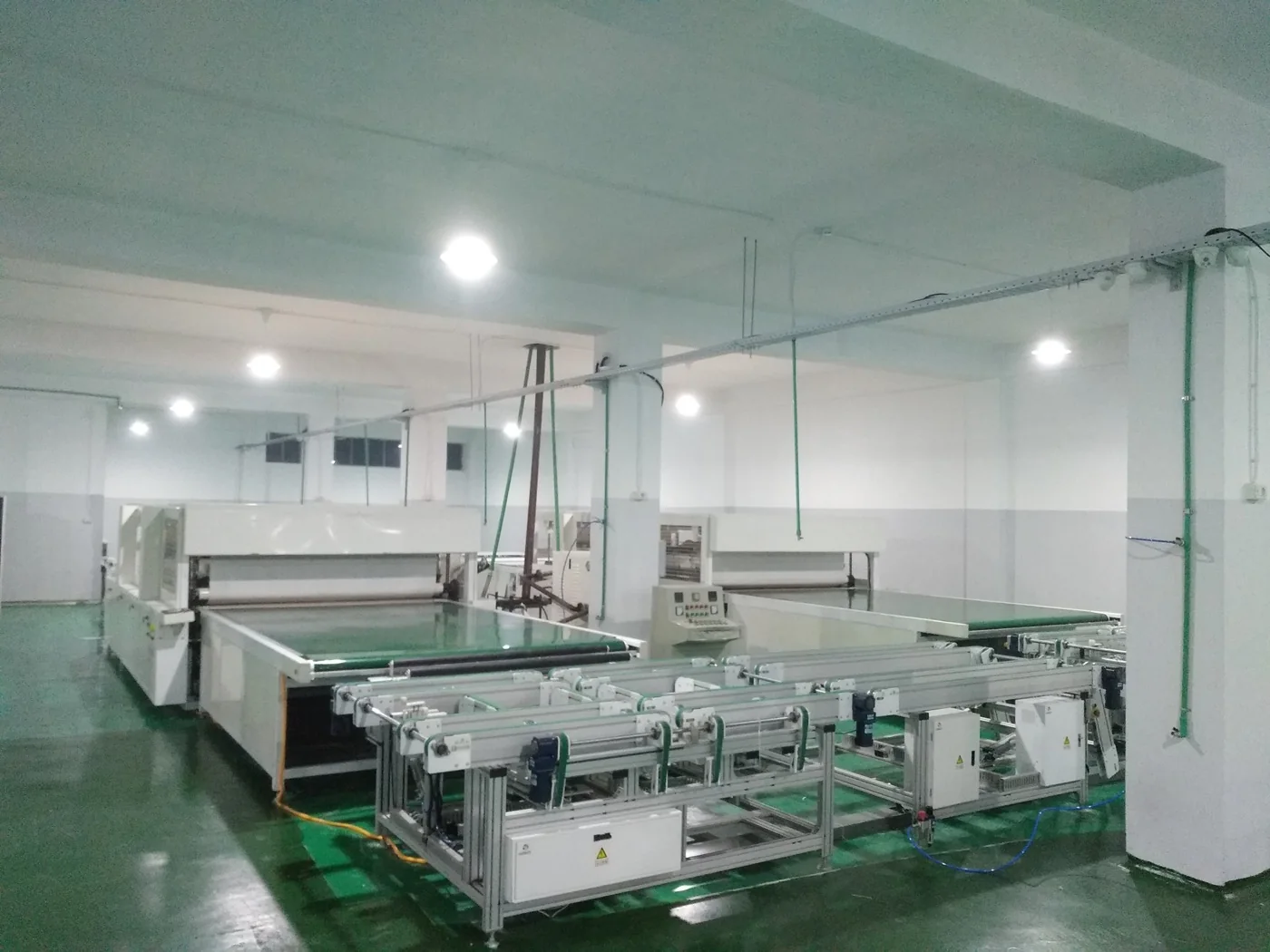
A laminator and its conveyors can be installed as hardware, but stable yield depends on recipes, materials and defect diagnosis after commissioning.
Layer 4: Yield Ramp-Up and Defect Diagnosis
Rating: 9 out of 10. This is the hardest layer for a module assembly business, and it is where the majority of schedule slips originate.
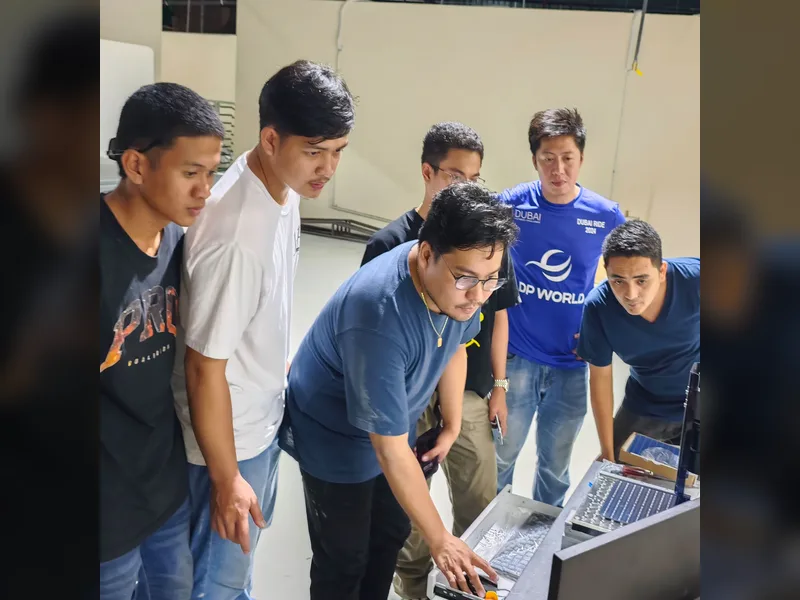
Commissioning a line and running it at rated yield are two different milestones separated by months. Equipment suppliers hand over machines that meet their mechanical specifications on day one; what takes time is building the process window, the recipe library, and the operator’s diagnostic instinct around them. The failure modes are rarely dramatic. They are microcracks from handling, cold solder joints from a heating profile that drifted, bubbles and delamination from lamination parameters, and power loss from ribbon misalignment. Each one has multiple possible causes, and the diagnostic skill is knowing which to eliminate first.
Some examples show how narrow the window gets. Bubbles in a laminate are blamed on the encapsulant first and are usually caused by something else — moisture, vacuum ramp rate, or trapped volatiles from flux residue — a diagnostic sequence worth studying in what really causes solar module bubbles. Snail trails trace back to microcracks and soldering residue rather than to a single defective material. Cell bowing and warpage in back-contact formats change the handling and soldering window fundamentally, as explained in why BC cells bow and warp. None of these are mysteries to an experienced team, and all of them cost weeks to a team meeting them for the first time.
What a first-time entrant gets wrong here is assuming that the ramp is a matter of operators getting faster. It is not. It is a matter of building institutional memory — written recipes per cell format, documented corrective actions, an incoming material log, and a habit of checking the upstream cause before adjusting the downstream symptom. Budget three to six months from first module to stable rated yield, and plan your cash flow around it.
Layer 5: Certification and Export Compliance
Rating: 5 out of 10. It is mostly administrative and predictable, but the timeline is long and it gates revenue.
You cannot sell modules into most serious markets without IEC 61215 and IEC 61730 qualification, and depending on destination you may also need regional marks, local content documentation, and, for equipment and factory compliance, CE marking. These tests are run by accredited third-party laboratories, they consume real modules, and they consume calendar time. A qualification campaign that starts after you have a salable product delays your first shipment by months.
Two points are frequently confused. Factory-level certification of the production line and factory — the CE documentation that allows the equipment itself to be exported and installed — is separate from product certification of the modules you make. Ooitech’s lines are supplied with CE certification issued through UDEM in Turkey, which addresses the equipment side. Pre-shipment inspection of machinery can also be arranged with SGS as a third-party service, though SGS is not a standing factory certificate and should not be presented as one. The compliance landscape for equipment export is mapped in CE certification for solar panel production lines.
If your business plan includes exporting modules rather than only serving your domestic market, start the certification path in parallel with line installation. It is the cheapest schedule compression available to you.
Layer 6: Finding Buyers
Rating: 8 out of 10 for most new entrants, and the layer that determines whether the factory was a good idea at all.
The uncomfortable truth is that module assembly is not a technology business at the entry level, it is a distribution business with a factory attached. The process is well understood and widely available; what is scarce is a customer who will buy from a new, uncertified, unproven brand at a price that covers your cost. Utility-scale and large EPC buyers run approved-vendor lists, require a track record of installed capacity and field performance data, and will not put an unknown brand on a bankable project.
The realistic entry paths are: serving a domestic market with local-content preference or import friction that shelters you; contract manufacturing or tolling for an established brand that supplies the cells and the customer; and regional distribution into markets where the incumbents are expensive or absent. All three are businesses where you win on relationship, service, and delivery reliability rather than on manufacturing novelty.
This is the layer where the honest advice is to invert the usual sequence. Before choosing a line capacity, write down who the first twenty customers are, what certification they require, what price they will pay, and how long their approval process takes. The capacity decision then follows from the answer. If the answer is vague, the factory is premature regardless of how good the equipment is. The commercial sequence is set out in how to start a solar panel manufacturing business.
Difficulty Scorecard and What First-Timers Actually Get Wrong
Pulling the layers together gives a more useful picture than a single verdict. The overall difficulty of module assembly is best described as moderate and largely operational; the capital decision is easy, and the process discipline is what takes years.
| Layer | Difficulty | Why | Typical rookie error |
|---|---|---|---|
| Buying equipment | 2 / 10 | Mature supplier market, turnkey packages available | Comparing headline price instead of scope inside the battery limits |
| Capacity and automation choice | 6 / 10 | Difficult to reverse, coupled to market size | Buying nameplate capacity the order book cannot fill |
| Raw materials and cell sourcing | 7 / 10 | Many streams, consistency matters more than price | Qualifying one supplier and assuming equivalence |
| Yield ramp and defect diagnosis | 9 / 10 | Requires process windows and institutional memory | Expecting rated yield within weeks of commissioning |
| Certification and export compliance | 5 / 10 | Predictable but slow, gates revenue | Starting IEC qualification after the product exists |
| Finding buyers | 8 / 10 | Distribution problem, not a technology problem | Building capacity before identifying a customer |
| Cell manufacturing (for contrast) | 10 / 10 | Semiconductor fabrication, long yield curve | Attempting it in a first project |
The composite pattern is consistent across projects: entrants over-invest attention in the layer that is easiest to buy and under-invest in the three layers that have no purchase order — materials qualification, yield ramp, and demand. A line is a machine that converts working capital into modules; whether that is profitable depends on inputs and customers, not on the machines being difficult to install.
Frequently Asked Questions
How difficult is it to manufacture solar panels?
Module assembly is moderately difficult: it is a mature mechanical and thermal process that a competent team can run at rated yield within roughly three to six months on a modern semi-automatic or automatic line. Cell manufacturing, by contrast, is very difficult because it is semiconductor fabrication with a capital cost an order of magnitude higher and a yield curve measured in years. Most new entrants should treat only the module side as realistic.
Is it hard to manufacture solar panels?
The equipment is not hard and the process is well documented, so the technical barrier is lower than people fear. What is hard is everything around the process: selecting the right capacity and automation level, qualifying material suppliers, building a recipe library that holds yield, completing IEC certification, and winning customers who will buy from an unproven brand. Those five layers, not the machines, decide whether the project succeeds.
Can I start a solar panel factory with a small budget?
Yes, at the entry end. A semi-automatic line in the 5–30 MW range is a genuine entry point, and equipment at that scale sits in the millions of RMB magnitude rather than tens of millions. The constraint is not only the line: you still need working capital for cells and materials, floor space with the right utilities, certification budget, and enough cash to survive the ramp period before revenue stabilises.
Do I need to make my own solar cells to manufacture panels?
No. The overwhelming majority of module factories buy finished, sorted and electrically tested cells and assemble them. Cell manufacturing is a separate industry with different capital requirements, different engineering skills, and different supply chains. Buying cells also gives you the flexibility to switch cell technologies as the market moves, which a captive cell line makes difficult.
How long does it take to reach full production yield?
Plan on two to six months from first module to stable rated yield for a module assembly line, with the precise figure depending on team experience, material consistency, and how much of the line is automated. The equipment is typically capable on the day commissioning ends; what takes time is building validated recipes for each cell format and teaching operators how to diagnose a defect to its upstream cause.
What is the most common reason a new solar panel factory fails?
Not equipment failure. The most common causes are buying capacity the market cannot absorb, failing to qualify more than one supplier for critical materials, underestimating the yield ramp, and starting certification too late to sell into the target market. In practice these are commercial and operational failures that happen around a factory whose machines work correctly.
Is module assembly a good business to enter now?
It can be, with the right market position. Pure commodity module assembly competes on cost against very large incumbents and is difficult for a new entrant. The positions that work are domestic markets with local-content preference or import friction, contract manufacturing for an established brand, and regional distribution where service and delivery matter more than brand. Decide which of those you are before choosing your line capacity.
Should I buy a semi-automatic or a fully automatic line?
It depends on your labour cost and your volume, not on prestige. Semi-automatic lines make sense at low volume and in low-wage markets, and are a legitimate starting point around 5–30 MW. Fully automatic lines pay back where wage costs are high or where output above roughly 60–100 MW makes labour the dominant variable cost. A useful middle path is to automate selectively — stringer, layup and testing first — and add automation elsewhere later.
Bottom line: buying a solar module line is easy, running one at rated yield is a process-discipline problem, and selling the output is a distribution problem. Rate your own readiness against the six layers above before you compare quotations; if the weakest layer is materials, yield, or customers, more equipment will not fix it. Send Ooitech your target capacity, cell format and destination market, and we will tell you which stations that combination actually requires.