Can I Make My Own Solar Panels at Home? What Is Actually Possible
Table of Contents
Yes, you can assemble a solar panel at home from bought cells, and people do it every week. No, you cannot make the cells themselves at home, and the difference between those two answers is where almost every DIY plan goes wrong. Assembling a panel is a craft project with a known bill of materials. Making a cell is a semiconductor process. And once you have built one panel, a second question arrives: is any of this actually cheaper than buying? This article answers the three questions separately and honestly, and then explains what a rational entry point looks like for someone who wants output rather than a weekend project.
Question 1: Can I Assemble a Panel From Bought Cells?
Physically, yes. The process is well documented and the materials are available. What it takes:
| Item | What it is for | Where DIY attempts fail |
|---|---|---|
| Cells | The active material, usually bought pre-cut | Buying unmatched cells or a mixed bin, which caps the panel output |
| Ribbon and flux | Interconnecting cells into a string | Poor soldering technique produces joints that fail under thermal cycling |
| Soldering setup | Attaching ribbon to the cell pads | Excess heat cracks cells; too little heat gives cold joints |
| Encapsulant | EVA or POE sheet protecting the cells | Handling and storage; damp encapsulant causes bubbles and delamination |
| Front and back layers | Tempered glass and backsheet, or glass on both sides | Using ordinary glass, which is a safety and durability problem |
| Vacuum laminator | Melting the encapsulant and bonding the stack without voids | This is the real blocker. Without vacuum, trapped air becomes permanent bubbles |
| Frame and junction box | Mechanical protection and electrical connection | Sealing quality; this is where water gets in |
| Testing | Verifying output and finding cracks | Most DIY builds are never electrically tested at all |
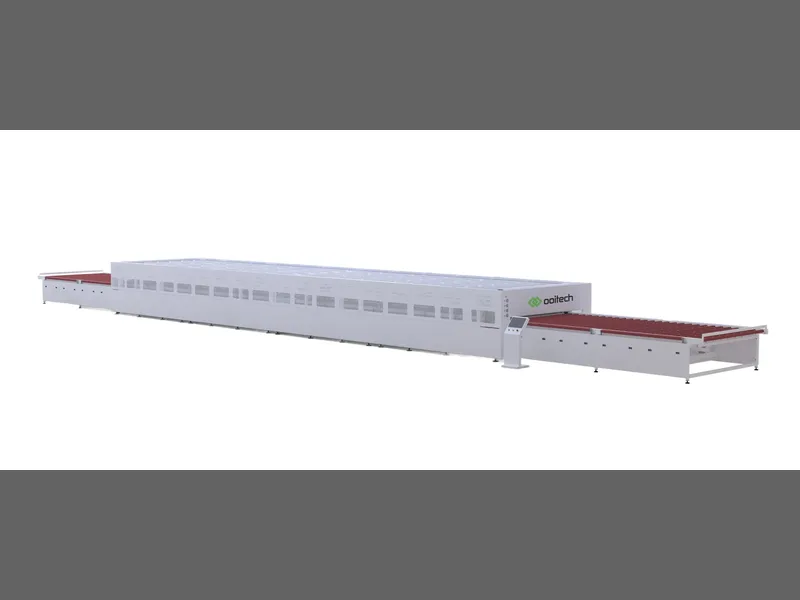
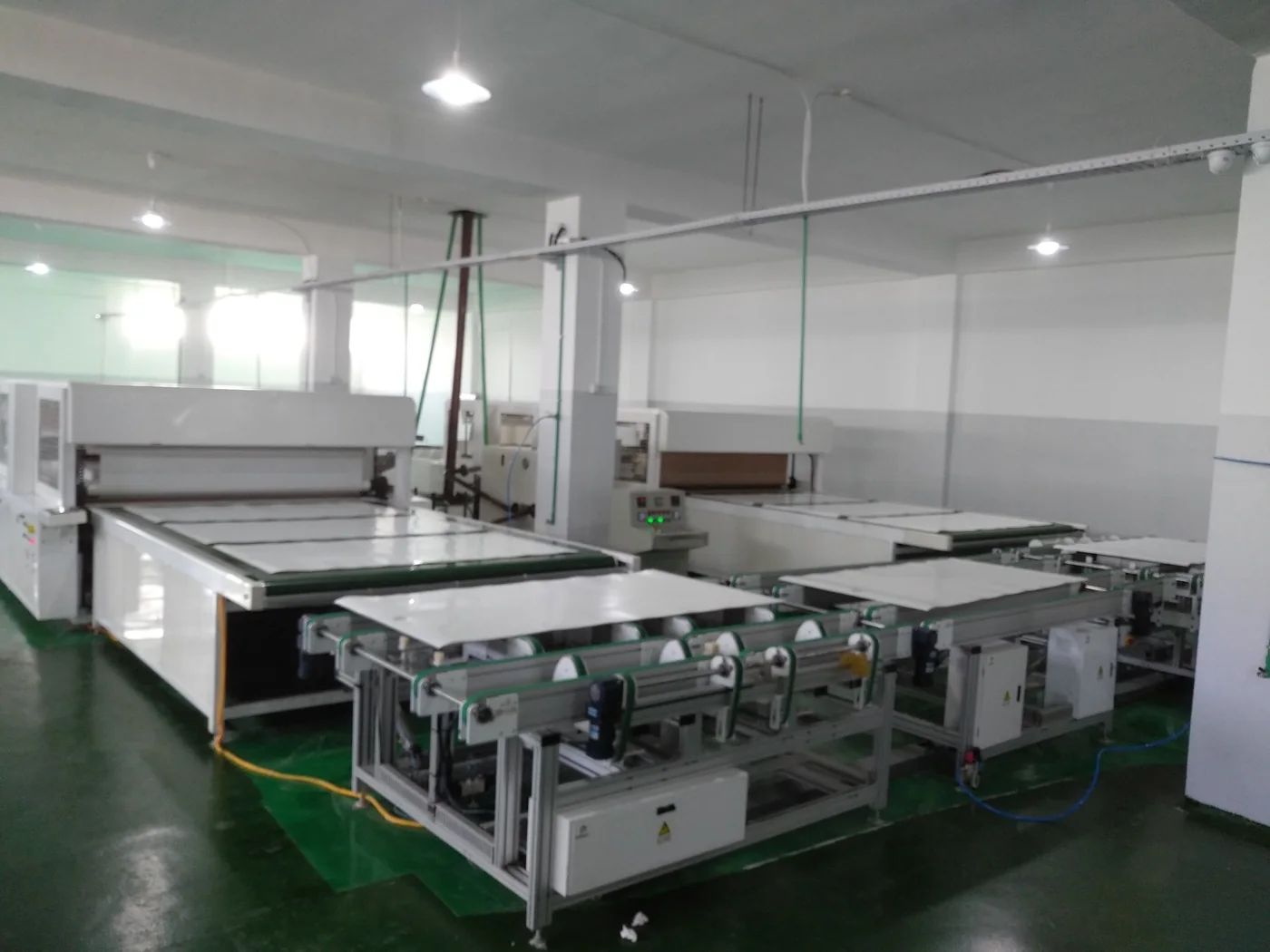
The vacuum laminator is the item that decides whether the project produces a panel or a science experiment. The encapsulant has to melt, flow, and cure with no air trapped inside, and that requires a vacuum and controlled temperature and pressure over a defined cycle. A heat press or an oven will not do it. The result of skipping it is not immediate failure but gradual degradation: moisture enters through the voids, the encapsulant delaminates from the glass, and the panel loses output over months rather than years.
There is also a regulatory point that DIY guides usually leave out. A panel you build yourself has no certification, no warranty, and in most markets cannot legally be connected to the grid or sold. If it is for an off-grid shed or an RV and you accept the risk, that is a defensible choice. If it is intended to feed a grid-tied system or to be sold to anyone, it is not.
Question 2: Can I Produce the Cells Themselves?
This is where the answer is a clear no, and the reason is worth understanding rather than just accepting.
Screen printing a finger pattern onto a cell is, in principle, something a determined person could set up. A laminator is not the right tool for any part of it. The problem is everything around the printing:
Diffusion and doping. Forming the emitter requires furnace temperatures in the range of 800 °C and above, with controlled gas flows and tight temperature uniformity across the wafer. This is not a bench process.
Passivation and coating. Modern cells depend on thin dielectric layers and, on passivating-contact routes, on ultra-thin tunnel oxides and doped polysilicon. These are deposited in vacuum equipment with sub-nanometre thickness control.
Firing. The metal contact is formed in a firing furnace with a precisely shaped temperature profile. Wrong profile, and the contact either does not form or fires through the junction.
Edge isolation. Without it, the front and rear of the cell are shorted.
Cleanliness. Contamination at the parts-per-million level degrades the minority carrier lifetime, which is exactly what the cell is selling.
Yield. Industrial cell lines fight for fractions of a percent of yield with full metrology and process engineering teams. A one-off build that works once is not the same as a process.
The honest summary is that the barrier is not one hard step, it is thirty interacting process steps each of which has to be right simultaneously. Nobody makes cells in a garage, and this is not a matter of effort.
Question 3: Is It Cheaper?
Almost never, once you count everything that actually gets spent.
The cost comparison people run is materials versus retail panel price, and that comparison misses three lines. The first is equipment: the laminator, the soldering setup, the testing gear and the consumables are real money, and they are worth nothing if you build one panel. The second is failures: the first panels usually leak, delaminate or underperform, and each failed attempt consumes its full material cost. The third is your time, which is free only if it has no alternative use.
Against that, buying a certified module gets you a verified power bin, a warranty backed by a manufacturer, a product that can legally be grid-connected, and a per-watt price that reflects an industry operating at enormous scale. Competing with that on cost, at home, with hand tools, is not a realistic proposition.
For a hobbyist this analysis does not matter. Building a panel is an education in how modules work, and that has value that does not appear in a spreadsheet. For anyone whose goal is output rather than learning, the comparison that matters is not home workshop versus retail panel — it is small production line versus retail panel.
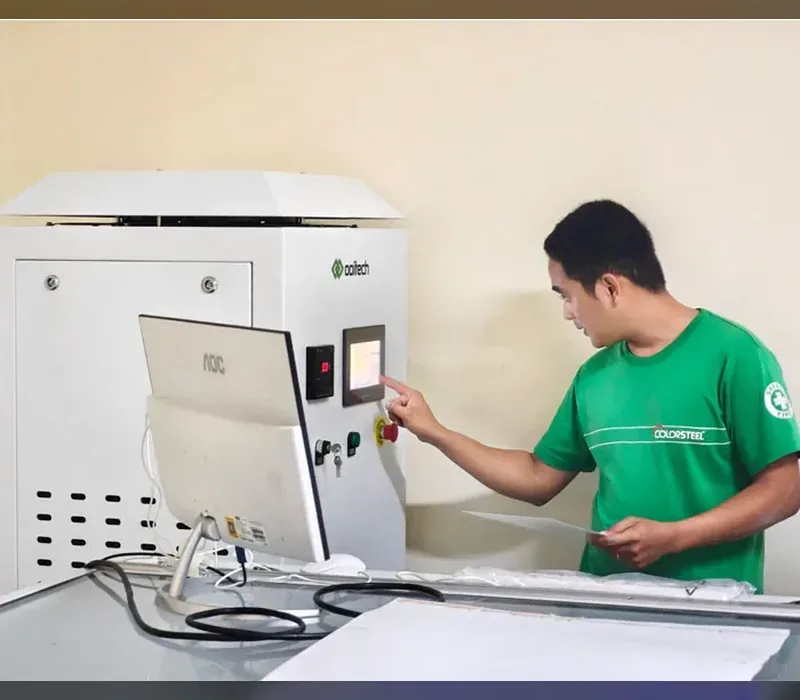
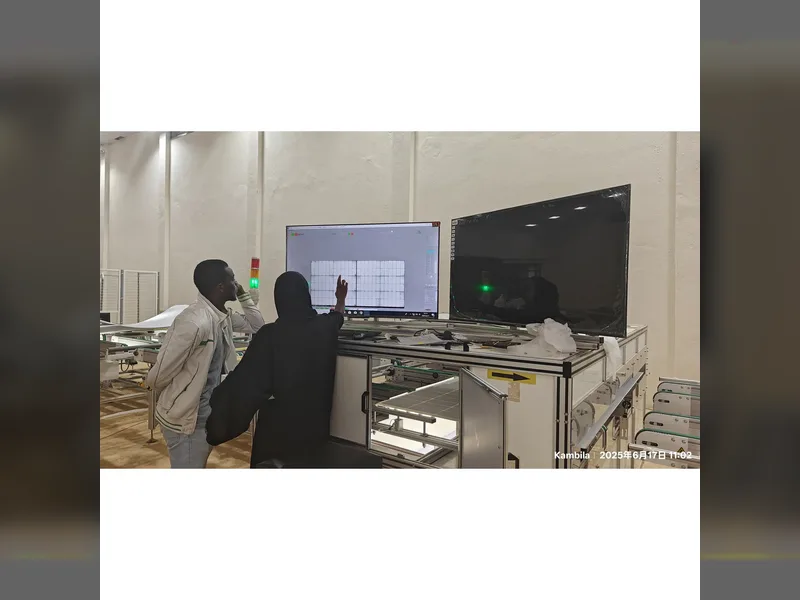
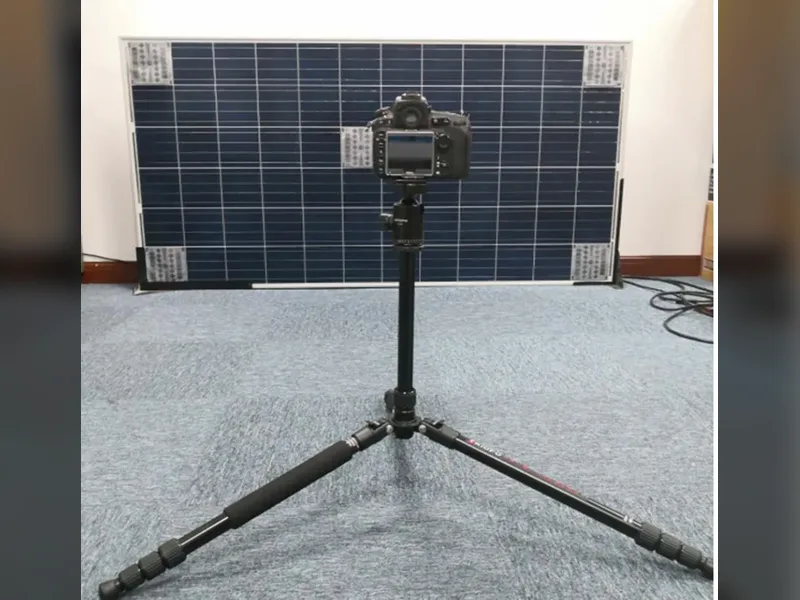
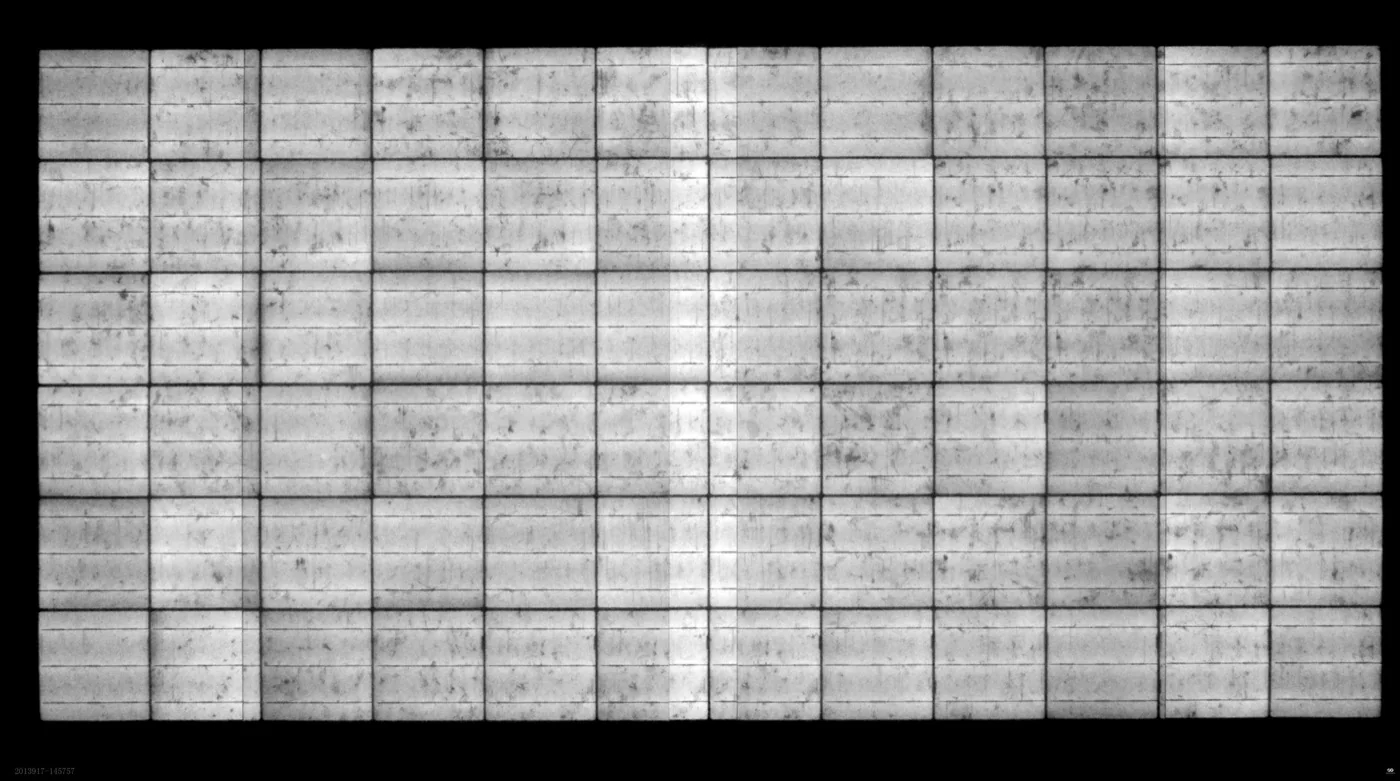
Testing is what makes hidden cell defects visible, and it is the step a home-built panel almost never gets.
The Five Mistakes That End Most DIY Panel Projects
The failures are consistent enough to list. If you are building a panel anyway, these are the points where the project usually stops producing something useful.
Laminate without vacuum. The single most common cause of a panel that works for a month and then fades. Trapped air is not a cosmetic defect; it is a moisture path and a delamination start point.
Buy unmatched cells. A string is limited by its weakest cell, so mixing bins or buying whatever was available caps the output of the whole panel and makes the result unmeasurable against any expectation.
Overheat the cells while soldering. Cells are thin, brittle and thermally sensitive. A soldering iron held too long produces a microcrack that is invisible until the panel is flexed or thermally cycled, at which point the string goes open.
Use the wrong glass. Ordinary window glass is not tempered and not low-iron. The first affects safety, the second costs output because iron absorbs light that should reach the cell.
Never test the finished panel. Most DIY builds are measured with a multimeter in whatever light is available, which tells you almost nothing. A panel that has not been tested under controlled conditions has an unknown output, an unknown bin and no baseline against which to notice degradation later.
Notice that four of the five are process discipline rather than equipment cost. That is the useful lesson from the DIY exercise: the hard part of making a module is not the components, it is controlling the process tightly enough that the result is repeatable. That is exactly what a production line is for, and it is why the same stations appear in every factory regardless of scale. Our station-by-station walkthrough of the module manufacturing process shows the same sequence the DIY builder is attempting, with the process control added.
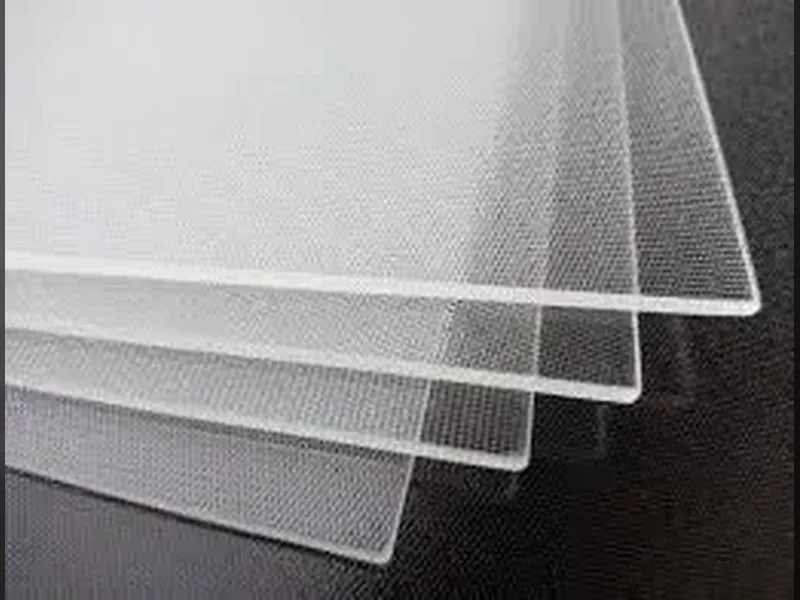
Loose module materials show the gap between having the parts and running a controlled process that makes repeatable panels.
What a Rational Entry Point Looks Like
If the real question behind the DIY idea is “can I make money making panels”, the answer changes completely, and so does the scale. The entry point that works is a small semi-automatic module line, not a workbench, and it is worth knowing what that involves before dismissing it as out of reach.
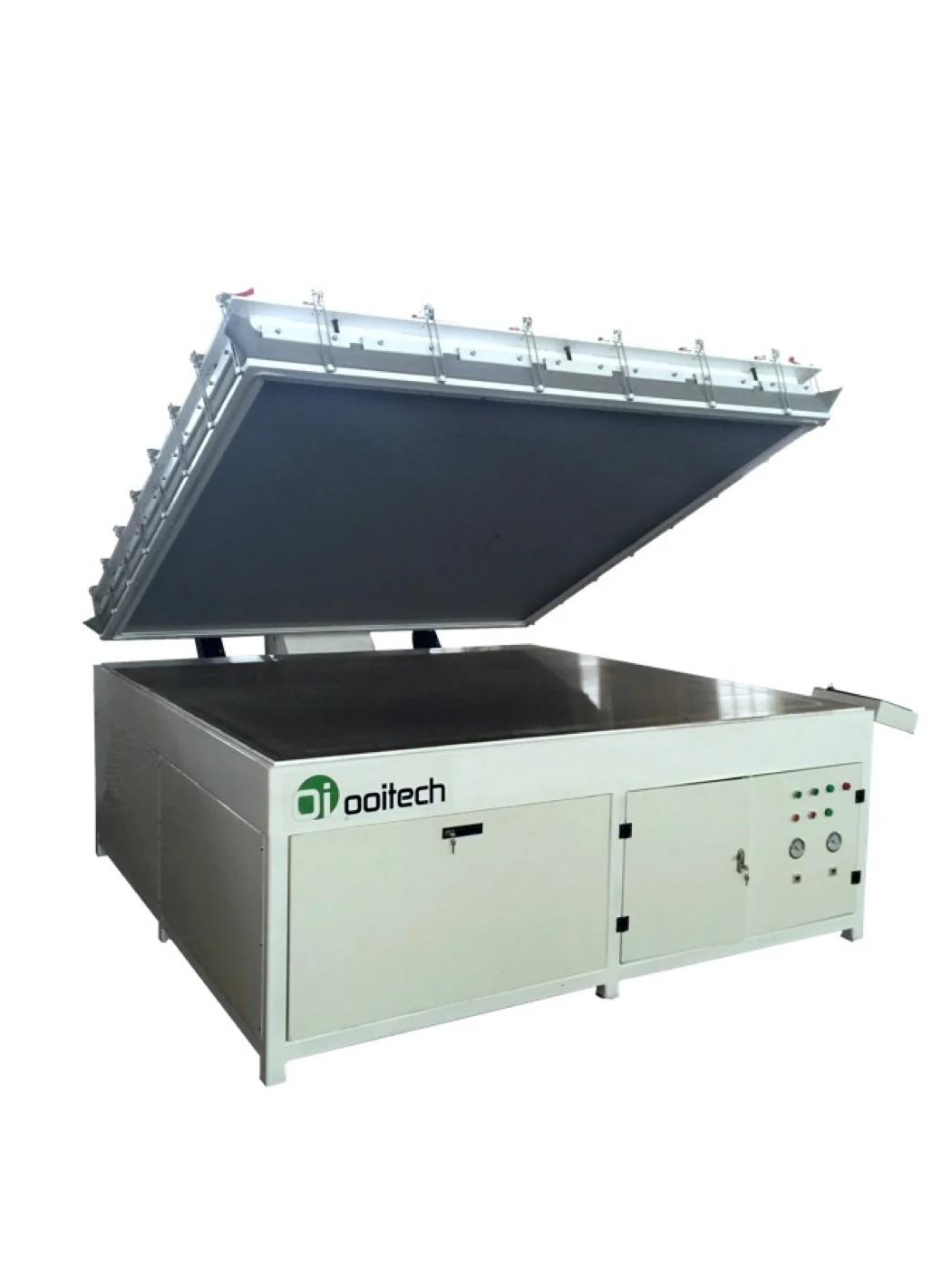
A semi-automatic line still needs the same fundamental stations — stringing, layup, lamination, framing, testing — because those are what make a module a module. What changes at the entry tier is the degree of automation between them: more manual handling, less inline inspection, lower throughput. The stringer and the laminator remain the two stations that decide output quality, and they are the two where cutting the specification costs the most.
The economics of that entry tier are knowable. Our breakdown of line cost at each capacity tier covers what the equipment actually costs, the guide to what drives machine price explains why two quotations for the same nameplate capacity can differ substantially, and the walkthrough of starting a module business covers the decisions that come before the machine list. Those three are the honest starting point for the question the DIY idea is really asking.
The short version: assemble one panel to learn how modules work, and if the goal is output, plan a line. The two activities look related and are not.
Frequently Asked Questions
Can I make my own solar panels at home?
You can assemble a panel from bought cells at home, and it will produce electricity. Doing it well requires a vacuum laminator and a proper soldering setup, because without vacuum lamination the encapsulant traps air and the panel degrades. The finished panel has no certification and cannot normally be sold or grid-connected.
Is it cheaper to make your own solar panels?
Almost never, once equipment, failed attempts and your own time are counted. Retail module prices reflect an industry operating at very large scale, and a home workshop cannot match that cost base. The exception is when the goal is learning rather than output, in which case the cost is tuition.
Can solar panels be produced at home with screen printing and a laminator?
No. Screen printing the metallisation is only one of roughly thirty interacting steps. The rest — diffusion at furnace temperatures, vacuum-deposited passivation layers, controlled firing and edge isolation — cannot be done on a bench, and a laminator is not used in cell production at all. Cell manufacturing requires industrial equipment and a clean environment.
What is the minimum equipment to make a usable panel?
A tabber and stringer (even a manual one), a layup arrangement, a vacuum laminator, a framing setup, and EL and IV testing. The laminator and the tester are the two that separate a usable product from an unverified one. Everything else affects throughput and repeatability rather than whether the product works.
Why is vacuum lamination necessary?
Because the encapsulant must melt and flow around the cells without trapping air. Any trapped air becomes a bubble, and a bubble is a path for moisture. A heat press or oven applies pressure but does not remove the air first, so voids remain and the module degrades over time rather than failing immediately.
What is the smallest solar panel factory that makes sense?
A small semi-automatic line producing a few megawatts a year, aimed at a market you can actually reach — typically your own region, where freight and import duty make imported modules more expensive. Below that, the certification, testing and working-capital requirements do not scale down, and the business case stops working before the equipment does.
Do I need certification to sell solar panels I make?
In most markets, yes. Module certification covers safety, performance and durability, and buyers, insurers and grid operators require it. Certification is a process with its own timeline and cost, and it should be planned before production starts rather than after. Our notes on certification and export compliance cover what is involved.