Editorial responsibility for this article rests with Wuhan Ooi Photoelectric Technology Co., Ltd. Written and reviewed by the Ooitech editorial team. See our editorial policy for how we write, where AI tools are used, and how to request a correction.
IEC 62788 vs IEC 61215: Why Materials Pass but Modules Fail
Table of Contents
Quick answer: Photovoltaic materials are qualified one way and modules another, and the gap between the two is where quiet failures slip through. IEC 62788 measures a material in isolation: an encapsulant's volume resistivity, transmittance, gel content and shrinkage, a backsheet's water vapor transmission. IEC 61215 qualifies a finished module with thermal cycling, damp heat, humidity freeze, UV and mechanical load. What neither standard owns is the combination: the chemistry that starts when several passing materials are laminated into one nearly sealed environment and left in heat and moisture for years. A UNSW series shows the size of the gap. Change only the encapsulant and damp heat loss moves from about 11 percent to 55 percent. Change only the paste and it moves from a few percent to about 30 percent. Every material passes its own incoming test. Together they fail. The practical fix is a bill-of-materials level compatibility check, not a longer list of single-material specs.
Every material enters the factory with a clean test report, and the finished module still fails damp heat. The problem is rarely one bad material. It is the seam between the material standards and the module standard.
Two Standards, Two Different Questions
IEC 62788 is the family of measurement procedures for materials used in photovoltaic modules, split by material. Part 1 covers encapsulants, with volume resistivity, light transmittance, gel content and dimensional shrinkage. Part 2 covers frontsheets and backsheets. Part 5-1 covers edge seals. Part 6 covers shared tests such as water vapor transmission. Part 8-1 covers conductive adhesives. Its output is a data sheet used for material selection, incoming inspection and process control.
IEC 61215 is design qualification of a complete module. It applies thermal cycling, damp heat, humidity freeze, UV and mechanical load to one specific design and judges it mainly on power loss, insulation resistance and visual appearance. The two documents answer different questions, and neither one asks about the other's subject.
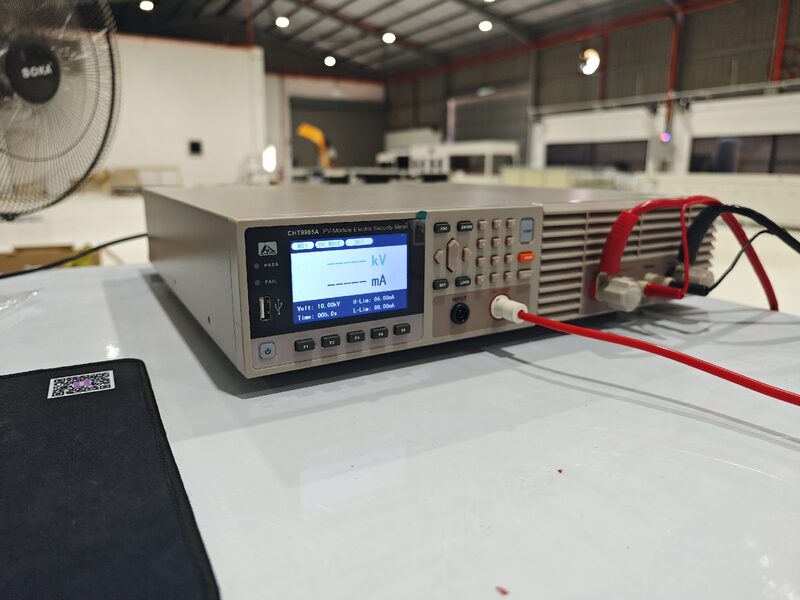
When performing these IEC 61215 test sequences, we evaluate insulation resistance and wet leakage before and after damp heat exposure to detect dielectric breakdown caused by internal chemical reactions.
| Question | IEC 62788: material | IEC 61215: module |
|---|---|---|
| What it asks | Is this material good? | Does this design pass? |
| What it tests | One material or a simple coupon | A full module, one bill of materials |
| System state | Largely open, volatiles escape | Laminated and nearly sealed |
| What it returns | A data sheet for incoming control | A pass or fail plus power loss |
| Multi-material chemistry | Largely out of scope | Only indirect, inside the test |
IEC TS 62788-2 states in its scope that backsheet tests should represent the material's actual in-module use, including its combination with the encapsulant and the adhesive. The standards committee knows the combination matters. The current clauses still leave that combination to module-level testing.
The Gap the Standards Leave Open
The material standard answers one question and the module standard answers another. Neither owns the middle: whether several materials that each pass alone still pass together. That middle is a compatibility question, and today it is not a required clause anywhere.
A Compatibility Gap, Not a Quality Gap
The failure is not that a material is out of spec. Every material in the chain can sit inside its own tolerance and the combination still fail damp heat. Compatibility is not a property of a single material. It is a property of the bill of materials as a whole, and no single-material test can see it.
A Reaction Vessel After Lamination
After lamination the glass, encapsulant, cells, ribbon and backsheet are pressed into one piece with a frame and sealant around the edge. Inside is a nearly closed, long-term hot, humid and lit micro-environment. Small molecules released by each material cannot escape, so they meet and react with each other and with the metal contacts.
Right after framing and edge sealing, we run ground continuity and hipot tests on the assembly to verify that the insulation barrier remains sound before environmental chambers are loaded.
- Encapsulant: EVA releases acetic acid under damp heat and UV, and the acid accelerates its own formation. POE does not acidify, but its antioxidants, UV absorbers and crosslinker aids can decompose into organic acids. White EVA contains a magnesium additive that hydrates and forms a local alkaline zone.
- Backsheet: PET backsheets hydrolyze over long damp heat, breaking chains into oligomers and carboxylic end groups that can migrate toward the cell. The backsheet also decides how much vapor can vent.
- Flux residue: no-clean flux leaves organic acids (azelaic, malic) and halide activators near the solder joint, which become an electrolyte once water is present.
- Sealant and potting: de-alcohol, de-oxime and de-acid silicones release methanol, oximes and acetic acid, and keep releasing if the cure is incomplete.
- Metal and cell: silver paste glass frit, Ag/Al contacts and copper-tin ribbon are the targets, and TOPCon and HJT are the most sensitive.
Each release is small and stays inside its own standard. The problem is that they share the same moisture, temperature and metal surface. Acetic acid etches a little glass frit, flux residue corrodes a little contact, an additive acid adds a final push. That is the chemistry of a single pass and a combination failure.
Change One Material and the Result Flips
A controlled-variable series from UNSW on TOPCon mini-modules shows what happens when one material changes and everything else stays fixed.
- Change the encapsulant: with the same TOPCon cells, only the film changes. After 1000 hours of damp heat, EVA modules lose about 11 percent of power, while one POE formulation (call it POE-C) loses more than half, about 55 percent. The POE base thermally oxidizes to a carboxylic acid, its UV absorber hydrolyzes to benzoic acid, and the flux residue adds azelaic acid. Together they form what the researchers call an acid cocktail. Two other POE films in the same study stayed stable.
- Change the paste: UNSW and Jolywood tested EVA-plus-backsheet TOPCon modules with different front metallization. After 1500 hours of damp heat, two low-aluminum pastes lost about 28 to 30 percent, against 4 to 5 percent for a third. The difference is the glass frit: a barium-zinc frit resists acetic acid far better.
- Change the back film: a double-glass POE build lost about 8 percent after damp heat, while white EVA (especially paired with EPE) lost about 16 percent, mostly from alkaline corrosion by the white EVA's magnesium additive.
- Change the flux: at cell level, a halogenated no-clean flux corroded the TOPCon front Ag/Al contact more than a cleaner alternative.
Every Material Passed Its Own Test
The telling detail is that each of these materials would likely pass its own incoming inspection. POE-C's transmittance and gel content sit in a normal range. The two low-aluminum pastes make cells with almost the same initial efficiency, around 25.2 percent. The failure only appears once the materials are combined and damp-heated. A single-material test cannot see it, because the problem does not exist in a single material.
| What changed | Test condition | Power loss |
|---|---|---|
| Encapsulant: EVA | DH 1000 h | About 11 percent |
| Encapsulant: POE-C | DH 1000 h | About 55 percent |
| Paste: low-aluminum A | DH 1500 h | About 28 to 30 percent |
| Paste: low-aluminum B (Ba/Zn frit) | DH 1500 h | About 4 to 5 percent |
| Back film: double-glass POE | Damp heat | About 8 percent |
| Back film: white EVA | Damp heat | About 16 percent |
What the Scorecard Says About the BOM
The Kiwa PVEL 2025 scorecard confirms the pattern at industry scale. 59 percent of the bills of materials it tested had at least one failure, a record high. Its damp heat test runs 2000 hours, twice the IEC and UL requirement. And it grades by bill of materials rather than by model, which is its own admission that changing one material makes a different product. A module model is not a stable identity; the bill of materials under it is what actually fails. For a buyer, that means a certified module is only as trustworthy as the bill of materials behind the certificate, and any supplier change re-opens the question.
Why IEC 61215 Does Not Catch It
Three reasons the module standard misses the problem:
- Not enough time: corrosion failures build up and accelerate after DH1000. Passing 1000 hours does not predict 2000 hours, because the acid feedback loop has not yet reached its steep part.
- One stress at a time: the 61215 sequence is mostly single-factor or simple series. NREL work showed a polyamide backsheet that cracked in the field could not be reproduced by the standard accelerated test. A combined-accelerated stress test (C-AST) that applies UV, temperature, humidity and mechanical load together did reproduce it.
- Samples are not representative: qualification sends one batch with one bill of materials, but production changes the film formula, the flux type and the sealant batch, and one certificate cannot cover every combination.
A Check-Up, Not a Lifetime Warranty
IEC 61215 is closer to a check-up that proves one bill of materials was healthy on the day it was sampled. It is not a lifetime warranty, and it was never designed to be one. The damp heat tests a module must clear say nothing about what happens three years later with a different flux batch.
How the Standards Are Patching the Gap
- IEC TS 62915:2023 lists which module tests to redo after material and component changes, and it is the first document to reference IEC 62788-1 and 62788-2 for key sub-component changes, with a retest matrix. The idea is simple: change a material, go back to module level and re-verify the combination.
- Combined and sequential tests: C-AST and MAST apply several stresses together or in sequence, closer to the field, and have reproduced failures that conventional single-stress tests missed.
- Cell-level fast screening: acetic acid immersion and unencapsulated cell damp heat with flux exposure can catch paste-flux-encapsulant incompatibility before a module is built. EPFL notes that an accelerated aging method for acetic acid corrosion is still a blank in industry standards.
Screening Is Still Not a Required Clause
Most of these tools are technical specifications, research methods or third-party programs, not mandatory qualification clauses. The compatibility check still falls on the manufacturer today.
Screen the Combination Before You Build
Full-module qualification is expensive and slow, so the smart move is to front-load the chemistry. Acetic acid immersion and flux exposure at cell or coupon level catch the acid-cocktail risk in days instead of waiting for a DH2000 run to fail. The point is to fail cheap, on a coupon, before you build boards and before you certify. An encapsulant failure that appears only after years outdoors is far easier to trace when the whole matrix is screened up front. A coupon that fails in a week has told you more than a certificate that passes once.
Four Practical Moves for the BOM
If the failure lives in the combination, the control plan has to live there too. Four habits turn the compatibility gap from a surprise into something you can manage.
- Lock the bill of materials and version every change. If the encapsulant, paste, flux, backsheet or sealant changes, treat it as a new product for reliability purposes.
- Build a compatibility matrix: encapsulant by paste by flux by backsheet by sealant, with a damp heat result in each cell. The matrix, not any single spec, is the real reliability document.
- Front-load screening: acetic acid immersion, flux exposure and DH2000 at coupon or cell level before committing to a full build.
- Manage formula changes: suppliers change additives and frits without changing the product code. Require notification and re-screen when the recipe moves.
Where These Numbers Come From
The 11 percent, 55 percent, 28 to 30 percent, 4 to 5 percent, 8 percent and 16 percent figures come from the UNSW controlled-variable series described in the source article, testing TOPCon modules under damp heat with a single material changed at a time. The 25.2 percent initial cell efficiency and the acid-cocktail chemistry (carboxylic acid from POE thermal oxidation, benzoic acid from UV absorber hydrolysis, azelaic acid from flux) come from the same source. The 59 percent bill-of-materials failure rate and the 2000-hour damp heat test are from the Kiwa PVEL 2025 scorecard. The polyamide backsheet field crack reproduced by C-AST is from NREL. The IEC 62788 and IEC 61215 scope descriptions follow the published standards, and the IEC TS 62915:2023 reference to 62788-1 and 62788-2 follows the technical specification.
Q: What does IEC 62788 actually measure?
IEC 62788 measures a single material in isolation. For encapsulants it covers volume resistivity, light transmittance, gel content and dimensional shrinkage. For backsheets it covers properties like water vapor transmission. Later parts cover edge seals, shared tests and conductive adhesives. It returns a data sheet for selection and incoming control, not a pass or fail on a module.
Q: What does IEC 61215 actually test?
IEC 61215 qualifies a complete module design with thermal cycling, damp heat, humidity freeze, UV and mechanical load. It judges the result mainly on power loss, insulation resistance and visual appearance. It is a design qualification of one bill of materials, not a material test.
Q: Why can a material pass IEC 62788 and the module still fail?
Because the material standard measures one material in an open state, while the module seals several materials into one hot, humid environment. Acids and electrolytes released by each material meet and attack the contacts together, a chemistry that does not exist in any single-material test.
Q: Which material combination is the most corrosive?
The worst case in the source study combined a POE encapsulant whose base oxidized to a carboxylic acid and whose UV absorber hydrolyzed to benzoic acid, plus a flux residue that added azelaic acid. That three-part acid cocktail drove a POE module to about 55 percent loss after DH1000.
Q: How much does changing one material change the result?
A lot. Changing only the encapsulant moved DH1000 loss from about 11 percent to about 55 percent. Changing only the paste moved DH1500 loss from about 4 to 5 percent to about 28 to 30 percent. The direction depends on the exact chemistry, not on the material category.
Q: Is IEC 61215 a lifetime guarantee?
No. It proves one bill of materials passed on the day it was sampled. Corrosion keeps working after DH1000, and a production change to the film, flux or sealant is outside the certificate. It is a check-up, not a warranty.
Q: What is the fastest way to catch a compatibility problem?
Screen the combination at cell or coupon level before building modules. Acetic acid immersion and flux exposure can reveal the acid-cocktail risk in days, and a DH2000 coupon run costs far less than a failed full-module qualification.
Q: Does IEC TS 62915 close the gap?
Partly. It is the first document to reference IEC 62788-1 and 62788-2 for sub-component changes and to require a retest matrix after a material change. But combined stress tests and cell-level screening are still largely research or third-party tools, not mandatory clauses.
Final Thoughts
The gap between IEC 62788 and IEC 61215 is not a defect in either standard. It is a boundary nobody was assigned to police. Materials are tested alone because that is cheap and repeatable, and modules are tested whole because that is what the buyer sees. The combination is where the failure actually lives. Treating the bill of materials as the unit of reliability, and screening the combination early, closes the gap without waiting for the standards to do it.
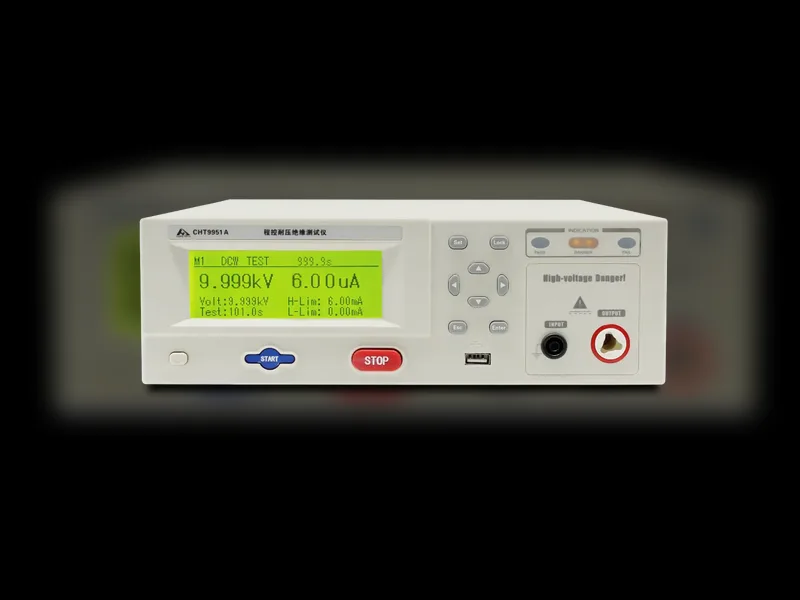
For electrical safety and dielectric verification under IEC standards, we supply the CHT9980A and CHT9981A PV comprehensive safety testers to handle hipot, insulation resistance, ground continuity, and wet leakage routines in production or laboratory lines. Send your module stack, technical drawings, or trial samples to our engineering team for configuration evaluation.