Photovoltaic Module UV Light-Conversion Film:
Table of Contents
Quick answer: A UV light-conversion film is an encapsulant layer that absorbs ultraviolet light, which a silicon cell cannot use, and re-emits it at a longer wavelength the cell can convert. The film is doped with a conversion material that takes in photons around 380 nm and emits near 530 nm, which sits in the range a silicon cell responds to well. The gain is real but modest, because the UV share of the solar spectrum is small. The more significant argument is degradation: UV is a principal driver of encapsulant yellowing and backsheet chalking, so absorbing it before it reaches those layers extends module life even where the conversion gain is marginal. Whether the film earns its cost depends on the module's intended service life and on whether the encapsulant it replaces was already UV-stabilised.
PV Module Manufacturing · by Jerry, Ooitech
Photovoltaic Module UV Light-Conversion Film
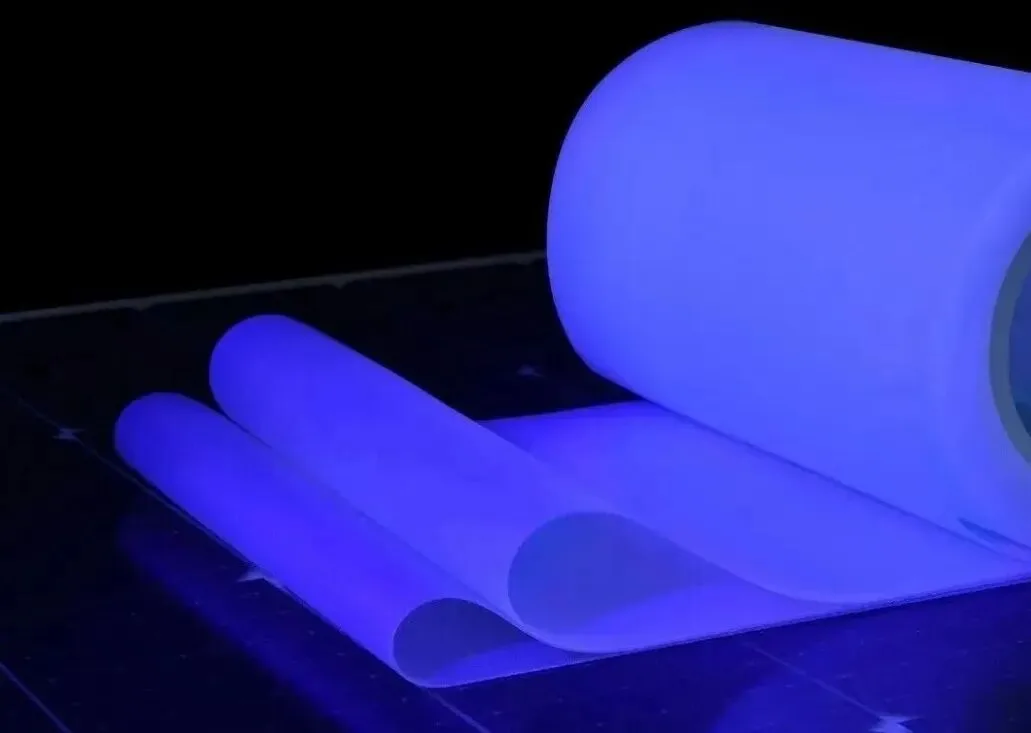
UV light-conversion encapsulation film is also commonly known in the photovoltaic industry as light-conversion film.
It is designed to improve the power output of photovoltaic modules while helping reduce ultraviolet-induced degradation caused by prolonged UV exposure of silicon solar cells.
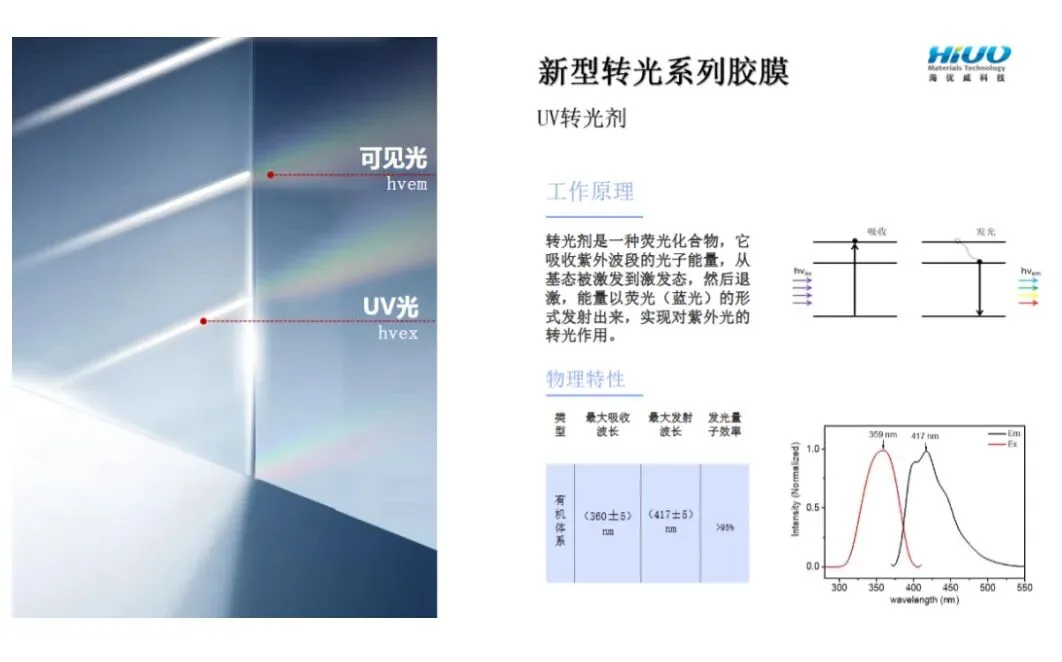
A dedicated light-conversion additive is incorporated into the film. It converts otherwise ineffective ultraviolet light into blue light within the 430–530 nm wavelength range. This range closely matches the high-efficiency absorption region of crystalline silicon solar cells.
Two Core Functions of Light-Conversion Film
1. UV Protection and Reduced Solar Cell Degradation
Ultraviolet-induced degradation, commonly referred to as UVID, can affect solar cell performance.
Light-conversion film helps prevent ultraviolet radiation from directly reaching the solar cells. This protects the stability of the passivation layer and slows the power degradation of the PV module.
2. Secondary Use of Light Energy to Improve Power Generation
Instead of simply blocking ultraviolet radiation, light-conversion film takes a conversion-based approach. The light-conversion additives inside the film convert otherwise unusable ultraviolet light into blue light that can be absorbed more effectively by the solar cells.
Core Working Principle of Light-Conversion Film
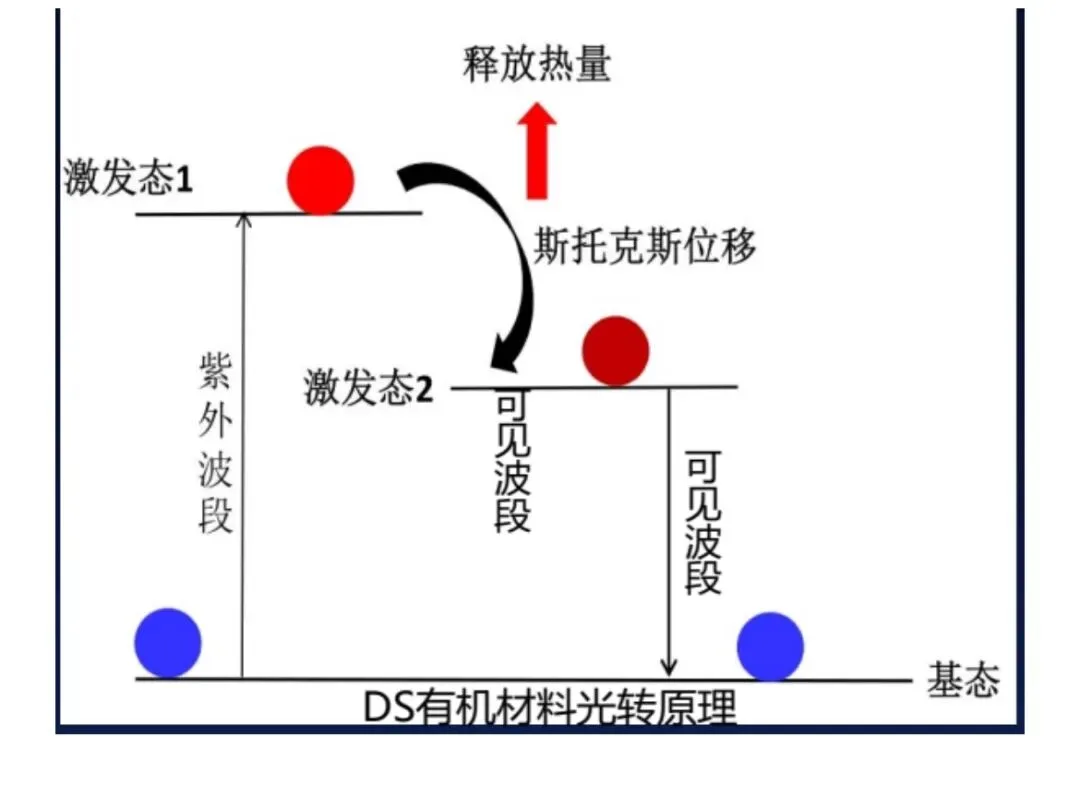
The film converts light energy through the optical effects of Stokes shift and down-shifting, also known as DS.
Three Key Parameters for Evaluating Light-Conversion Film
1. Quantum Conversion Efficiency
Quantum conversion efficiency is a key indicator used to evaluate the film's ability to convert ultraviolet photons into light within a wavelength range that crystalline silicon solar cells can absorb effectively.
2. Optical Transmittance
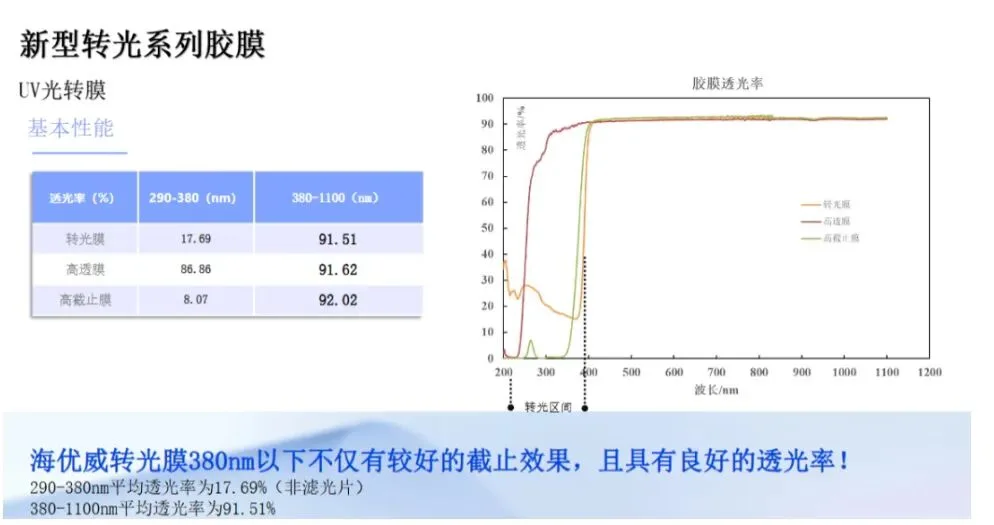
Within the ultraviolet wavelength range of 280–380 nm, the transmittance of the encapsulation film is below 20%.
3. Long-Term Weathering Reliability
Long-term weathering reliability is another critical parameter when evaluating light-conversion film for photovoltaic modules. It determines whether the film can maintain its optical conversion and protective performance during long-term outdoor operation.
Related: TOPCon UVID and the r-UVID / ir-UVID split explains the cell-level loss that those films are used to limit.
Further reading and background data
Public reference material on this topic, published by the organisations that maintain the industry's technology roadmap and market data: