Solar Rooftops You Cannot Afford to Ignore: A Complete Guide to Pitched and Flat Roof PV Systems
Table of Contents
Product Introduction
Within building-integrated photovoltaics (BIPV), rooftop solar stands out as the most important application form. Rooftops enjoy excellent sunlight conditions, remain unaffected by building orientation, are less prone to shading, and can fully absorb solar radiation. These advantages make the roof the prime real estate for capturing solar energy. Rooftop PV generally falls into two main categories: pitched roof PV and flat roof PV.
Technical Parameters
Pitched Roof PV
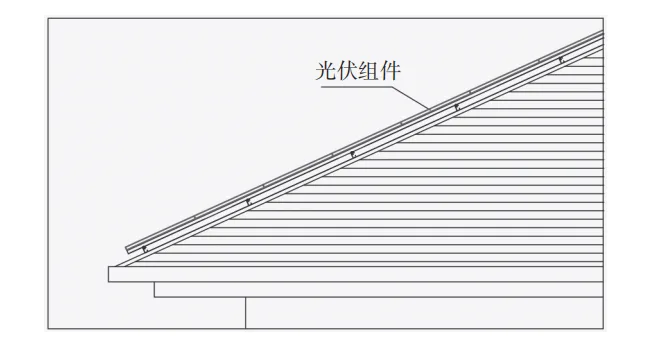
Direct-Mounted on Pitched Roofs: PV modules are typically laid flat following the direction of the sloped roof surface. A gap is left between the modules and the roof to allow for cable routing and ventilation for heat dissipation, as shown above.
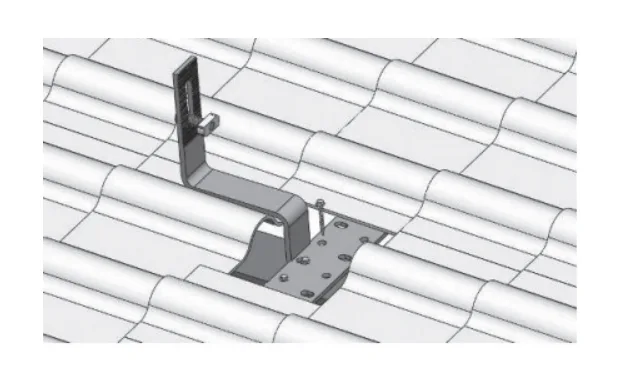
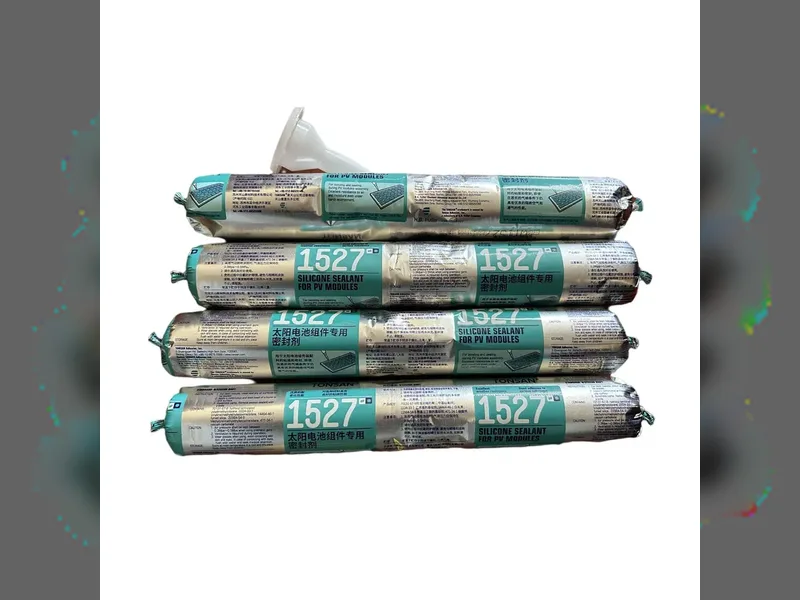
For new concrete pitched roofs or villa-type concrete pitched roofs (covered with tiles), bolts can usually be pre-embedded during the design stage, and roof waterproofing handled through conventional practice. When installing the module base, the waterproof layer should be extended over the base and metal embedded parts, with sealing treatment around the anchor bolts. Where the waterproof layer is penetrated, waterproof sealant should be used to fill the gap and block any path for rainwater infiltration. An additional waterproof layer should also be added beneath the base, so that even if leakage occurs at the top of the base, rainwater will not reach the structural layer.
For large-area color steel roofs of factories and warehouses, the slope is generally 5% to 10%. Modules can be laid parallel to the roof slope, or arranged at a certain tilt angle. The upper support brackets connect to the roof's load-bearing structure through various connectors and fasteners. Different color steel panel structures require different bracket clamps — the better the clamp matches the color steel tile, the higher the reliability of the mounting system.
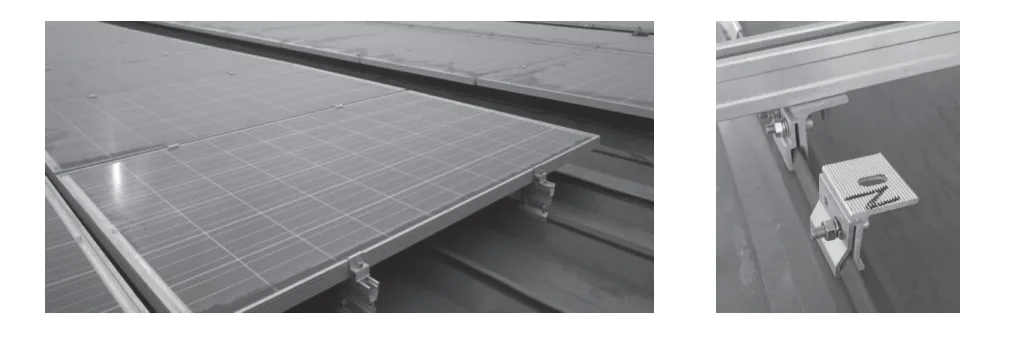
For retrofit projects adding PV to existing color steel roofs, the fixing method must be chosen according to the roof panel structure — suitable clamp connections, drilled bolt connections, or chemical adhesive bonding are used to mount the PV brackets onto the roof panel. Special attention must be paid to reinforcing roof waterproofing after adding the PV equipment, especially for connectors that penetrate the roof panel. Waterproof gaskets or other sealing structural adhesives can be applied to guarantee waterproofing performance. In addition, the structural load of the original roof steel frame, trusses, purlins, and roof panels must be re-checked through stress analysis on the load-bearing members to ensure structural safety.
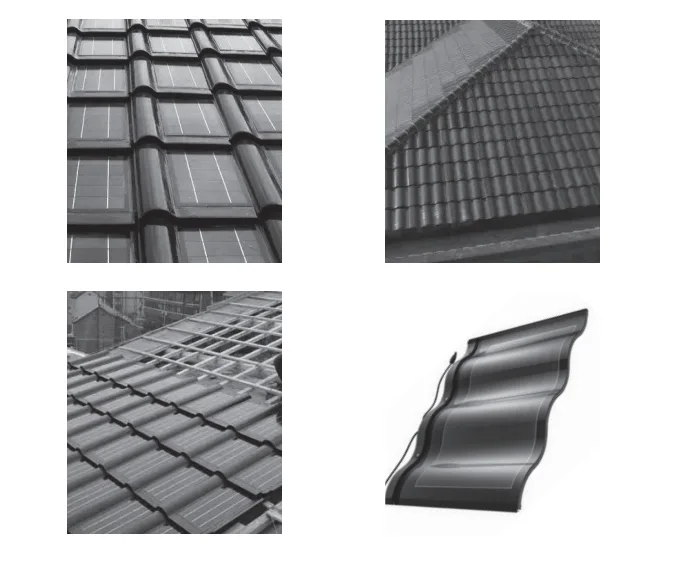
Solar Tile Construction and Installation: For new concrete pitched roofs or villa-type concrete pitched roofs (covered with tiles), besides the common direct-mounted type, many projects adopt the form of solar tiles. A tiled roof is a type of sloped roof whose distinctive shape demands a high standard of module appearance. Solar tiles are therefore often used to blend with the building roof, as shown above.
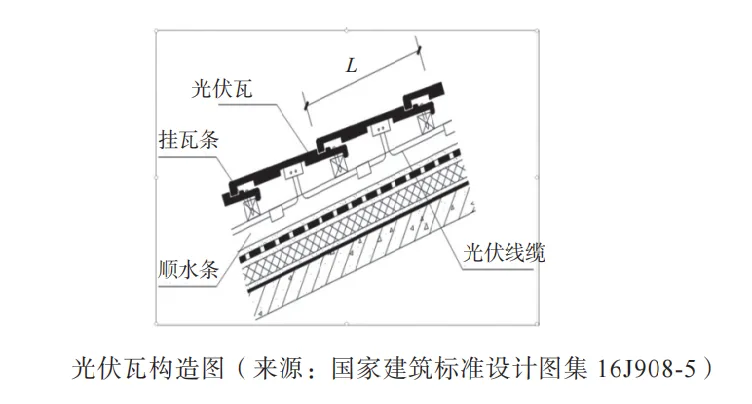
Solar tiles preserve the overall architectural style, supply building energy, and reduce indoor temperature at the same time. Solar tiles should match the modular dimensions of ordinary roof tiles and must not interfere with the normal drainage function of the roof. The solar tile construction is shown above.
Flat Roof PV
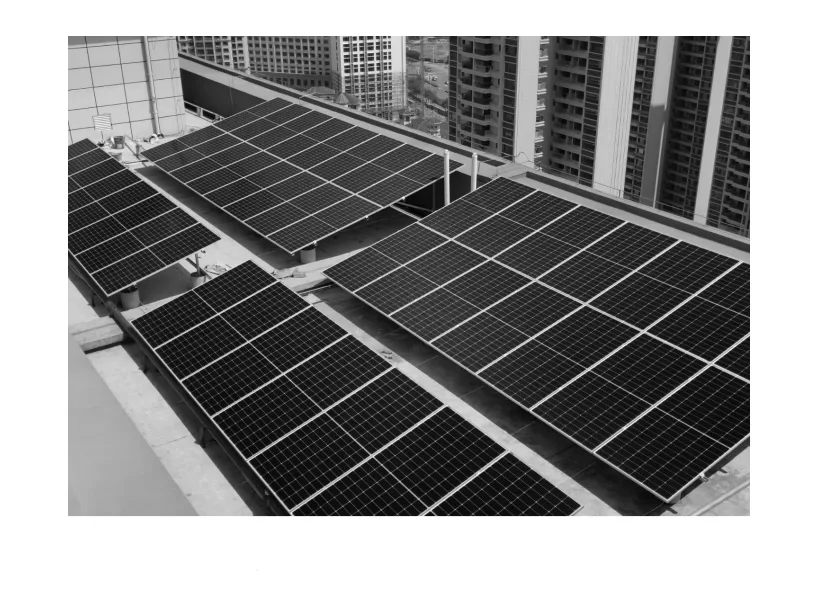
Direct Placement: For the most common concrete flat roofs of buildings, a fixed-tilt PV array is adopted, using steel brackets fixed onto concrete piers on the roof. The module brackets are arranged with transverse supports along the length direction of the structural unit. Bolted connections are used between the brackets and the foundations, between the bracket members, and between the brackets and the purlins.
This mounting method carries a relatively small structural load, is easy to install, generally does not affect the safety of the building's roof structure, does not damage the original roof waterproofing system, and has a relatively low economic cost. For new buildings, concrete piers can be reserved during the design stage according to the specific bracket installation dimensions, making installation convenient. The tilt angle of the module brackets can be calculated using relevant solar PV software based on the local latitude and the roof layout, selecting the optimal solar-facing and tilt angle.
When modules are placed at a tilt, the row spacing of the PV array must be considered to avoid the front row shading the rear row. The choice of tilt angle and row spacing should be coordinated with the specific dimensions of the available roof space. On the premise of satisfying sunlight conditions, the optimal tilt and configuration should be selected by weighing all factors, so as to increase the installed capacity per roof area and improve power generation efficiency. Based on past design experience, PV systems installed this way have an installed capacity of about 120–160 Wp/m² per unit area, and it is recommended to estimate at 150 Wp/m² during scheme design.
Building roofs host many electromechanical facilities such as cooling towers, ventilation and fire-fighting fans, water supply and drainage equipment, and pipelines, as well as stairwells, elevator machine rooms, and rooftop fire water tanks rising above the roof. All of these significantly affect the placement of PV arrays. The available and continuous roof area for modules may be small or scattered, which is unfavorable for system layout and cable combining. Communication and coordination with the architectural and various electromechanical disciplines must be carried out early in the design stage to secure better installation area and conditions.
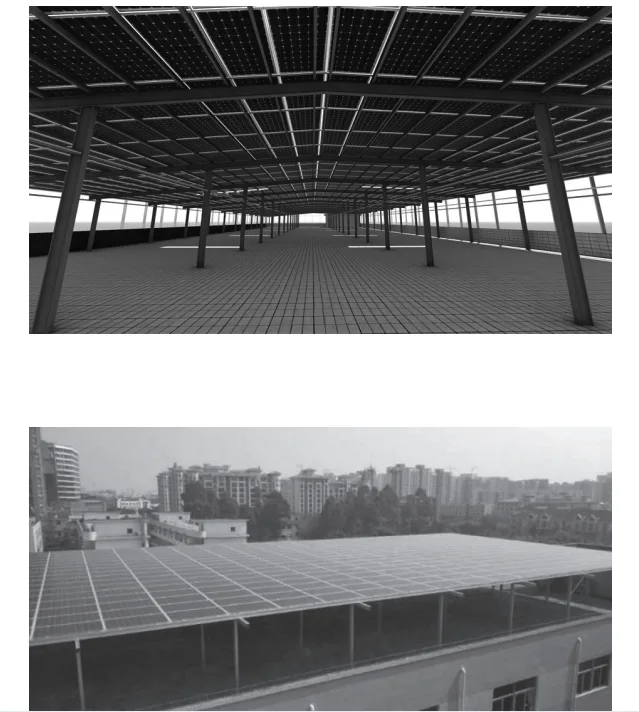
Elevated Installation: To make effective use of space and overcome the drawbacks of direct rooftop mounting, an elevated arrangement can be used. A steel canopy frame is added at a high position on the roof to support the PV modules without affecting the layout and use of rooftop equipment. The module brackets are bolted to the purlins of the steel canopy structure, adopting an overall horizontal tilt in which the modules are laid flat on the canopy steel structure, as shown above.
This method maximizes the use of roof area and avoids interference from rooftop equipment layout, but several issues need to be considered. First, safety. Since the steel canopy exceeds the height of the parapet, extreme weather (such as strong typhoons) may lift the modules and cause them to fall, posing danger below. The installation tilt angle should therefore not be too large, and the connection strength of the mounting connectors must be re-checked. Second, the impact of the steel canopy on building height and floor area ratio. Although the canopy is open on all sides, owners may later enclose it for use, so it is necessary to confirm with local construction and planning authorities whether the structure can be exempted from height and floor area ratio calculations. Third, whether rooftop electromechanical equipment such as cooling towers, exhaust fans, and vent pipes can be covered from above must be negotiated and confirmed with the relevant disciplines.
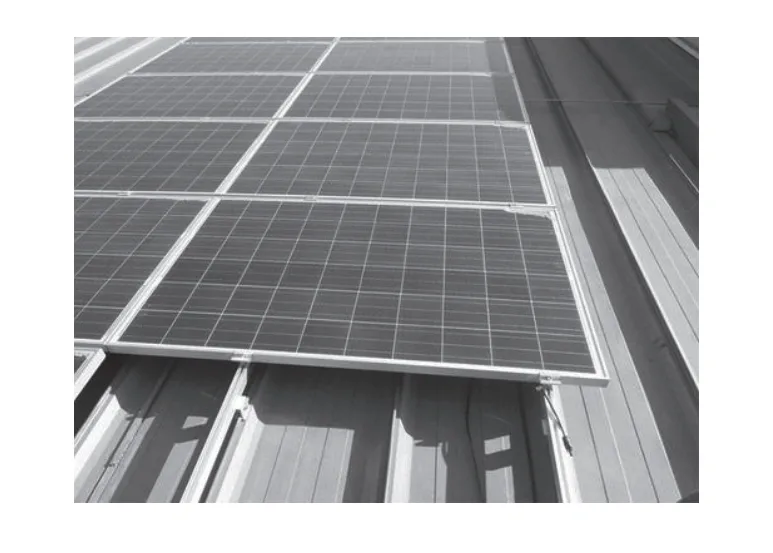
For newly built color steel roof buildings, an integrated PV roofing panel can be selected to lay modules across the entire roof — bracket-free, fast to install, walkable, and requiring no reserved maintenance or cleaning channels. Compared with adding ordinary modules onto traditional metal roof panels, this integrated solution performs better in wind resistance, waterproofing, fire protection, and full utilization of the available roof area, as shown above.
Technical Advantages
Rooftops offer superior sunlight exposure, freedom from orientation constraints, and minimal shading
Multiple mounting strategies adapt to concrete, color steel, tiled, and integrated roof types
Solar tiles preserve architectural aesthetics while lowering indoor temperature
Reinforced waterproofing and structural re-checking ensure long-term roof safety
Optimized tilt angle and row spacing maximize installed capacity and generation efficiency
Integrated PV roofing panels deliver bracket-free, walkable, weather-resistant roofs
Product Application
Rooftop PV solutions apply across a wide spectrum of building types: residential villas with concrete pitched or tiled roofs, industrial factories and warehouses with large color steel roofs, existing structures undergoing PV retrofit, and commercial buildings with flat concrete roofs crowded with electromechanical equipment. Whether through direct mounting, solar tiles, fixed-tilt arrays, elevated canopy structures, or fully integrated PV roofing panels, each approach can be tailored to site conditions to balance energy yield, waterproofing, structural safety, and architectural appearance.
Ooitech's View
As a global solar panel production line supplier, Ooitech believes that the diversity of rooftop scenarios described here — from tiled villas to elevated factory canopies — is exactly why module quality and dimensional consistency matter so much at the source. Solar tiles must match tile modularity, and elevated arrays must survive typhoon-grade loads, so the framing, lamination, and EL-testing stages of module production directly determine whether these rooftops stay watertight and safe for decades. For engineers who want to see how reliable modules are actually built, following the Ooitech YouTube channel at www.youtube.com/ooitech offers a closer look at the production line behind every dependable rooftop installation.