PV Cell Metallization: Can
Table of Contents
Quick answer: The economics of solar cell metallisation have shifted as the silver spot price moved back up, and the question of whether to reduce or replace silver has returned to the front of process planning. Silver is the largest non-silicon cost in a high-efficiency cell, so a price movement translates directly into cost per watt. The two routes are reducing silver per cell through finer fingers and fewer busbars, or replacing silver with plated copper. Reduction has been the industry's answer for years because it uses existing equipment and carries no reliability risk. Replacement offers a larger saving but brings adhesion and copper-diffusion problems, and any plated contact still has to pass IEC 61215 qualification and hold up over a 25-year service life. The choice depends on how far reduction can go before resistance limits it.
PV Module Manufacturing · by Jerry, Ooitech
Introduction
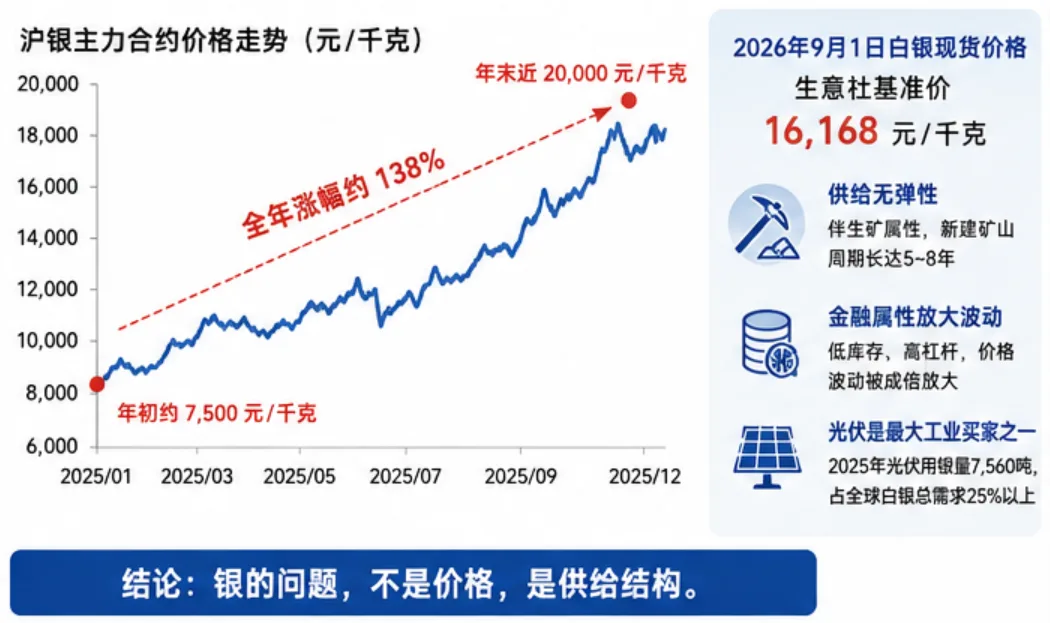
Silver spot price in China is back above 16,000 yuan/kg in early September — the SunSirs benchmark sits at 16,168 yuan/kg. Pull the timeline back a bit: in 2025 Shanghai silver futures climbed roughly 138% over the year; by early 2026 it briefly broke through 26,000 yuan/kg. The PV industry has spent more than a year watching silver prices with its heart in its throat.
But the thing really worth watching isn't today's price. It's three structural problems.
The Silver Problem Isn't Price, It's Supply Structure
Silver supply has no elasticity
Silver output rides on the mining of its host metals (lead, zinc, copper). A new mine takes five to eight years to build. No matter how hard silver prices run, supply can't keep up — the price signal takes the better part of a decade to reach supply.
Silver carries a financial attribute
Low inventory, high leverage, price swings amplified many times over. It's not just an industrial raw material, it's an asset.
PV is one of its single largest industrial demand sources
PV silver consumption accounts for nearly 20% of global annual supply. After N-type cells went mainstream, per-watt silver use didn't fall — it rose, and total silver use basically doubled. Silver paste already makes up 43% of non-silicon cost (Haitong Securities estimate). In the words of Shen Wenzhong of Shanghai Jiao Tong University: "Silver has become the number one cost item in PV modules, exceeding polysilicon."
So here's my read: the silver problem isn't price, it's supply structure. Waiting for the price to fall before acting is betting on a low-probability event.
2026: PV Silver Consumption Turns the Corner for the First Time
For the past few years, what the industry kept cutting was "how much silver per watt." What's really changing this year is "how much silver the whole PV industry eats in a year."
Fraunhofer ISE has announced that TOPCon cell silver consumption has dropped by a factor of ten — ten times, not 10%. A two-step printing approach cut rear-side silver use by another 80%. And the latest World Silver Survey 2026 from the Silver Institute shows global PV silver demand in 2026 is expected to fall to 151 million ounces (about 4,290 tonnes) — the first decline in years.
Silver reduction has, for the first time, gone from a "cost pressure" story to a "total-volume delivery" story.
The Routes We Won't Repeat
The specific routes — silver-coated copper, pure copper paste, copper plating, ACM — their process details, cost math, and reliability question marks, we've covered in previous features. There's a link collection at the end, so no need to unpack them again here.
What this piece wants to talk about is the wall all these routes run into together: copper is coming, so who's going to stop copper?
The Silver-Blocking Lesson: Can It Be Used to Stop Copper?
The last two pieces talked about "blocking silver" using a layered defense line: a heavily doped amorphous outer layer as the reception hall, letting silver in to form contact; a highly crystalline poly-Si inner layer as the gate; and a tunnel oxide as the final interface barrier. Silver gets held outside the substrate, and the implied open-circuit voltage holds onto 5mV.
Now copper wants in. Copper inside silicon is far more dangerous than silver — it diffuses fast, it's a deep-level recombination center, and once it gets into the substrate it penetrates deeper and poisons harder. So the job of "stopping diffusion," upgraded from blocking silver to stopping copper, jumps a whole level in difficulty.
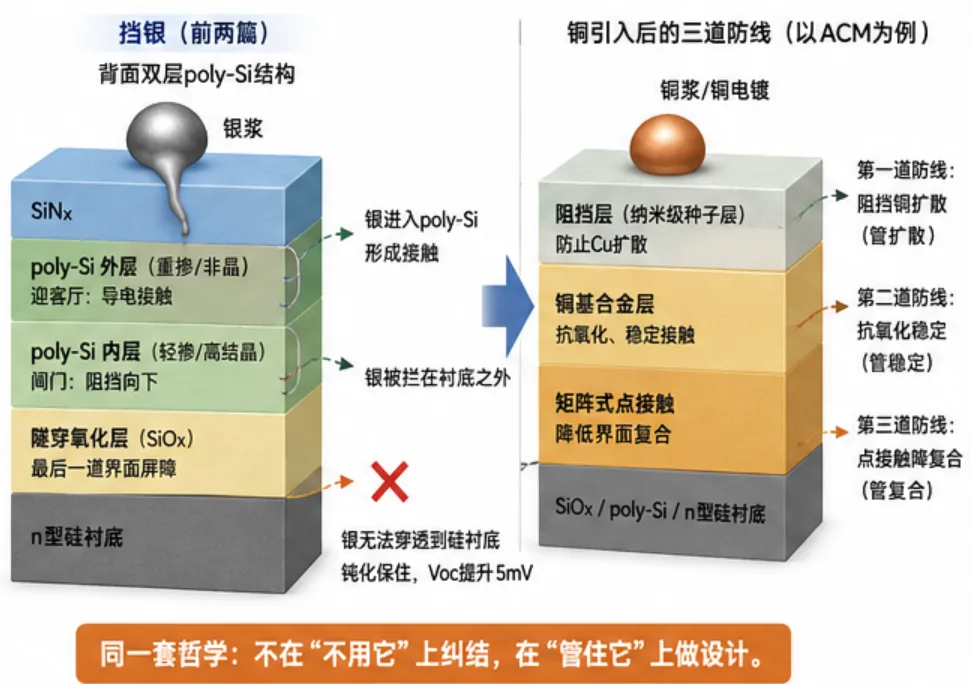
Look at the three-part design of LONGi's ACM: a seed layer to block copper diffusion, a copper-based alloy for oxidation resistance, and a matrix point-contact to reduce recombination. The first part is "seed layer blocks copper diffusion" — what it defends against isn't just oxidation, it's copper itself drilling into the silicon. This thinking is the same philosophy as the double-layer poly-Si blocking silver: don't get hung up on "not using it," design around "managing it." The seed layer manages diffusion, the alloy manages stability, the point contact manages recombination — again, layered division of labor, each layer doing one job.
We said before: the wisdom of blocking silver isn't in "walling off," it's in "layering." That line holds just as true for stopping copper, maybe even more so — because copper needs managing more than silver does.
A Splash of Cold Water
De-silvering has no national standard and no long-term outdoor field evidence. Some pure-copper-plating routes in published research still lag current high-efficiency TOPCon mass production by a meaningful margin — some comparisons put the gap around 1.5 percentage points. LONGi's ACM so far has only accelerated aging data and no 25-year outdoor field results (though Fraunhofer ISE's copper-plated TOPCon modules have passed IEC 61215 degradation testing, so the accelerated aging data already shows positive signals).
These routes are still in transition from demonstration lines and pilot lines toward volume production. Planned capacity can't be simply equated with actual shipping capability.
The race has started, but a race isn't mass production — whoever finishes the reliability validation first is the real winner.
One Judgment and One Action for the Line
Judgment
The second half of silver reduction shifts from "save cost" to "compare reliability." Total silver use has started falling. The remaining competition is no longer "who uses less silver," it's "who uses less silver without losing efficiency and without causing problems." Reliability data accumulation, not launch events, will become the new threshold.
Action
Watch three things closely. Where the material route has reached (yield and cost of silver-coated copper, copper paste, plating). How far reliability data has built up (beyond accelerated aging, is there real outdoor field evidence). And the scissor gap between silver price and silver consumption (whether the money saved from cutting silver is enough to cover the cost of switching materials). The moment any one of these three hits an inflection point is the moment the line should move.
So these three pieces, all the way to the end, are really about the same thing. On the front side, let silver go in precisely. On the back side, let silver stop precisely. Further out, use less and less silver. And once copper truly takes the baton, the question becomes: how do you let copper in but keep it out of the silicon.
From removing aluminum, to blocking silver, to reducing silver, to stopping copper — the next round of TOPCon metallization competition, at its core, is no longer about "whose paste is stronger," but about who is better at managing metal.
Ooitech's View
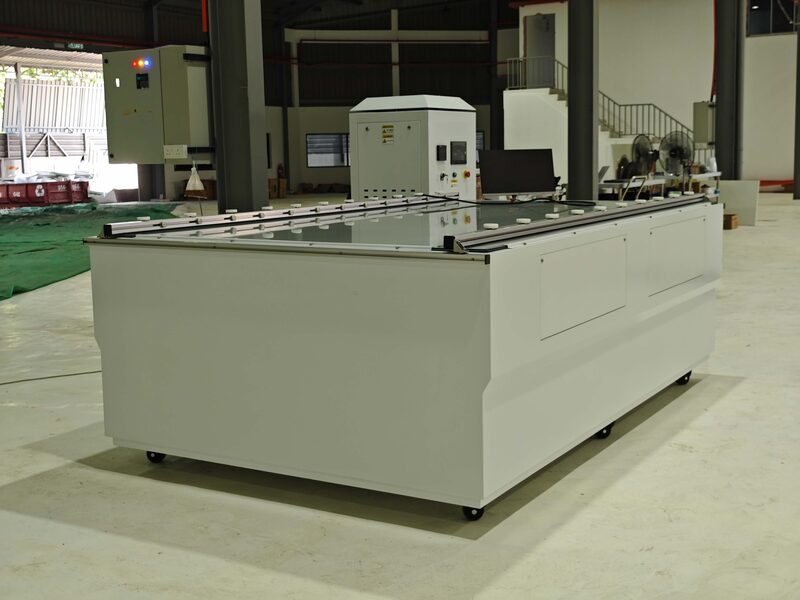
What strikes me here is that the fight has moved off the paste bottle and into process control on the line. Seed-layer barriers, plating windows, alloy stability — these all raise the bar for how a module line is built, aligned and inspected, not just what feedstock it buys. On our side building 5MW to 1GW turnkey module lines, we already see that EL testers, IV testers and layup precision matter more as cells get thinner and metallization gets touchier. Copper won't forgive a sloppy line the way silver sometimes did. Worth subscribing to our YouTube channel www.youtube.com/ooitech if you want to see how these steps actually run on a real factory floor.
Related: 0BB cell technology: what removing the busbar changes looks at the metallisation side of the same question, where the metal itself is being replaced.
Related: Laser-cut edges in TOPCon: passivating the cross-section is about the layer that has to go on the cut surface first, before any metal touches it.