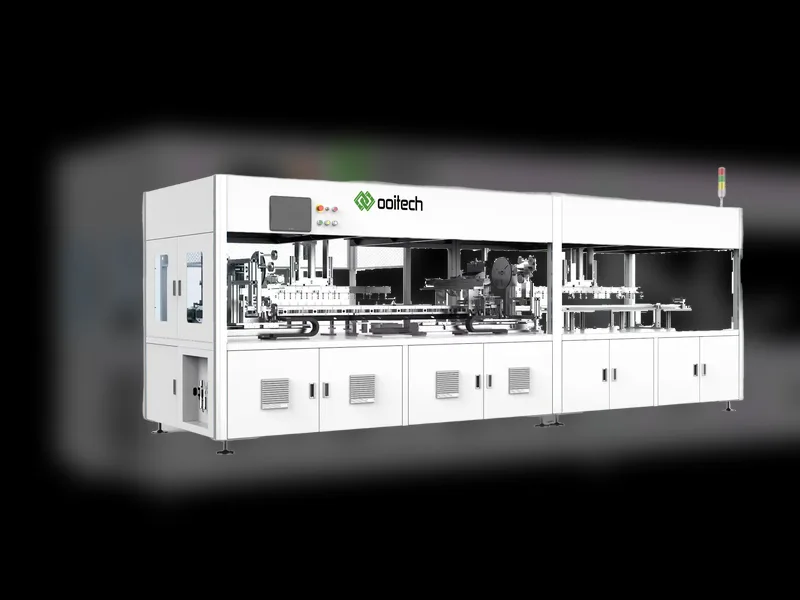
PV Stringer Machine Basics — Solar Cell Tabber Stringer
Table of Contents
Quick answer: A tabber stringer does one job at the front of a module line: it solders ribbon onto individual solar cells and joins those cells into a series string. Every crack, cold joint or misaligned ribbon created here is permanent, because no later station can repair a connection that is already sealed inside the laminate. The process works by melting the solder coating on the ribbon, so the soldering zone runs above the melting point of the alloy you use: conventional leaded coatings melt near 183°C and common lead-free alloys near 217°C. Machines hold that zone to a tight tolerance, and our AM050FH platform specifies ±7.5°C. A handful of figures tells you most of what a machine is worth: breakage on Class A cells, which current machines hold at or below 0.2%; positioning accuracy, typically ±0.15 mm; and throughput matched to your laminator rather than to a brochure. This page covers the basics and the three machine classes.
What a stringer does, the difference between manual, semi-automatic and full automatic machines, and the four numbers worth asking about before you read any quotation.
PV Module Production · PV Basics · by Jerry, Ooitech
This is the page I send to buyers who are new to module manufacturing. Not because the stringer is difficult to understand, but because it is the one station where a small process mistake becomes a permanent one, and most people learn that after their first bad batch.
What the Machine Does
Stringing is how individual cells become a usable voltage. One cell produces roughly half a volt, so a module needs its cells connected in series before it can do anything useful. The stringer does that by soldering tinned copper ribbon from the front of one cell to the back of the next, repeating the pattern until a full string exists at the length your module design calls for.
That sounds like a straightforward mechanical task, and mechanically it is. The difficulty is thermal. The ribbon arrives coated in a solder alloy, and the machine has to heat that coating past its melting point, wet the cell’s silver fingers, and cool again without cooking the wafer or cracking it. A wafer is 130 to 180 micrometres thick, which is thinner than a sheet of paper folded twice. Heat it too fast and it bows. Press it too hard and it chips. This narrow window is why stringer selection is really a question about process control rather than about mechanics.
The Three Classes of Machine
Almost every stringer on the market falls into one of three groups, and the group matters more than the brand when you are budgeting. The division is about how much of the cycle the machine handles on its own, not about how modern the design is.
Manual. The operator places cells and ribbon by hand and solders with simple tooling or a heated stage. Investment is low and so is consistency: positioning accuracy is limited by the operator’s eye, throughput is measured in tens of modules a day, and breakage risk is high. You still see these in laboratories, university pilot lines and training workshops, and they are a reasonable way to prove a module design before committing to a line. They are not a production solution.
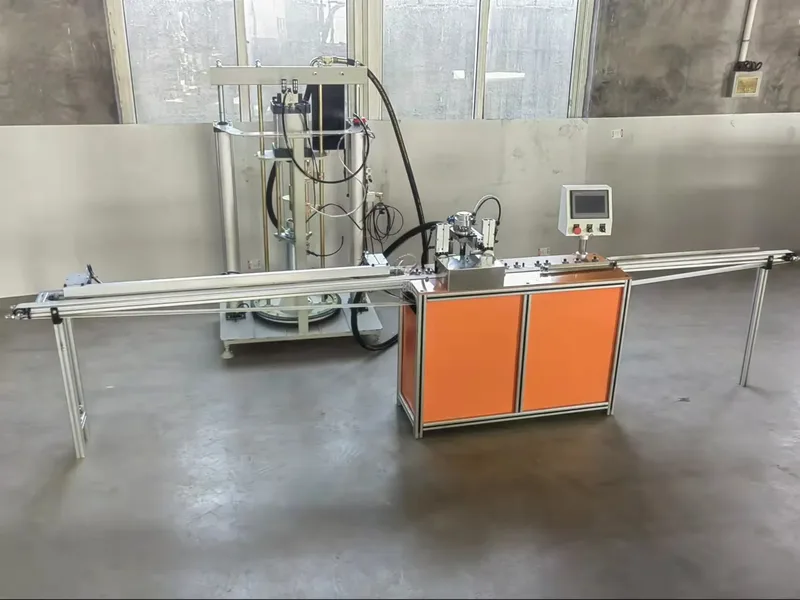
Semi-automatic. The machine takes over ribbon feeding and soldering while the operator still handles string transfer, loading and unloading. This is the class most factories meet first, because it breaks the capital cost into stages and can be expanded later. Quality depends heavily on the operator, and soldering consistency varies more between shifts than on a fully automatic platform. For a 5 to 60 MW line it is often the sensible starting point.
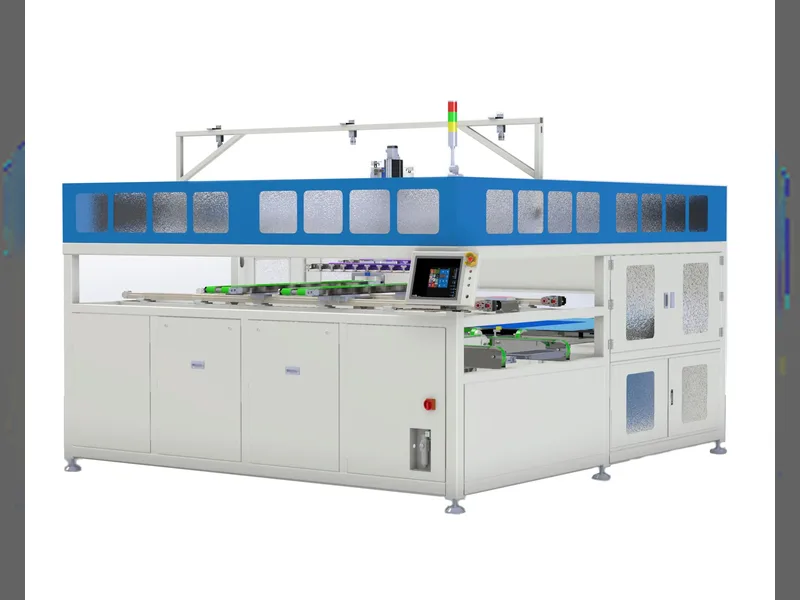
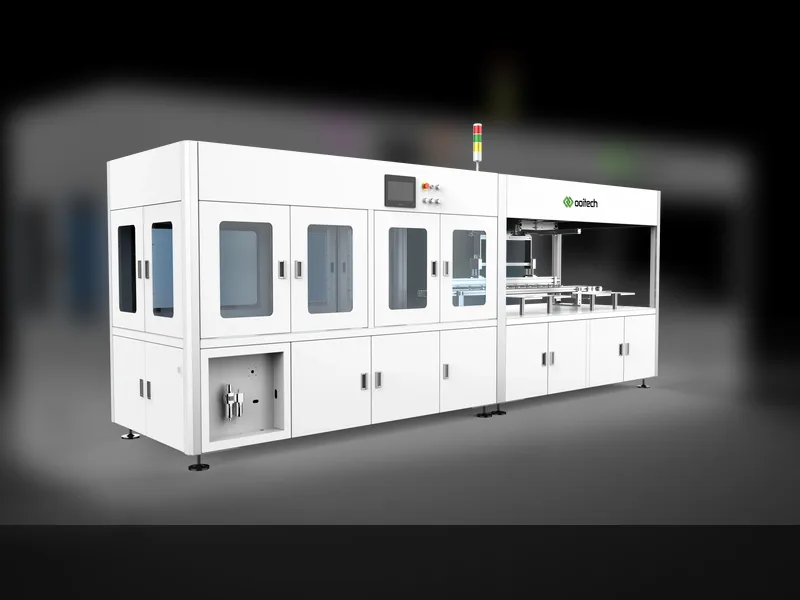
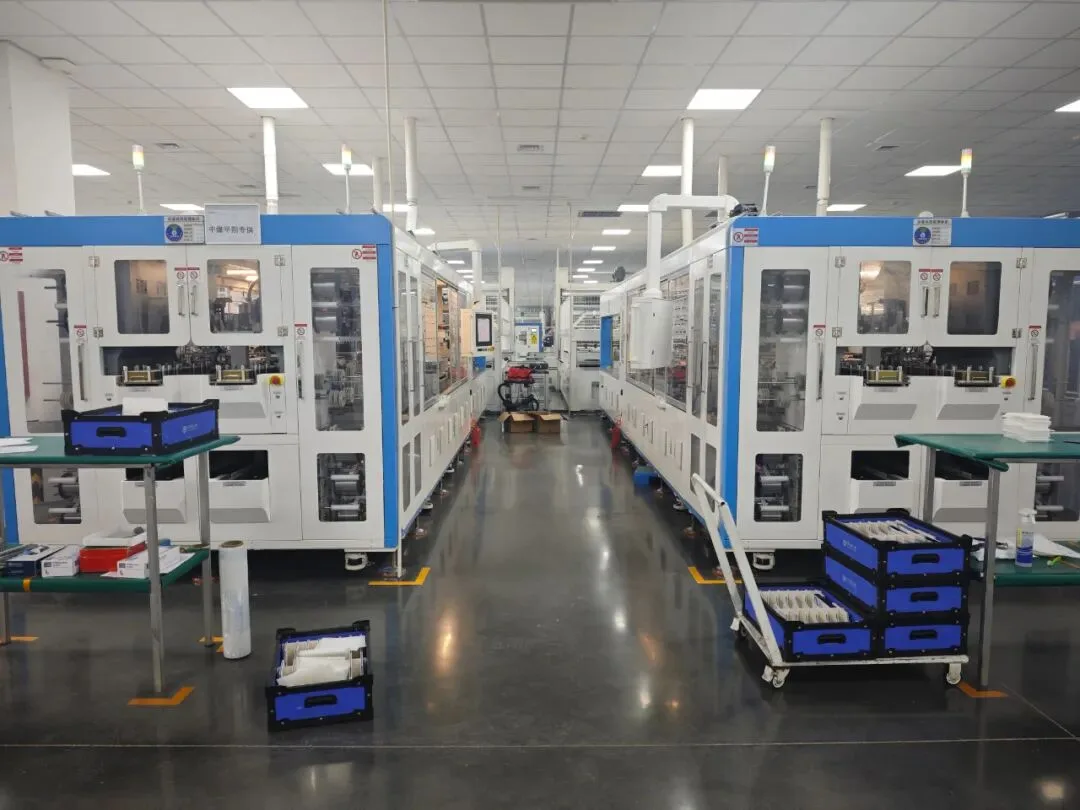
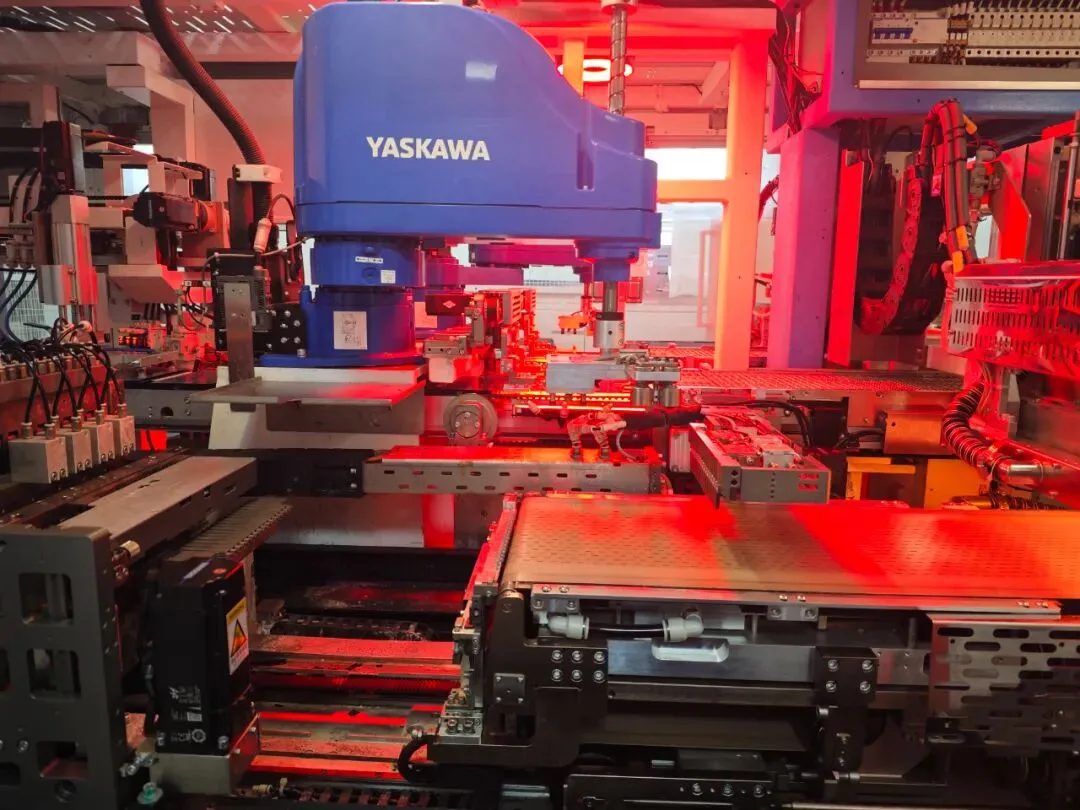
Full automatic. Loading, vision alignment, ribbon feed, soldering and string transfer all run without an operator in the loop. Positioning accuracy, throughput and repeatability are all higher, and labour dependence drops sharply. The trade is capital cost and the need for a real maintenance function. Mainstream module factories treat this class as the default above roughly 100 MW.
| Class | What the machine handles | Where it fits |
|---|---|---|
| Manual | Nothing; the operator places cells and ribbon and solders by hand | Laboratory, pilot line, training. Not a production answer |
| Semi-automatic | Ribbon feed and soldering; operator still transfers and loads strings | 5–60 MW lines, and upgrades from manual stringing |
| Full automatic | Loading, vision alignment, ribbon feed, soldering and string transfer | Continuous lines, the default above roughly 100 MW |
The capacity bands above are a rule of thumb rather than a specification. What actually decides the class you need is the cycle time of the station behind you. A fully automatic stringer feeding a semi-automatic layup station is money spent on a bottleneck that no longer exists.
Where It Sits in the Line
The stringer sits after cell sorting and laser cutting, and before layup. In that position it is the first irreversible step between a cell and a finished module: lamination can be re-run and framing can be corrected, but a cold joint or a cracked cell inside a completed string is inside the module for the next 25 years.
That is why the stringer has a habit of setting the ceiling on line yield even when it is not the most expensive machine on the floor. It is also why its takt has to be matched to the layup station and the laminator rather than chosen in isolation. Downstream, the strings are joined by a bussing machine and checked by an EL tester, and a mismatch at any of those three points shows up as a queue rather than as a defect report. If you are still mapping the whole sequence, the line equipment overview walks through every station in order.
The Four Figures to Ask About First
A full stringer datasheet runs to twenty parameters. Four of them decide most of the outcome, and they are the four most often left vague in a first quotation.
- Breakage rate. Current-generation machines hold at or below 0.2% on Class A cells, and the figure should be quoted with the cell grade it was measured on. Anything looser costs you cells permanently.
- Positioning and placing accuracy. These are two different numbers. Positioning accuracy is how precisely the machine moves; placing accuracy is where the ribbon ends up. Current machines specify around ±0.15 mm and ±0.2 mm respectively, and a quotation that gives one figure without saying which is worth a follow-up question.
- Throughput, per cell type. Entry machines run around 1,200 cells per hour, the workhorse class 2,400, and high-speed platforms around 6,800. Rates differ by cell type on the same machine, so a single figure with no format attached tells you very little.
- Temperature control tolerance. The soldering zone has to stay inside a narrow band between a good joint and thermal damage. Our AM050FH platform specifies ±7.5°C with settable upper and lower limits on the HMI.
Where to Go From Here
This page stops at orientation on purpose. The next two questions buyers ask are how the machine actually works in detail, and how to choose one, and both are covered in the tabber and stringer machine guide: the six stations, why infrared replaced hot air, the move from multi-busbar to zero-busbar, cell compatibility across PERC, TOPCon, HJT and BC, and what the different machine classes cost.
If you already know what you want and the open question is who to buy it from, that is a separate decision with its own checklist, set out in how to evaluate a tabber stringer machine manufacturer. For concrete platforms rather than categories, the SS-1500B is our entry-class machine and the SS-2500B the higher-capacity one.
Final thoughts: if you are new to stringing, do not start by comparing machines. Settle your intended capacity, your cell formats for the next two years, and the cycle time of the station you already own. Those three answers eliminate most of the market before you read a single quotation, and they are much cheaper to change now than after a machine is on your floor.
Specifications reference Ooitech machine data. Capacity bands and accuracy figures are typical for each machine class and are confirmed against your cell formats before quotation.