Follow Us:
Why Does Electrifying a Solar Panel Reveal Hidden Cell Cracks?
  • 2026-08-20
  • 113 Views
  • Blog

Why Does Electrifying a Solar Panel Reveal Hidden Cell Cracks?

Before leaving the factory, solar panels go through two major quality checks. One is a simple visual inspection. The other is what we're talking about today: the power-on test. The technical name for this is the EL test. EL stands for Electroluminescence.

1. The Science Behind EL Testing

A crystalline silicon solar cell is essentially a PN junction semiconductor. It has bidirectional photoelectric properties. In our daily use, sunlight hits the panel, triggers the photovoltaic effect, and turns light energy into electricity.

EL testing flips this physical process backward. An external power source applies a forward direct current to the module. This injects electrons and holes into the cell. These charge carriers recombine at the PN junction and release energy as photons, creating the electroluminescence effect.

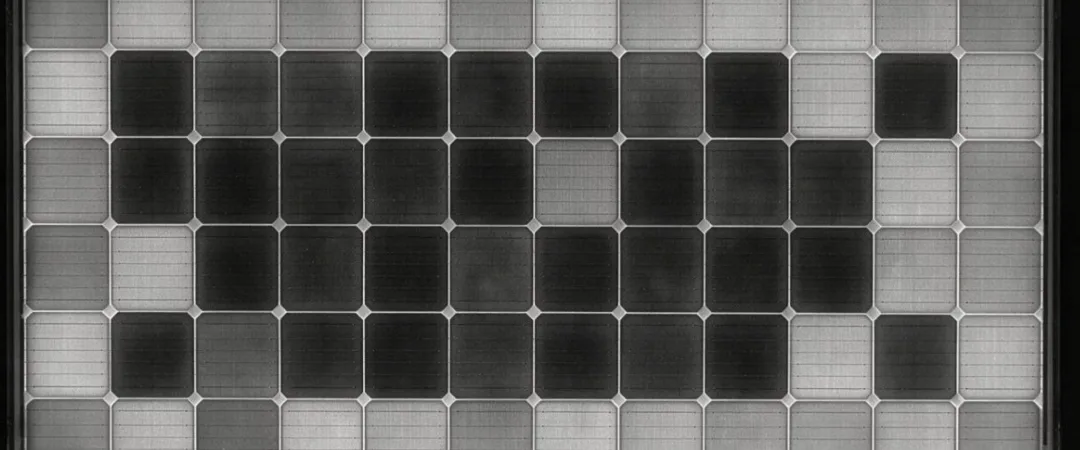
Here is the catch. When the silicon cell gets powered, the light it emits is near-infrared, with a wavelength around 1100-1150nm. This specific band falls completely outside human vision. We can't perceive this light at all. Even if the module is fully powered and glowing, it just looks like a regular piece of glass to the naked eye. You won't see any bright or dark patterns.

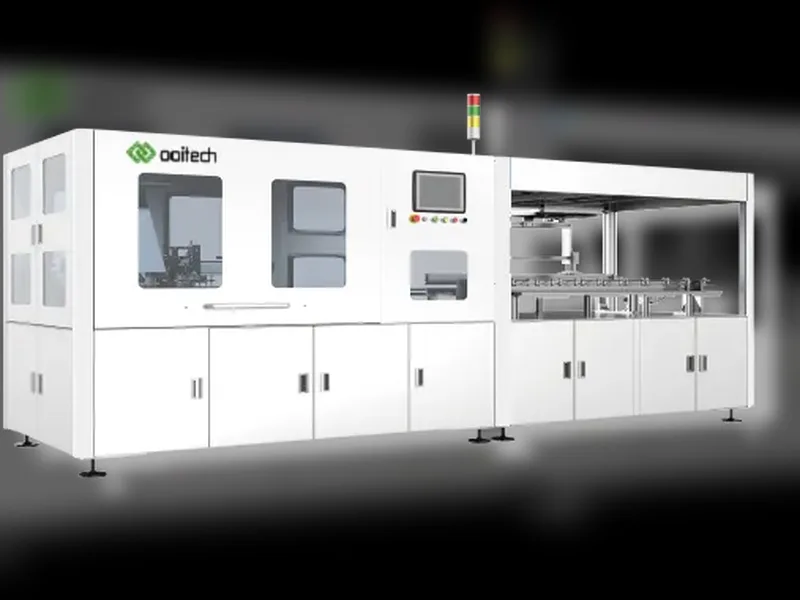
That is why just applying power is nowhere near enough. We have to rely on specialized infrared imaging cameras. EL equipment uses near-infrared sensitive CMOS or CCD cameras paired with IR filters. They take long-exposure shots in a completely dark environment. This setup converts the invisible infrared signals into clear black-and-white images on a monitor.

Why Does Electrifying a Solar Panel Reveal Hidden Cell Cracks?

2. Why Do We Need EL Testing?

Think of it as a CT scan for solar panels. Defects you cannot spot from the outside become crystal clear through an EL test. Let's look at a few common EL defects: micro-cracks, cold soldering, and broken grid lines.

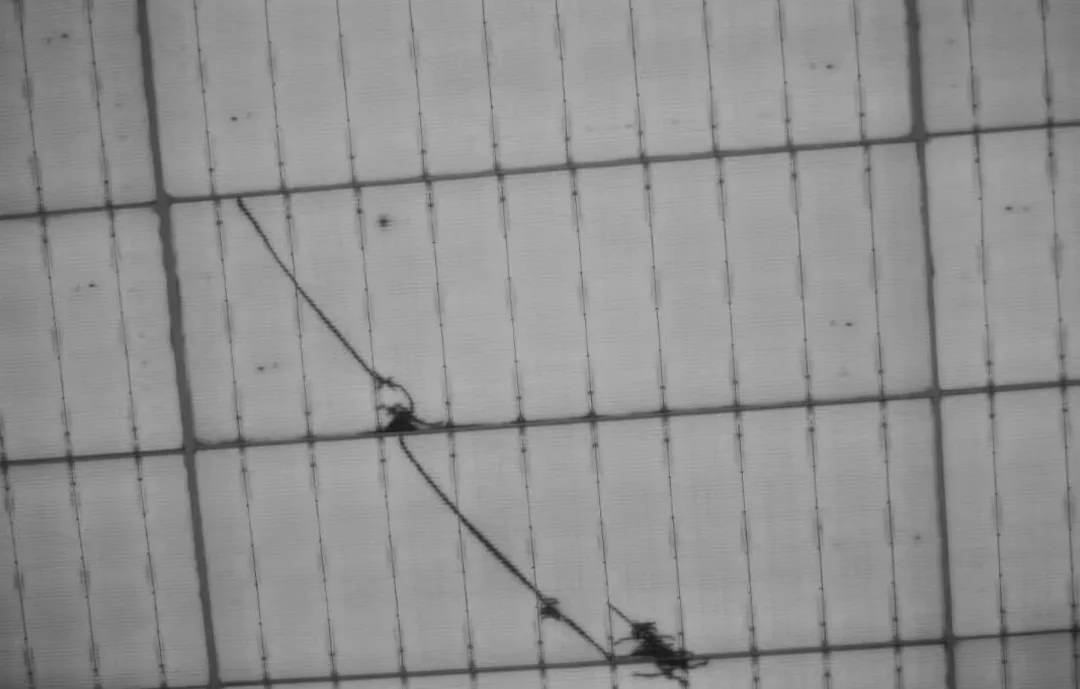
Micro-cracks:These are micro-fractures in the silicon body caused by mechanical stress. The cell hasn't completely snapped apart, so the surface looks fine. But the crystal lattice is already cracked. Since it is actual damage to the silicon base, the EL camera catches it easily. In an EL image, a micro-crack shows up as a distinct black line.
Why Does Electrifying a Solar Panel Reveal Hidden Cell Cracks?

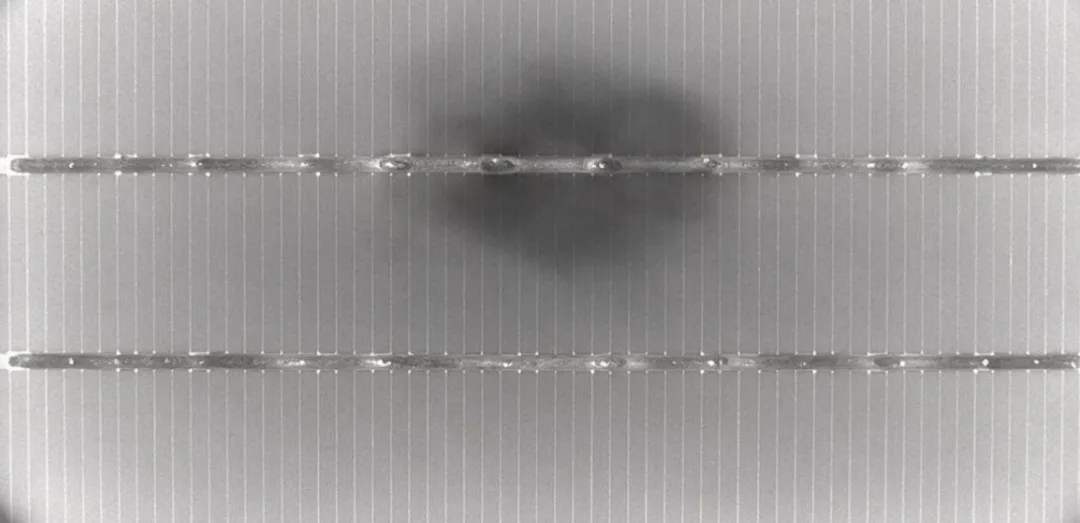
Cold Soldering:This happens when a good alloy contact fails to form between the soldering ribbon and the cell's main busbar. They touch mechanically, but the electrical connection is weak. In EL images, cold soldering appears as local dark spots or dark lines. You will usually see them running along the grid lines, showing up as irregular, broken black lines or dotted patches.
Why Does Electrifying a Solar Panel Reveal Hidden Cell Cracks?

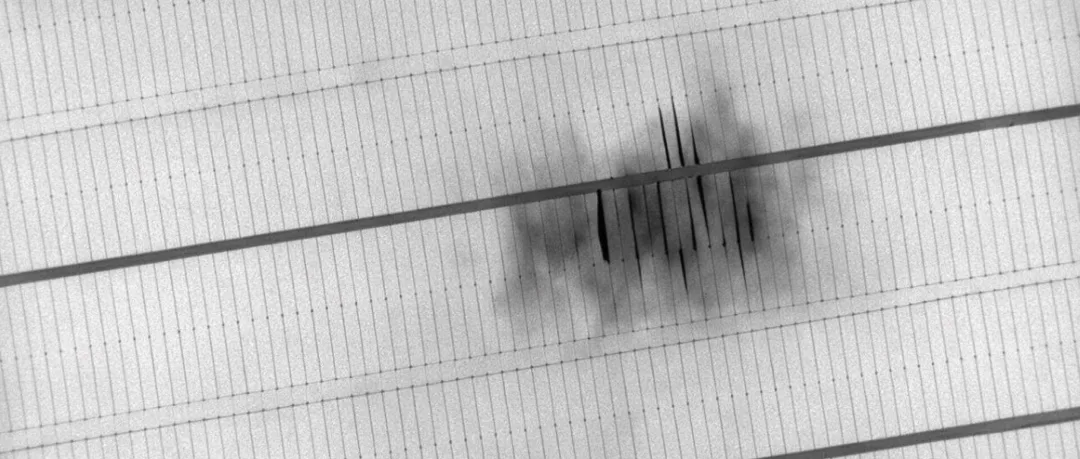
Broken Grid Lines:Sometimes the fine silver grid lines on the cell break. When this happens, the current collection path gets cut off. This is almost always a raw material defect. You can spot it in an EL scan as black or dark areas running perpendicular to the main busbar.
Why Does Electrifying a Solar Panel Reveal Hidden Cell Cracks?

About 15 years ago, buyers rarely asked for EL inspections. Today, it is an absolute must-have for panel shipments, tested at 100% capacity on the line. Things like micro-cracks, cold soldering, and broken grids will seriously drag down a module's power output and ruin its long-term reliability.

Ooitech's View

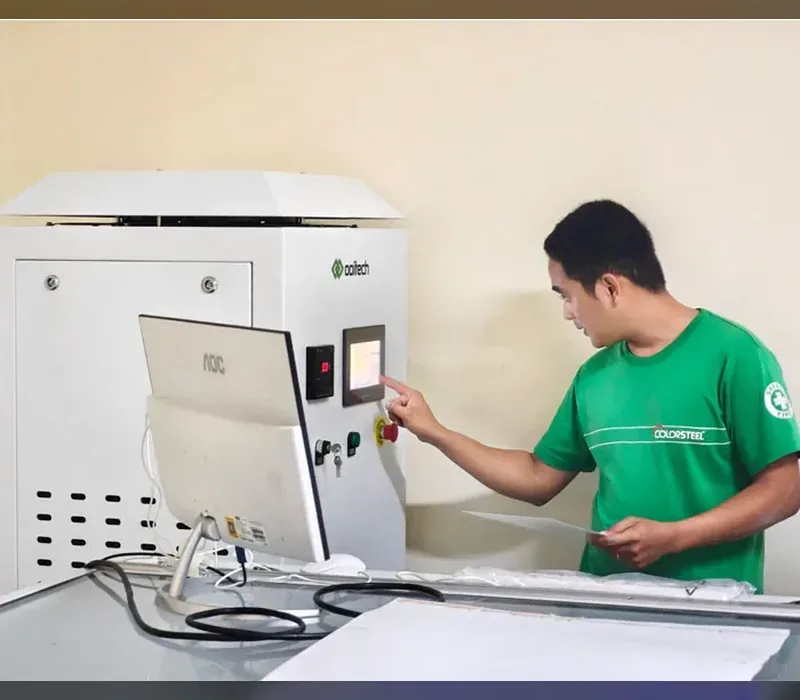
Quality control hardware has drastically evolved to keep pace with modern high-efficiency cell architectures like TOPCon and HJT. Pushing panels through EL testers isn't just about catching defects anymore; it's about fine-tuning the upstream tabber stringer and laminator parameters in real time. Factory yields jump significantly when EL data directly feeds back into the production line's main control system to prevent repeated mechanical stress issues.


Tags :

Request A Quote

All uploads are secure and confidential.

Why Choose Us

We deliver expertise you can trust our service

Direct-from-Factory Equipment.

Cost-Effective Advantages

We deliver exceptional value, maximizing results while optimizing budgets for clients.

Our Experience Team

Our skilled professionals specialize in innovative solutions and tailored strategies.

15+ Years Industry Experience

Deep expertise ensures reliable, trend-aware, and proven outcomes for success.

Testimonials

What Our Client Say's about us

Client testimonials praise our deep understanding of their challenges, which leads to innovative solutions and strong ROI. Long-term collaborations—some over a decade—demonstrate their trust and satisfaction. Their success stories drive us to continually exceed expectations. Know More

Our Products

Our Latest Products

PV Busbar Ribbon Integrated Drawing Rolling Tinning Production Line
2026-05-11 16:28:19

PV Busbar Ribbon Integrated Drawing Rolling Tinning Production Line

Professional integrated PV busbar ribbon production line combining wire drawing, rolling, flat drawing, annealing and tin coating processes for high quality solar cell interconnect ribbon manufacturing.

Read More
XJCM-13A2615 XJCM-13A+ IV Tester – PERC/HJT/TOPCon Module Testing
2025-09-08 10:49:43

XJCM-13A2615 XJCM-13A+ IV Tester – PERC/HJT/TOPCon Module Testing

XJCM-13A2615 IV tester – A+A+A+, 2600×1500mm, 10–100ms pulse for PERC, HJT, TOPCon & IBC. Eliminates capacitance effect. IEC 60904-9:2020 compliant. For high-efficiency module QC.

Read More
Single Layer Double Chamber Automatic BIPV Laminator OTCY-2754DD | Ooitech Solar Panel Lamination Equipment
2025-09-06 11:41:22

Single Layer Double Chamber Automatic BIPV Laminator OTCY-2754DD | Ooitech Solar Panel Lamination Equipment

Ooitech OTCY-2754DD Single Layer Double Chamber Automatic BIPV Laminator features 2700x5400mm dual lamination areas, upper and lower double heating, 280kW rated power, and advanced vacuum system. Designed for monocrystalline, polycrystalline, and double g

Read More
SUNPOWER Back Contact Cell Welding Machine SL-1000 | IBC Back Contact Solar Cell Stringer
2025-09-05 21:43:58

SUNPOWER Back Contact Cell Welding Machine SL-1000 | IBC Back Contact Solar Cell Stringer

SUNPOWER Back Contact Cell Welding Machine SL-1000 by Ooitech features electromagnetic welding, CCD+SCARA robot positioning, dual cell loading, and automatic loading/unloading. Capacity up to 600 pcs/h for 1/3 cut cells. Supports 125mm and 166mm cell size

Read More
Solar Panel EL Defect Tester OEL-S2400 | Electroluminescence Testing Machine for Solar Module Quality Inspection
2025-09-06 11:27:52

Solar Panel EL Defect Tester OEL-S2400 | Electroluminescence Testing Machine for Solar Module Quality Inspection

Ooitech OEL-S2400 Solar Panel EL Defect Tester is an offline electroluminescence testing machine designed to detect microcracks, black spots, mixed wafers, cold solder joints, and process defects in solar modules up to 2600mm x 1500mm. Features high-resol

Read More
GC-1500 EVA/TPT Online Cutting & Laying Machine | Automatic Solar Panel EVA Backsheet Cutter - Ooitech
2025-09-06 11:22:54

GC-1500 EVA/TPT Online Cutting & Laying Machine | Automatic Solar Panel EVA Backsheet Cutter - Ooitech

GC-1500 EVA/TPT Online Cutting & Laying Machine by Ooitech features automatic EVA, POE, and backsheet cutting and laying for solar panel production lines. Supports 156.75-210mm cells, half-cut and full-size modules (60/66/72/78 cells), with 16-second

Read More