Why Solar Panels Are Blue or Black — Silicon and Coating
Table of Contents
Quick answer: Solar panels look blue or black because of two things: the silicon's crystal structure and the anti-reflective coating on top of it. Crystalline silicon reflects a large share of incident light — roughly 22% for a bare polished wafer — and the texture etched into the surface plus the SiNx coating cut that reflection down to around 4%, so about 96% of the light entering the glass reaches the cell. The residual colour is the light that is not absorbed or transmitted. Polycrystalline silicon has visible grain boundaries that scatter light differently from monocrystalline, which is why the two read as different shades of blue, and why an all-black module usually indicates a particular cell type and coating stack rather than a purely cosmetic choice. The colour is therefore a rough indicator of cell technology.
PV Module Manufacturing · by Jerry, Ooitech
Product Introduction
Picture a clear day.

You stand at the edge of a roof and watch rows of solar panels lie quietly under the sun. Sunlight itself is white, yet those panels are not white, not gold, not transparent.
Most of them are blue. Or black.
And here a very natural question comes up. If solar panels exist to catch sunlight, why do they look so dark? Our instinct says white is the brightest, silver is the shiniest, gold looks the most like the sun. But the panels that actually make electricity look like slabs of blue-black glass.
As a supplier of solar panel making machines and solar panel production line turnkey solutions, Ooitech can provide production lines for all-black modules.
This is not really about aesthetics. It is a decades-long engineering negotiation between humans and sunlight.

Blue polycrystalline silicon versus black monocrystalline silicon
Caption: The blue and black of solar panels is not simple paint. It is the combined result of crystal structure, anti-reflective film and light absorption efficiency.
Let's start with a simple everyday experience. Wearing black in the summer sun feels hotter. Wearing white feels cooler. White clothes reflect a lot of light away. Black clothes soak more of it in.
Solar panels work the same way. For most objects, a nice shine looks good. For a solar panel, reflection is waste. When a beam of sunlight hits a panel and bounces back to the sky, it never becomes electricity. Only the light that goes inside the silicon has a chance to wake up the electrons and form a current. The U.S. Department of Energy puts it plainly too: the silicon layer absorbs light, electrons get excited, and as they move they create a current.
So from the start, a solar panel does not want to be white. White says, "Sunlight came, and I gave it back to the sky." Blue-black says, "Sunlight came, and I'm keeping as much as I can."
Technical Parameters
Why are so many older panels blue?
This goes back to a very common type of panel from the past: polycrystalline silicon.
Polycrystalline silicon is not one perfect crystal. It is many small grains packed together. Think of a frozen lake surface, full of cracked ice patterns. Each grain points in a slightly different direction. Sunlight hitting it reflects back a little differently everywhere. That is why poly panels often look blue or deep blue, with a surface that carries a faint fractured, ice-crack, metallic texture.
So the blue of poly silicon is not paint. It is more like the texture of silicon crystals showing under the sun.
But the blue does not come only from the crystal. There is a very thin layer on the panel surface called an anti-reflective coating. The term sounds technical, but it is easy to grasp. When you wear glasses, some lenses carry a faint blue-purple or green reflection (the phone screen you are looking at now does the same). That film is not decoration. It reduces reflection so more light passes through the lens.
Same with a panel. Silicon is actually quite reflective on its own. Left untreated, part of the sunlight bounces straight off the wafer surface. So engineers texture the wafer and deposit an anti-reflective coating so more light gets into the silicon. When the DOE describes crystalline silicon module manufacturing, depositing an anti-reflective coating on the front of the cell is listed as one of the cell production steps.

Scanning electron microscope image of a wafer surface
Caption: Under the microscope, the wafer surface is not a smooth plane but a dense field of tiny pyramids. This texture cuts reflection and traps more sunlight inside the wafer.
| Item | Detail |
|---|---|
| Poly silicon absorption (textured + AR coating) | about 93%–97% of sunlight |
| Black silicon absorption | over 98% of incident light |
| Monocrystalline share of module shipments (2022) | 96% |
| Typical real-world module efficiency | about 20%–22% |
| First practical silicon cell (1954, Bell Labs) | about 6% efficiency |
You can think of the anti-reflective coating as a gentle entrance. If the optical difference between air and silicon is too sudden, light bounces back easily. If there is a transition layer in between, light slips into the wafer more easily. NREL's black silicon material has a line that fits this logic well: less reflection means more absorption, which means higher efficiency and more power. Standard texturing and anti-reflective layers already let a cell absorb about 93%–97% of sunlight, while the black silicon process lets a wafer absorb over 98% of incoming light, which is why it looks black. This says one thing clearly: the more efficient a panel wants to be, the less light it can afford to reflect.
Blue is the little leftover glow from early poly silicon and its anti-reflective film. Black is what silicon looks like once it has learned to eat light.
Technical Advantages
Later, black panels became more and more common
Behind this is another lead character: monocrystalline silicon.
Mono silicon is more like a single block with one uniform direction and a tidy structure. It does not carry the fractured texture of poly silicon, so its surface looks more even, deeper, and closer to black.
If poly silicon is like a sheet of blue cracked ice, mono silicon is like a piece of obsidian.
Many residential roofs now favor all-black modules. From a distance they don't look like grids of industrial parts. They look more like black glass laid out neatly. DOE data notes that by 2022 monocrystalline silicon already made up 96% of global solar module shipments, becoming the most common absorber material in today's modules, and industrially produced modules usually reach real-world efficiency around 20%–22%.
So black is not just about looking premium. Behind it stand more uniform crystals, more mature manufacturing, lower reflection, and a more efficient light absorption route.
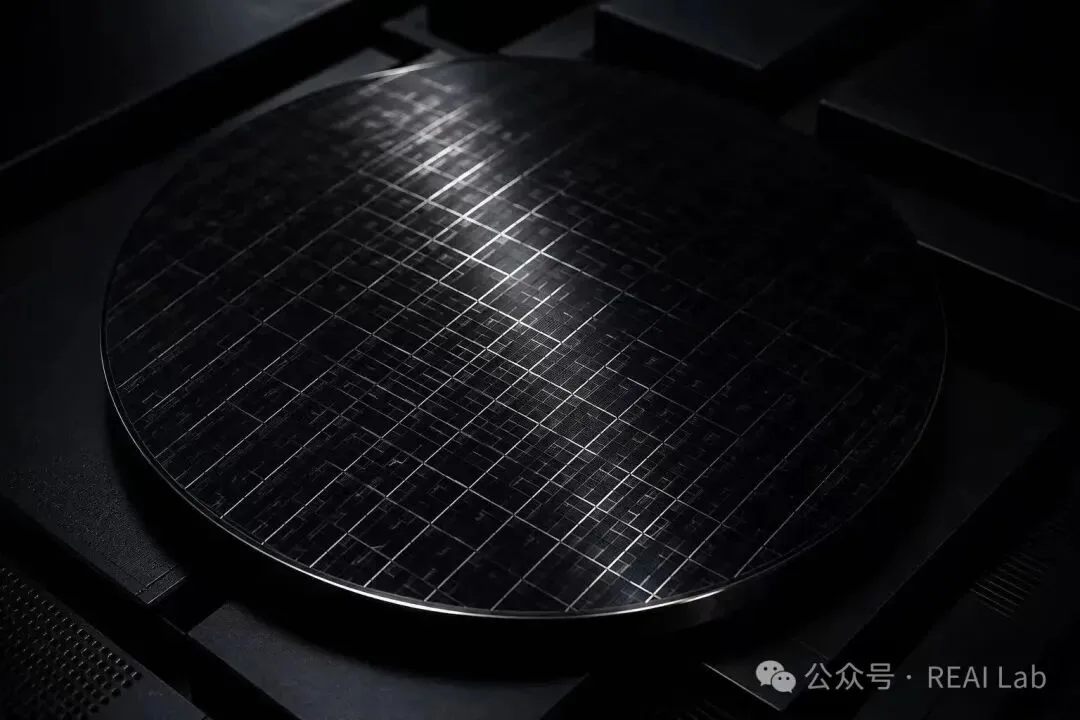
More uniform crystal structure with monocrystalline silicon
Lower surface reflection, more light trapped inside
Higher absorption, up to over 98% with black silicon
Cleaner, all-black look preferred on modern rooftops
Mature, low-cost manufacturing suited to mass deployment
Product Applications
Back to the history of solar power
In 1954, Bell Labs showed the first practical silicon solar cell. Its efficiency was only about 6%. By today's standards 6% seems low, but back then it was enough to spin a small toy, and enough to make people believe for the first time that sunlight could do more than dry clothes and warm skin. It could turn directly into electricity. The American Physical Society records this history too: Bell Labs demonstrated the first practical silicon solar cell on April 25, 1954, with early silicon cells around 6% efficiency.
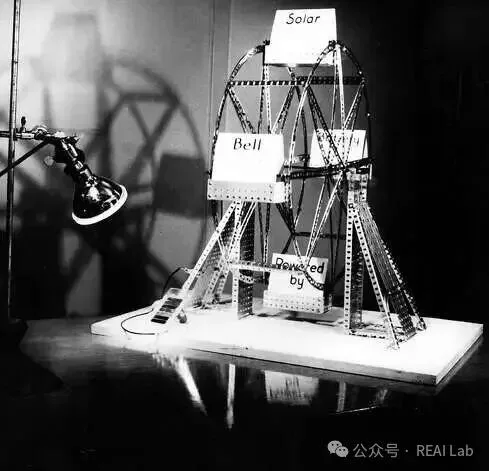
Historic photo of the 1954 Bell Labs solar cell
Caption: Early silicon solar cells were not very efficient, yet they opened the door to modern photovoltaics.
It was like a beginning. The earliest cells were expensive, tiny, and felt like a future toy from the lab. Then they went to space. A satellite cannot carry coal and cannot swap batteries every day, so solar cells became its best energy source. After that, wafers were sliced thinner, processes matured, costs dropped. Those blue-black slivers that once belonged only to labs and spacecraft slowly spread across deserts, factories, schools, carports and ordinary rooftops.
The color changed along the way too. From the common blue poly silicon of the early days to the increasingly common black mono silicon now, it may look like nothing more than a deeper shade. But behind it the whole supply chain was moving forward.
Less reflection. More absorption. Higher efficiency. Lower cost. Better suited for large-scale rollout. And the color kept getting darker.
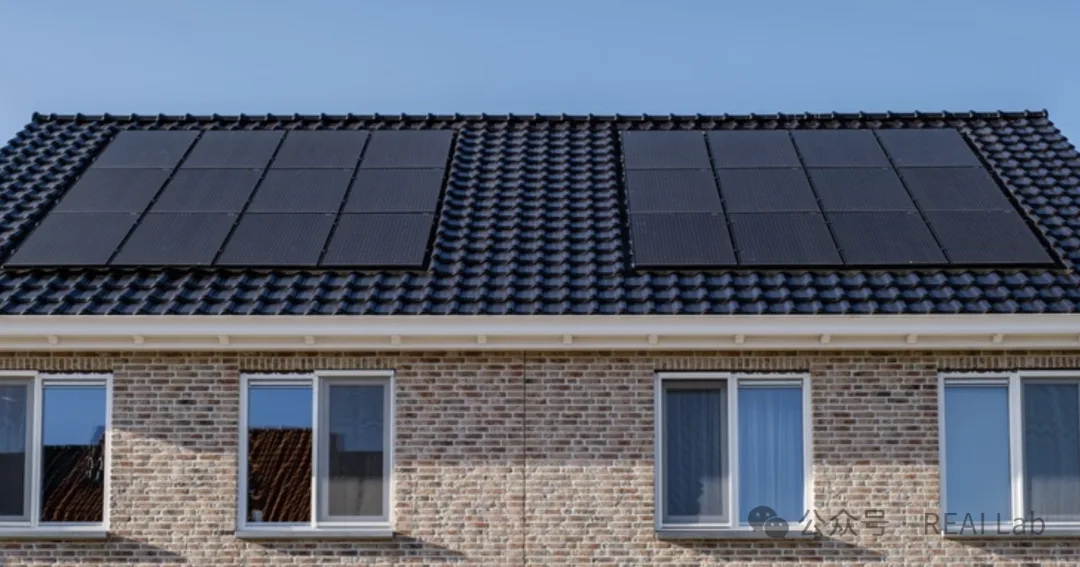
Black modules on a modern rooftop
Caption: Modern homes increasingly use black or all-black modules. They look tidier and reflect the maturity of monocrystalline silicon and low-reflection design.
Can panels be red, green or gold?
Of course they can.
Building-integrated photovoltaics already has plenty of colored modules. City buildings don't always want a wall of black glass, so engineers use special coatings, textures and encapsulation to turn panels gray, brick-red, green, even close to the tone of an ordinary curtain wall.
But the price is direct. You see it as red because it reflects some red light back at you. You see it as green because it reflects some green light back. And reflected light never enters the cell to make power. That means lost revenue and lower generation efficiency. Colored PV is not impossible. It just needs a fresh negotiation between looks and efficiency.
A prettier color doesn't make a better panel. Mature engineering design often lands not on the flashiest option, but on the one that is most reliable, most efficient and most cost-effective over the long run.
Contact and Purchase
So look again at that patch of blue-black on the roof
It is not that solar panels just happen to look this way. It is the outcome sifted out by silicon material, crystal structure, anti-reflective film, manufacturing cost and generation efficiency together.
Blue is not decoration. Black is not taste.
It is the panel telling you it does not want to give sunlight back to the sky. It wants to keep the light, wake the electrons, and turn invisible photons into visible current. The sun drops through the clouds and lands on that silent blue-black. No roar, no chimney, no flame. Just light entering silicon, electrons starting to move, current flowing along thin metal fingers toward somewhere far away.
In that moment a solar panel is like a black page written all over by the sun. And what humans read on it is a plain little answer.
To catch a bit more sunlight, silicon dressed itself in blue-black.
Ooitech's View
The shift from blue poly to all-black mono isn't just a color trend, it's a manufacturing story about squeezing reflection down toward zero. On the module side we see it every day: uniform mono cells, tight texturing and clean lamination are what make an all-black panel look sharp and still perform. If you want to see how these black modules actually get built on a real line, our YouTube channel at www.youtube.com/ooitech shows the factory floor up close, and it's worth a subscribe if solar manufacturing is your thing.