Understanding Quarter-Cut Solar Modules:
Table of Contents
Quick answer: Quarter-cut solar modules divide a full cell into four strips, following half-cut as the next step in the same direction. The reasoning is unchanged: less current per strip means less resistive loss in the ribbon and fingers, which allows thinner ribbon and raises module power. Half-cut had already become standard, and quarter-cut extends the same arithmetic further, at the cost of more cutting work per cell, more handling and a larger number of solder joints. The practical constraint is mechanical: a strip cut into four is thin enough to bow and shift during soldering, so the stringer needs tighter placement control and a gentler thermal profile than a half-cut line. Rear-side inspection also becomes more important, because the defects that quarter-cut introduces are the ones a visual check cannot see.
PV Module Manufacturing · by Jerry, Ooitech
Introduction
Anyone working in PV knows half-cut cell modules are already everywhere. Quarter-cut, the next step up, gets marketed as "lower line loss, higher output." But most people only know the claim, not the reason behind it. Where exactly does a quarter-cut cell shave off its loss? And if smaller pieces mean smaller current, why doesn't the industry just cut into 16 or 32 pieces? Let's drop the dense formulas and use plain analogies to walk through the underlying logic, the gains, and the shortcomings of quarter-cut PV in one go.
Core Principle: The Current-Squared Law Behind Cutting Cells
Whenever current flows through a PV conductor (ribbon, busbar, gridline), loss is unavoidable. The power loss formula is:
P = I²R (power loss = current squared × resistance)
The square is the whole point here. Loss and current don't move in a straight line together. A small drop in current brings a big drop in loss.
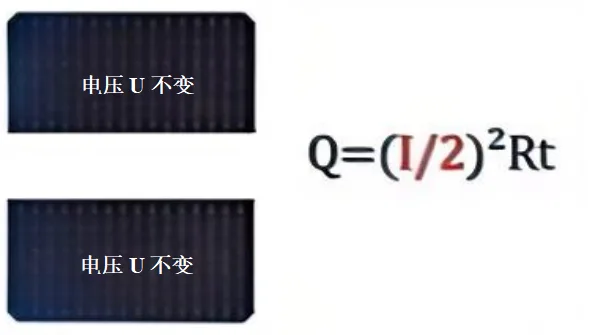
1. Full cell → half cell (half-cut module)
The current per piece drops to 1/2 of the original, so loss = (1/2)² = 1/4. Line loss falls by 75% straight away. That's the core reason half-cut modules took over.
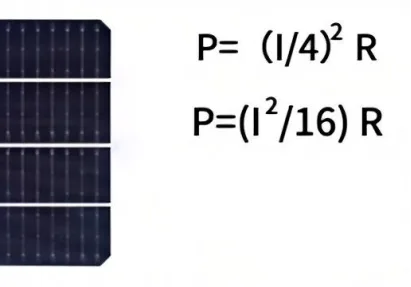
2. Half-cut upgraded to quarter-cut
Current per piece shrinks to 1/4 of the original full cell, so loss = (1/4)² = 1/16. Compared to a full cell, internal loss drops by more than 90%. Compared to a half-cut module, loss falls sharply again.
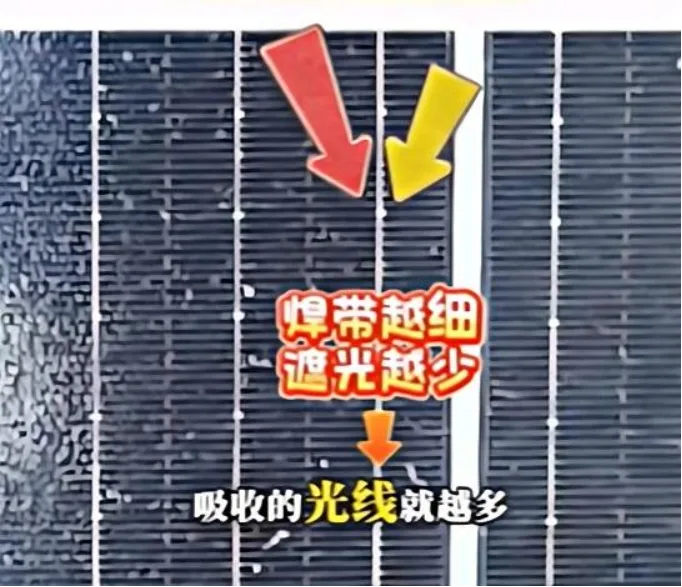
Cutting brings a bonus too. Smaller cells mean the matching ribbon can be made thinner. Thinner ribbon covers less of the cell's front face, so shading loss goes down, the cell soaks up more light, and output climbs a bit more.
At this point a lot of people ask: if smaller pieces mean smaller current and lower loss, why doesn't the industry cut cells into 16, 32, even 64 pieces?
The answer is clear: more cuts is not always better. Quarter-cut carries a cost and loss trade-off you can't ignore.
Visualizing It: Where Does the Reduced Line Loss Actually Happen?
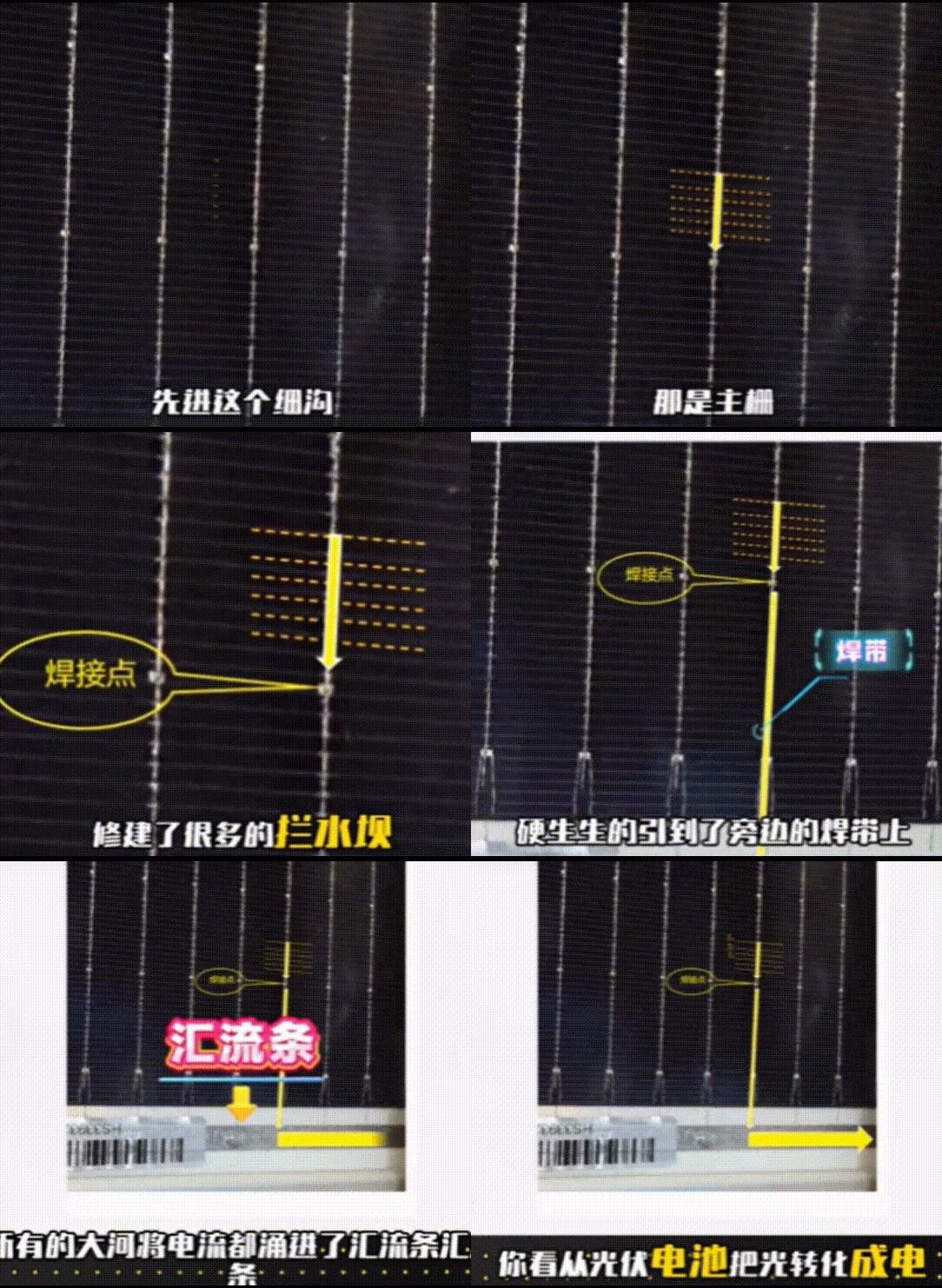
Plenty of people know quarter-cut has lower line loss, but can't pinpoint where the reduction sits. Picture the current path like water flowing downhill and it all clicks.
The photogenerated current is like rain falling evenly from the mountaintop. The full path runs through 5 stages: PN junction → finger gridline (creek) → busbar gridline (small river) → ribbon (big river) → busbar (great river). Every stretch produces loss.
1. The part that doesn't change: gridline loss
No matter how many pieces the cell is cut into, the total light hitting a unit of cell area stays the same. The current flow and speed inside the gridlines don't change, so finger and busbar gridline loss doesn't drop.
2. The part that drops a lot: cell-to-cell ribbon
Full cell: the current from a whole cell all funnels into a single ribbon, high current and high loss.
Quarter-cut cell: only 1/4 of the cell area's current flows through each ribbon, so ribbon current falls sharply.
Industry data shows ribbon loss accounts for 60% of a module's total internal loss. By cutting ribbon current, quarter-cut saves a big chunk of that power loss.
The Hidden Shortcoming: Busbar Loss Eats Into the Gains
Ribbon loss drops a lot, which looks like all upside. But quarter-cut needs a redesigned circuit layout, and that brings two downsides.
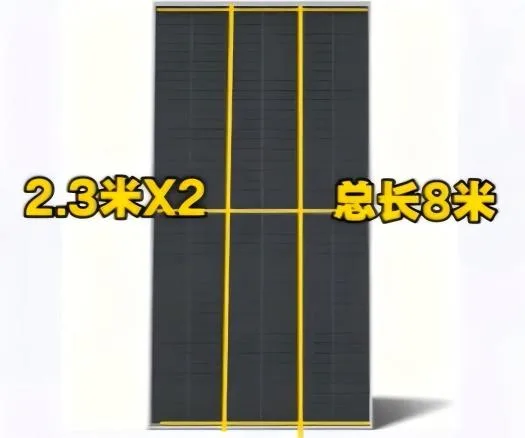
1. Busbar length jumps up
A quarter-cut module needs extra busbars. Total busbar length grows from 3.4 meters to 8 meters, nearly double, and material cost rises right along with it.
2. New busbar loss cancels part of the gain
Busbar loss makes up 20% of the module's total loss. Once lengthened, overall busbar line loss climbs by 50%.
Quick math: nearly 40% of what quarter-cut saves on the ribbon gets eaten back by the added busbar loss. The real output gain ends up far less dramatic than the theory suggests.
Industry Take: Is Quarter-Cut Worth Rolling Out?
Here's the full pros and cons of quarter-cut modules:
Advantages
Riding the current-squared law, ribbon line loss drops sharply, so theoretical output beats full-cell and half-cut modules.
Pairs with thinner ribbon to cut front shading and boost the cell's light-receiving area.
Drawbacks
The circuit layout changes, busbar usage and length double, and material cost goes up.
New busbar loss offsets most of the power savings, so the real gain is limited.
No infinite cutting: the more cuts, the more complex the gridlines, solder joints, and busbar structure become, and the added loss and manufacturing cost quickly outrun the savings.
Let's Talk
Quarter-cut is a step up from half-cut. The theoretical loss reduction looks great, but busbar cost and extra loss put a ceiling on the real payoff. Across distributed PV and large ground-mount plants, do you think quarter-cut modules pencil out? Drop your thoughts below.
#SolarTech #QuarterCutModule #PVLineLoss
Ooitech's View
What this really shows is that module gains live or die at the interconnection stage, not just in the cell. When you're laying out ribbon width and busbar routing on a quarter-cut line, tabber-stringer precision and layup accuracy decide whether you actually capture that I² saving or bleed it back through longer busbars. We've seen this play out on Ooitech turnkey module lines, where the same cell design can swing several watts depending on how tight the stringing and bussing process is. If you want to see how these steps come together on a real production floor, our YouTube channel at www.youtube.com/ooitech has plenty of line footage worth a look.