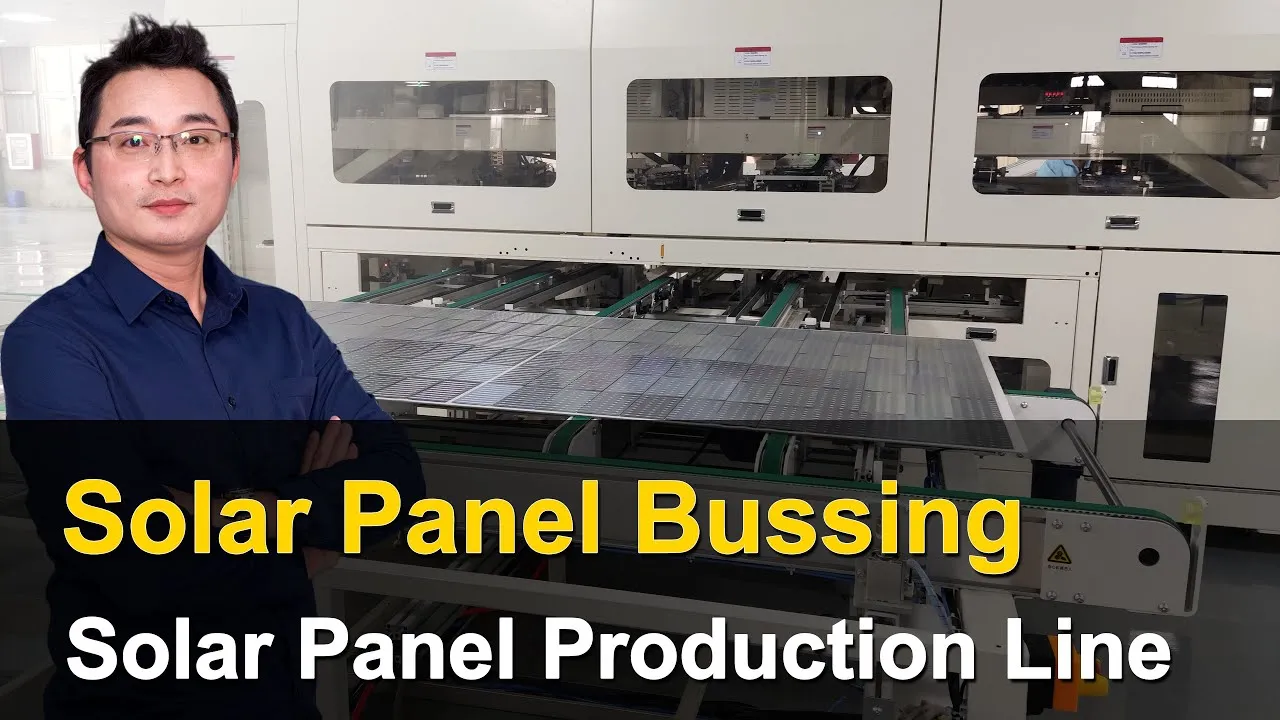
Busbar Welding Machine in Solar Module Manufacturing:
Table of Contents
Quick answer: A busbar welding machine is the station that collects the ends of every string in a module and joins them in parallel, carrying the combined current out to the junction box. It sits after layup and before lamination, and it directly sets current collection efficiency: a joint with higher resistance raises the module's series resistance and lowers its fill factor, which shows up as lost watts rather than as a visible defect. On a multi-busbar module there are more joints to make at this station than on a 5-busbar one, so the machine is normally specified by busbar count as well as by modules per hour. Soldering quality here is also a reliability matter — a cold joint passes flash testing and fails years later under thermal cycling. That combination is why bussing is treated as a critical station rather than a handling step.
PV Module Manufacturing · by Jerry, Ooitech
Introduction
In solar module manufacturing, one process has a direct influence on current collection efficiency and long-term module reliability: busbar welding. A busbar welding machine is the core equipment used in this stage. It connects solar cell ribbons and busbars through controlled welding, helping ensure stable electrical transmission from the cell strings to the junction box.
In a photovoltaic module, multiple ribbons are laid across the solar cells. The ends of these ribbons extend to the two sides of the cell layout and are welded to busbars. The busbar collects the current generated by the cells and transfers it to the junction box. If this welding process is unstable, the module may suffer from higher series resistance, hot spots, power loss, or long-term reliability issues.
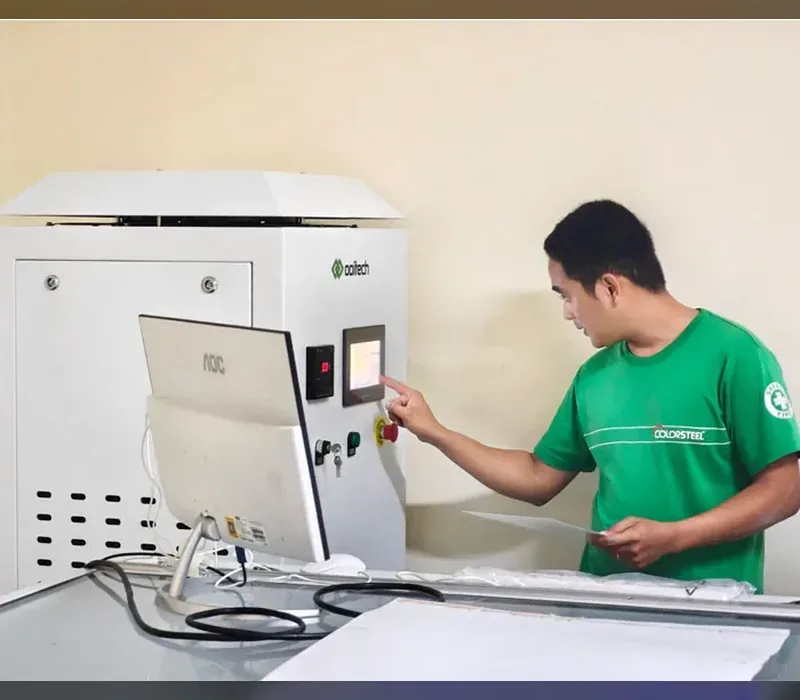
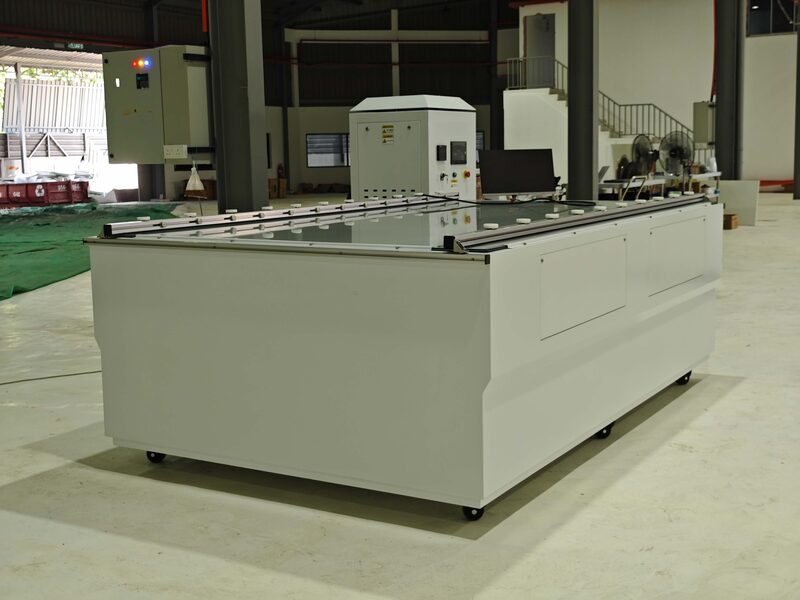
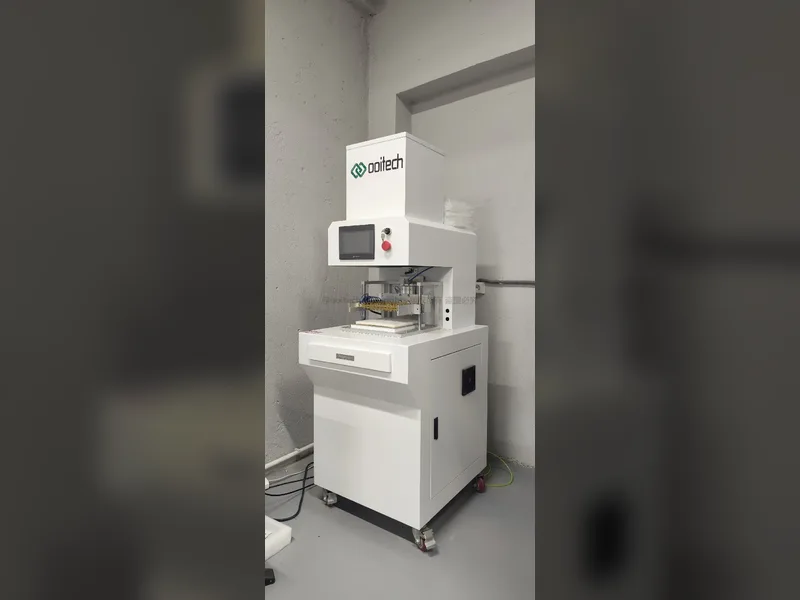
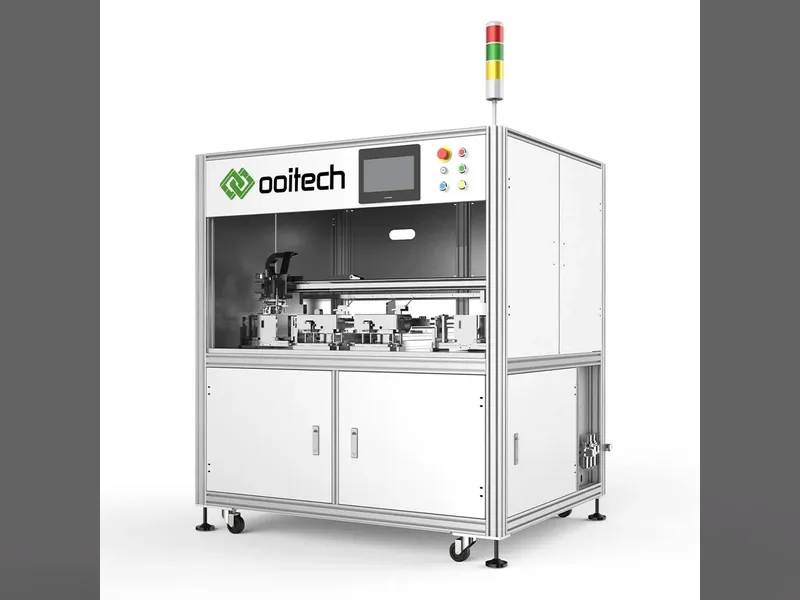
A typical busbar welding machine can complete several operations automatically, including busbar feeding, cutting, bending, positioning and welding. It is usually composed of a feeding module, busbar cutting unit, welding unit, transfer welding table and machine frame module. In modern PV module production lines, this equipment is an important part of achieving consistent quality and reducing manual handling.
Technical Parameters
The following table summarizes the main technical aspects normally considered when selecting or evaluating a busbar welding machine for solar module production.
| Item | Description |
|---|---|
| Equipment Name | Busbar Welding Machine / Solar Panel Bussing Machine |
| Main Function | Welds solar cell ribbons to busbars for current collection and transmission |
| Applicable Process | Solar module string layout and bussing stage |
| Common Welding Methods | Electromagnetic induction heating, hot press welding |
| Main Operations | Busbar feeding, cutting, bending, positioning, welding and transfer |
| Typical Materials | Copper busbar, tinned copper ribbon, solder-coated ribbon |
| Key Process Parameters | Welding temperature, welding time, pressure, alignment accuracy and cooling control |
| Main Machine Modules | Feeding module, cutting module, welding head, transfer table, control system, frame module |
| Quality Focus | Welding strength, conductivity, solder joint consistency, low resistance and no cell damage |
| Suitable Production Mode | Semi-automatic or fully automatic solar panel production line |
The actual configuration depends on module design, cell format, busbar layout, automation level and factory capacity requirements.
Technical Advantages
Working Principle
The core technology of a busbar welding machine is mainly based on electromagnetic induction heating or hot press welding.
Electromagnetic induction heating: A high-frequency electromagnetic field causes the metal molecules in the ribbon or solder area to generate heat through rapid movement and friction. This heat enables the ribbon and busbar to fuse together efficiently.
Hot press welding: The welding head is heated and pressure is applied to the welding area. Under controlled temperature and pressure, the ribbon and busbar are tightly bonded.
Both methods are designed to create firm solder joints with good electrical conductivity. For solar modules expected to operate for 25 years or more, this consistency is not a small detail; it is part of the module’s long-term performance foundation.
Four Key Features
High efficiency: The machine supports fast and continuous welding operation, helping improve production speed. Advanced models can be integrated into fully automatic production lines to reduce manual intervention and shorten the manufacturing cycle.
Stable welding quality: With a precise control system, the machine keeps welding parameters consistent, including temperature, pressure and time. This helps ensure that every module meets the required process standard.
Strong adaptability: Busbar welding machines can be adjusted for different cell types, module sizes and busbar specifications. Parameter flexibility allows factories to handle various production requirements.
Better energy performance: Modern machines optimize heating methods and control logic, reducing unnecessary energy consumption while maintaining welding quality.
Product Application
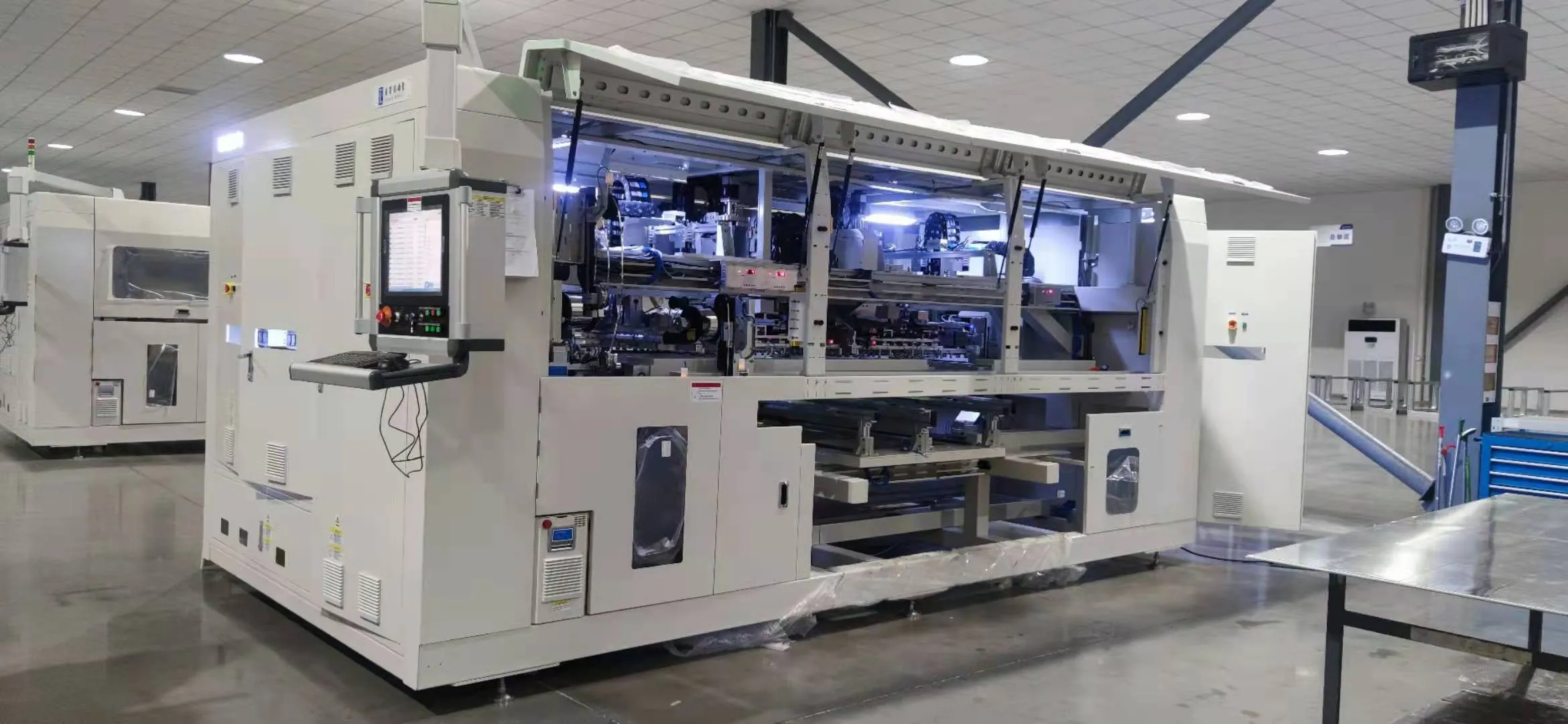
A busbar welding machine is mainly used in crystalline silicon solar module production lines. It is suitable for the stage after solar cell stringing and layout, where the ribbons must be connected to busbars before lamination and final module assembly.
Typical Workflow
Preparation and machine inspection
Operators check the electrical system, heating system and control system to make sure the equipment is in good operating condition. Welding parameters such as temperature, time and pressure are adjusted according to busbar material and size.
Material preparation
Qualified busbar materials, usually copper strips or tinned copper strips, are selected. The surface should be clean, with oil stains and oxidation removed. Flux is prepared to improve wetting performance and welding quality.
Positioning and fixing
The busbar and solar cell strings are placed on the welding table according to the module design. Fixtures are used to keep the position accurate and stable during welding.
Welding operation
Preheating: The heating system preheats the busbar and cell ribbon area to reduce temperature gradients during welding.
Flux application: Flux is applied evenly to keep the welding area clean and improve solder wetting.
Welding: The welding head applies suitable pressure and temperature, melting the solder and filling the gap to form a strong joint.
Cooling: After welding, pressure is maintained while the joint cools and crystallizes, helping secure final welding strength.
The quality of this workflow affects the electrical path of the whole module. Poor alignment, insufficient solder wetting, unstable temperature or excessive pressure can lead to weak solder joints, microcracks or higher electrical resistance.
Buying Guidance
When choosing a busbar welding machine, manufacturers should evaluate not only the basic welding speed, but also the machine’s compatibility with module design, cell format, ribbon type and future product upgrades. For factories planning higher automation, the equipment should also be considered together with upstream stringing and layup machines, as well as downstream EL testing and lamination processes.
A good busbar welding solution should provide stable soldering, accurate positioning, easy parameter adjustment and reliable integration into the production line. For PV module makers, the right machine can improve module consistency, reduce rework and support long-term production reliability.
Ooitech's View
As an equipment supplier, we see it this way: busbar welding is not just a single soldering action, but a key control point between cell interconnection and final module reliability. In practical solar panel production line design, Ooitech pays close attention to how the bussing process matches stringer output, layup accuracy and EL inspection standards, because small welding instability can later become power loss or field reliability risk. For manufacturers upgrading to higher-throughput or more advanced module formats, the busbar welding machine should be selected as part of the full module process flow, not as an isolated machine.