Solar PV Module Manufacturing:
Table of Contents
Quick answer: A solar module factory can produce one acceptable module and still have a weak manufacturing system. The difference shows up later, when the line has to reproduce that result across shifts, formats and material batches. IEC 62941 is the standard that addresses this gap: it sets requirements for a photovoltaic module manufacturing quality management system, covering process control, traceability, change management and the measurement discipline that keeps a rated output honest. The practical content is unglamorous — documented process windows, calibrated measurement equipment, records that tie a serial number to the conditions it was built under. For a plant moving from single-shift operation to continuous production, or from one customer to a certification-audited market, meeting this standard is often the difference between being able to bid and not.
PV Module Manufacturing · by Jerry, Ooitech
A factory can make one acceptable module and still have a weak manufacturing system.
The harder test comes later: a new cell lot arrives, another shift takes over, the laminator restarts after maintenance, or the factory changes from one module format to another. If quality moves every time one of those conditions changes, the factory is not really controlling the product. It is managing a series of surprises.
That is the useful way to understand solar PV module manufacturing. It is not simply the act of putting cells, glass and polymers together. It is the controlled reproduction of an approved module design, with enough process evidence to show that each released product was made as intended.
Four systems have to agree:
| System | The question it must answer |
|---|---|
| Product definition | What module are we actually making? |
| Materials and process control | Did the factory use the correct materials and settings? |
| Quality release and traceability | What evidence supports the release decision? |
| Factory operations | Can the same result be sustained at the required output? |
The machines sit inside these systems. They do not replace them.
One good module is not yet a manufacturing system
The stable reference in a PV module factory is the approved product definition. Cell technology may change, material lots will change, operators rotate and equipment wears. The module that leaves the line must still remain within the approved construction and release criteria.
This makes repeatability the central manufacturing problem.
A sample built carefully by experienced technicians may perform well. Mass production introduces different pressure: repeated handling, short cycle times, parallel stations, recipe selection, material replenishment, stops, restarts and rework. Small variations that look harmless at one station can combine later. A slight string-position error affects layup. A poorly controlled solder joint survives visual inspection but appears in EL. An incorrect lamination recipe may not produce an obvious defect at the chamber door, yet it changes the protection surrounding the cell circuit.
The line therefore needs more than a sequence of actions. It needs defined limits, measurement points and a response when a result moves outside those limits.
The product definition quietly writes the factory
Equipment selection often begins with an annual capacity target. That number matters, but it is not the first engineering input. The module itself comes first.
The drawing and bill of materials determine many of the line's physical jobs: cell size and architecture, full-cell or cut-cell construction, ribbon and interconnection pattern, string count, glass dimensions, single-glass or glass-glass stack, encapsulant type, backsheet choice, frame profile, junction-box position, cable length and label requirements.
Those decisions continue into production control. Material storage rules affect preparation. The interconnection design affects stringing and bussing. Module dimensions affect every transfer and alignment reference. Encapsulant and stack construction affect the lamination recipe. Frame and junction-box choices affect dispensing, assembly and cure time. The intended market and certification plan affect testing, sampling, records and document retention.
This is why a machine list cannot define a factory. Two projects may use machines with the same names while needing different working ranges, tooling, recipes, buffers, data interfaces and quality gates.
Before a line is configured, the product drawing, BOM, quality plan and release criteria should be treated as source documents. If they are still moving, the equipment specification is also moving, whether the purchasing file admits it or not.
The physical route is simple; controlling it is not
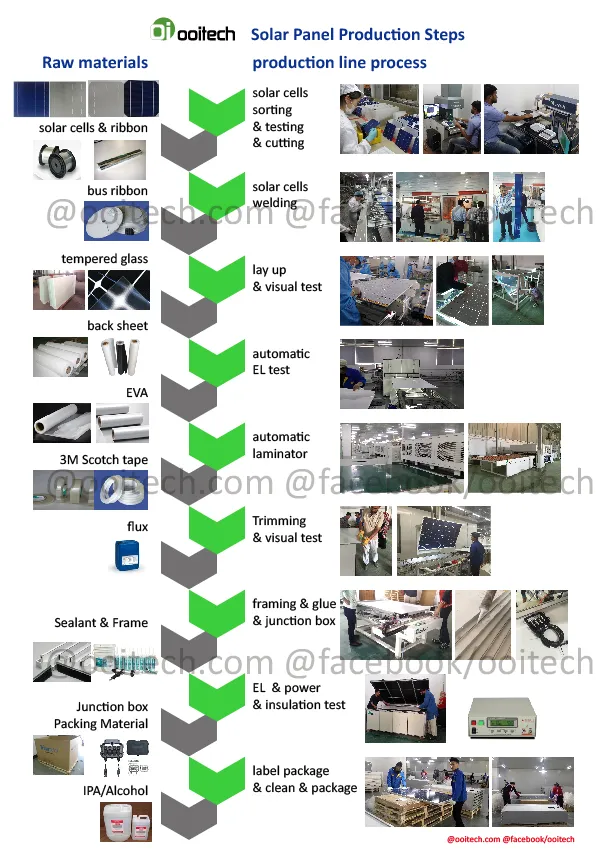
For a conventional crystalline-silicon module, the broad production route is easy to describe.
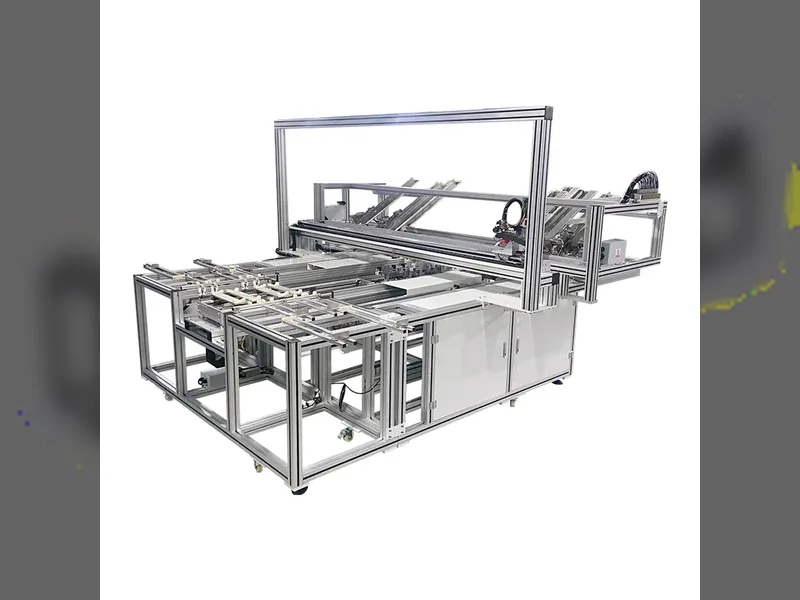
Cells are inspected or sorted as required, then interconnected with conductive ribbon by a tabber stringer. The strings are positioned on prepared glass and encapsulant, connected into the intended electrical circuit and covered with the remaining encapsulation and rear materials. The stack enters a laminator, where vacuum, heat, pressure and time convert the loose construction into a bonded laminate.
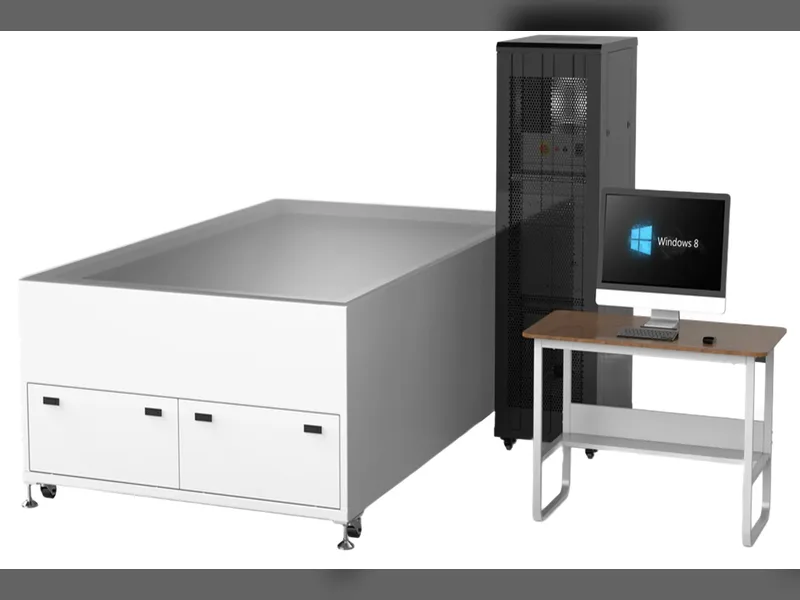
Downstream work completes the mechanical and electrical product. Depending on the design, this can include trimming, edge treatment, frame assembly, junction-box attachment, soldering, adhesive or potting application, curing, cleaning and corner finishing. EL inspection, IV measurement and electrical safety tests provide different parts of the final quality record. Labeling and sorting connect the physical module to its identity and destination.
The U.S. Department of Energy describes the same underlying route: tabbing and stringing, arranging the connected cells with glass and encapsulant, lamination, then fitting the module with its required frame, sealing and junction-box functions.
None of these operations is unusual on its own. The manufacturing difficulty lies in keeping the correct material, geometry, recipe and product identity together while the module passes through all of them.
Every critical operation needs a recipe and a record
A process becomes controllable when the factory can answer three questions: what setting was intended, what actually happened, and what action follows if the result is unacceptable.
The record does not need to be elaborate at every station. It does need to be useful. Recording a temperature without identifying the recipe, product or lot creates data, but not much evidence.
| Operation | What must stay controlled | A useful signal or check | Record to retain |
|---|---|---|---|
| Incoming material | Approved specification, supplier lot, storage and condition | Incoming inspection, identity check, storage status | Material lot and acceptance result |
| Cell interconnection | Ribbon position, soldering conditions, cell handling and string geometry | Vision result, pull-test plan, string inspection or EL where specified | Recipe, lot, station result and exception |
| Layup and bussing | String spacing, polarity, circuit arrangement and lead-out position | Alignment image, visual check, pre-lamination EL | Module identity and inspection result |
| Lamination | Correct product recipe, vacuum behaviour, temperature, pressure and time | Run parameters, alarms, laminate inspection | Recipe version, chamber, cycle and batch association |
| Framing and junction-box work | Dimensions, sealant or adhesive application, electrical joint and cure condition | Dispense monitoring, dimensional check, visual and electrical check | Material batch, station result and cure status |
| Final release | Circuit condition, measured output, electrical safety and labeling | EL image, IV result, safety-test result, identity check | Serial-linked release record |
The most important control points are not always the most expensive stations. Handoffs can be just as critical. A correct string can crack during lifting. A clean stack can collect contamination while waiting. A good laminate can be damaged during trimming or framing. A passing test result can be assigned to the wrong serial number if identification is treated as an office task rather than part of production.
The recipe and the record should therefore follow the product across station boundaries.
Certification is a baseline; consistency is daily work
Product qualification and manufacturing consistency solve related but different problems.
A qualification program asks whether a defined module construction meets the applicable test requirements. The factory then has to reproduce that construction without allowing uncontrolled substitutions or process drift. Passing a type-approval sequence once does not prove that a later production unit received the correct materials, soldering conditions, lamination cycle or final release checks.
IEC 62941 addresses this gap directly. The standard connects ongoing confidence in certified PV modules with product and process design, material selection, and control of manufacturing processes. It assumes an established quality-management foundation; it is not a substitute for one.
This distinction matters because field reliability begins long before a module reaches a project site. The IEA PVPS reliability program examines how module materials, designs, degradation modes, tests and operating environments affect performance over time. A factory cannot control the weather a module will face, but it can control whether the shipped construction matches the qualified design and whether production variation was detected before release.
Certification requirements still vary by product and target market. The practical rule is simple: define the certification and quality plan early enough for it to shape equipment, inspection positions, sampling, traceability and records.
Traceability turns a defect into a bounded problem
Imagine that final EL inspection begins showing an unusual pattern. Without traceability, the factory has a pile of suspect modules and a long list of possible causes. With traceability, the investigation can narrow quickly: which cell lot, which stringer recipe, which shift, which laminator cycle, which handling path and which other modules share the same history?
That does not mean every project needs the same software stack. A high-volume automated line may exchange recipes, images and test results with an MES. A smaller or semi-automatic factory may use simpler records. The invariant is the connection between the physical module and the evidence used to release it.
A practical release record may include:
module serial number and product revision;
critical material or production-lot references;
in-process inspection status and relevant images;
lamination recipe and cycle association;
final EL, IV and electrical safety results;
rework history, if any;
final disposition: accept, hold, rework or reject.
Traceability is sometimes sold as a reporting feature. Its real value appears when something changes. It helps contain affected output, compare good and bad conditions, prevent a rejected unit from returning to accepted stock, and convert repeated defects into a process-correction problem.
A fast station can still belong to a slow factory
Brochure cycle time is only one input to capacity. Sustainable output is closer to this relationship:
Good output = scheduled production time × effective line rate × first-pass yield
Each term belongs to the whole factory, not one machine.
Effective line rate falls when stations wait for one another, batch equipment receives uneven work, product changes take longer than planned, maintenance access is poor, or fault recovery requires repeated manual intervention. First-pass yield falls when defects cross several operations before detection, recipes are selected incorrectly, materials drift or rework becomes normal production.
Lamination makes the point clearly because it is commonly a batch process, but the same logic applies elsewhere. Stringing can produce faster than layup can absorb. Framing can wait for adhesive preparation. Finished modules can queue for curing or testing. A data-transfer problem can stop sorting even when the mechanical equipment is ready.
Buffers can absorb short variation; they cannot repair a permanent mismatch. More work in progress may hide the mismatch for a while, but it also consumes space and lets defects travel farther.
Automation should be judged against these actual constraints. It is valuable where it reduces fragile handling, stabilizes alignment, repeats dispensing or soldering, connects test data to identity, or maintains the required takt. It adds less value when the upstream product definition is unstable or when connected stations cannot share references, fault logic and changeover rules.
Define these inputs before asking for a line configuration
A useful request for quotation contains more than a capacity number and a factory floor area. It gives the supplier enough stable information to model the product, quality gates, operations and future changes.
| Input group | Information to define |
|---|---|
| Product | Module drawings, BOM, cell and interconnection technology, dimensions, construction variants and planned product roadmap |
| Output | Required good modules by shift, operating calendar, product mix, changeover frequency and expansion plan |
| Quality | Target markets, certification plan, inspection points, test scope, sampling, acceptance logic and rework rules |
| Data | Serial-number logic, material genealogy, recipe control, image retention, test-result storage and MES or ERP interfaces |
| Factory | Building dimensions, material routes, utilities, environmental needs, floor loading, maintenance access and warehouse flow |
| Operations | Labor model, skill level, maintenance capability, spare-parts strategy and planned shift structure |
| Delivery | Layout responsibility, equipment acceptance, installation, commissioning, training, documentation and after-sales support |
These inputs reveal the real configuration boundary. A semi-automatic line may be sensible for a changing product or lower-volume operation. A highly automated line may be justified when the product is stable, output is high and the factory can maintain the equipment and data system. In either case, the correct design is the one that protects the approved module definition while meeting the operating plan.
Sources consulted
Solar Photovoltaic Manufacturing Basics — U.S. Department of Energy
Reliability and Performance of Photovoltaic Systems — IEA PVPS Task 13
Manufacturing Consistency — International Photovoltaic Quality Assurance Task Force
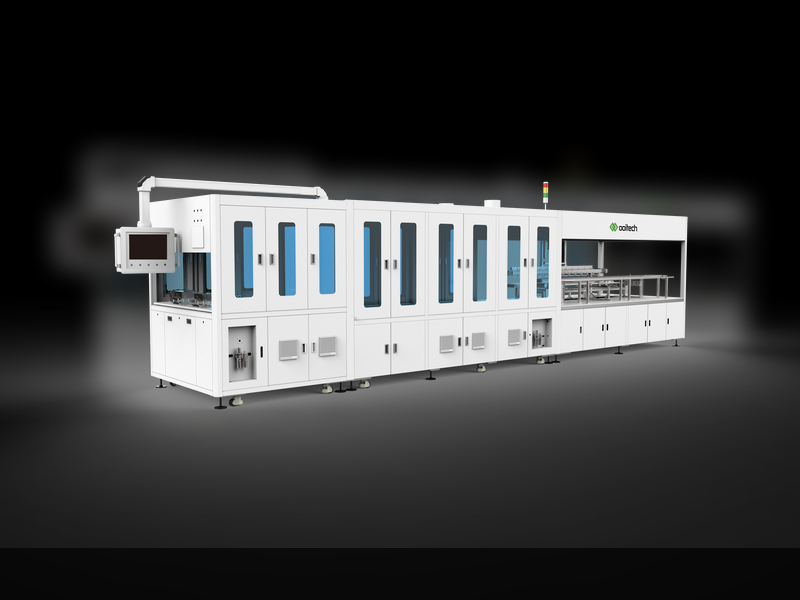
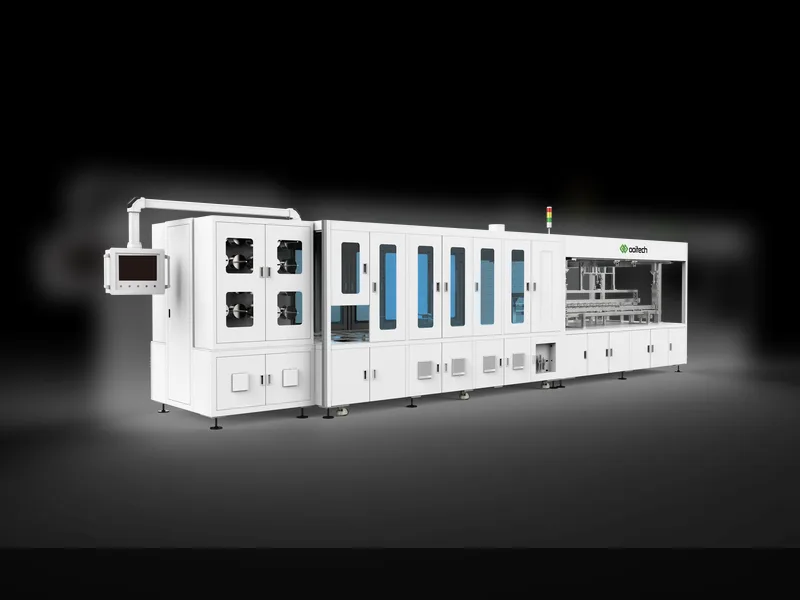
Ooitech Full Automatic Solar Panel Production Line Equipment
Manufacturing is repeatability made visible
The strongest solar PV module manufacturing system is not the one with the longest machine list. It is the one where the product definition, materials, process settings, inspections, identity and factory flow tell the same story for every released module.
Ooitech can provide solar PV module production-line configuration, equipment, factory layout, installation, commissioning, operator training and after-sales support for customers worldwide, matched to the intended module design and production plan.